
Breaking down the microbiology world one bite at a time
A New Way to Fight the Flu
Flu season is here, which means we might be looking up how to get our yearly flu shots. Influenza viruses cause significant infections and outbreaks annually, affecting both human and animal health. Vaccinations continue to be the most effective method for preventing infection, dampening symptoms, and slowing the spread of the virus. However, flu shots do not guarantee protection, especially among children, elderly, those who are immunocompromised, and those with underlying health issues or chronic conditions. Furthermore, a flu shot is not a form of treatment once someone catches the virus – it is preventative. Other medications, known as antivirals, are available for treatment; however, the number of approved antivirals is limited and are restricted by drug resistance.
Therefore, it is important to develop new strategies to combat the flu. A recently published study revealed a promising antiviral drug candidate for influenza virus infection. Researchers discovered that a nanobody targeting a specific component of influenza virus is able to protect against infection. Their findings open the door to new ways to fight the flu.
Why is the flu shot not enough?
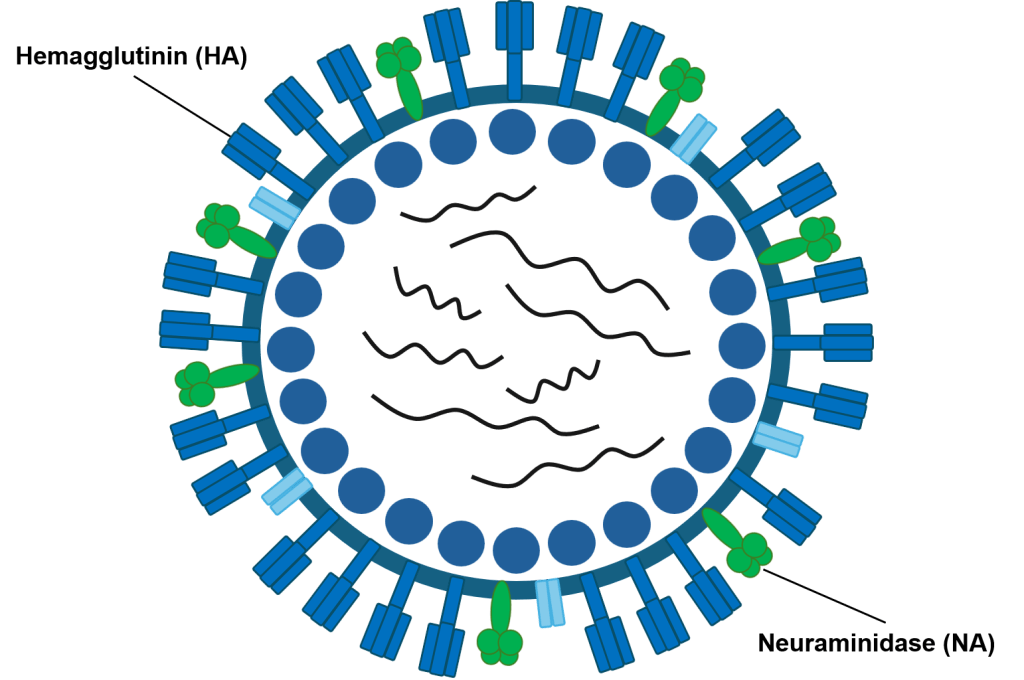
Getting your annual flu shot remains the most effective way to prevent influenza infection. However, most flu vaccines target hemagglutinin (HA), a protein on the surface of influenza virus. Vaccination is done annually because HA has a high mutation rate, meaning that the annual flu shot is designed based on what current influenza viruses are circulating. Because of this high mutation rate, if the HA of a circulating influenza virus shifts during the season, the vaccine is less effective. This partially explains why the flu shot isn’t 100% effective. Despite this, an annual influenza vaccine remains the best way to prevent severe influenza infection. However, work is being done to improve our current preventative and treatment options.
What other parts of influenza can be targeted?
Neuraminidase (NA) is another surface protein of influenza virus. NA exhibits a slower mutation rate compared to HA, making it an attractive drug target. This protein is also more conserved between different strains of influenza virus. Because NA is more conserved, effectively targeting NA may lead to broader protection and less drug resistance. A new study published in the Journal of Virology focuses on NA and how targeting it may be a new avenue for influenza virus treatment.
Nanobodies are small antibody-like proteins that can target specific parts of a virus, like NA. Researchers in this study focused on NA protein from the influenza subtype H9N2, a significant threat to poultry production and has the potential to spill over to humans. They identified a nanobody called F4 that was able to react to H9N2 NA. They also found that it can bind to NA from other influenza subtypes (H1N1, H3N2, H5N6, and H7N9). This means that F4 has potential to treat diverse influenza viruses, including the predicted circulating subtypes and emerging subtypes.
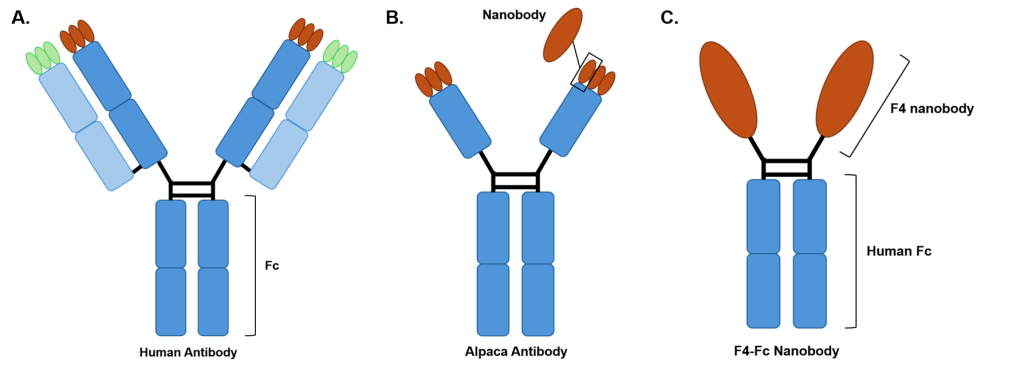
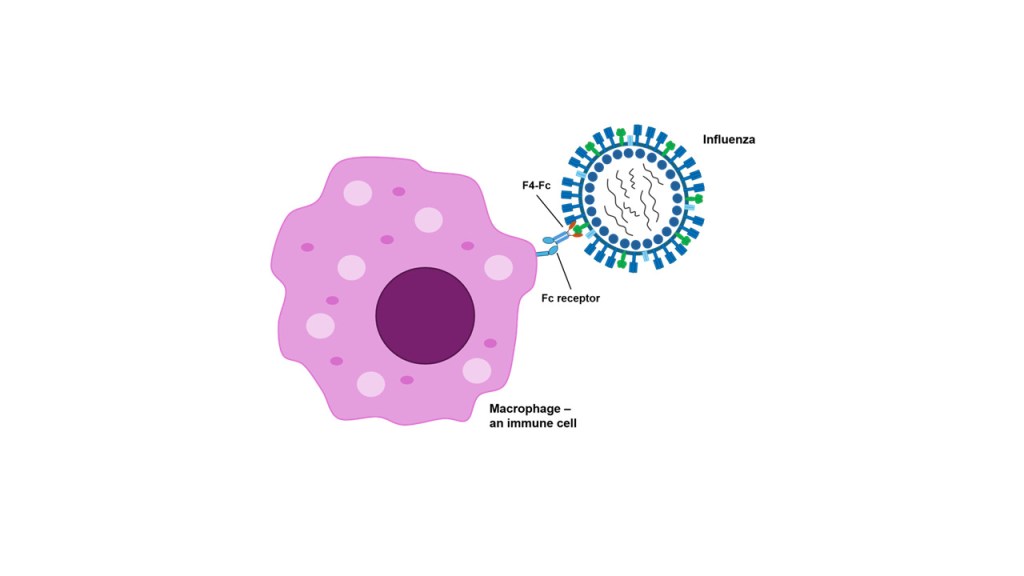
To increase the therapeutic potential of nanobodies, F4 was fused to an antibody domain from humans, called Fc, giving us F4-Fc. Fusion to the Fc domain increases therapeutic potential because it can bind to specific receptors on immune cells to enhance the immune response to influenza. Fusion to the Fc domain also increases the half-life of the nanobody, resulting in longer circulation.
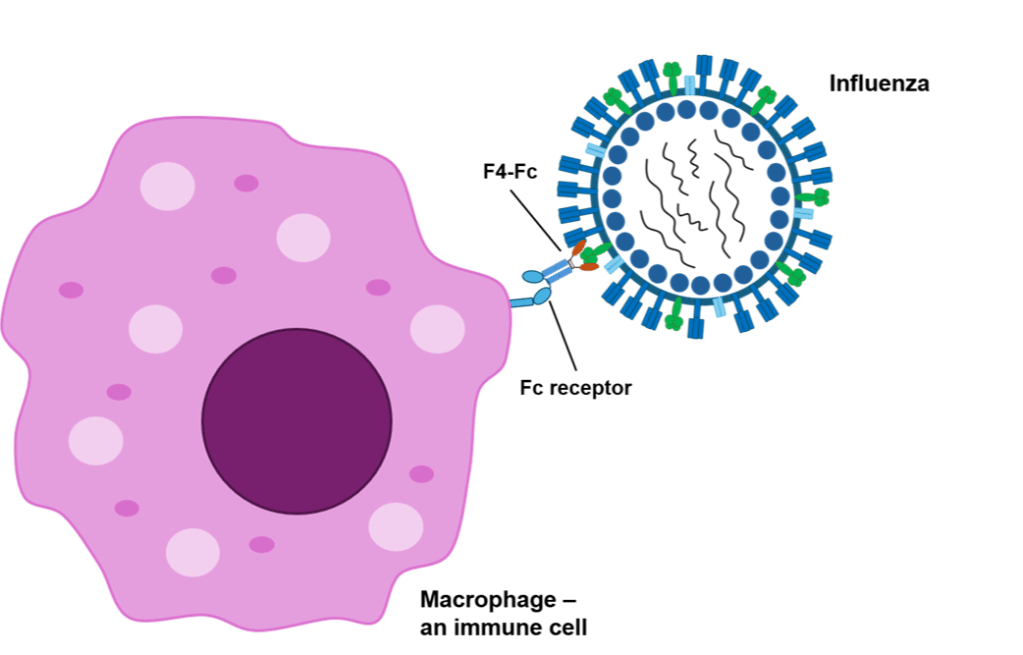
Researchers studied the effects of F4-Fc to restrict influenza infection in cells. F4-Fc was not only found to have antiviral effects against H9N2 influenza virus, but also against other influenza lineages. After establishing an initial effect on influenza infection in cells, the study was moved to a more relevant system using mice. Their mouse model showed that F4-Fc provided preventative protection against multiple influenza subtypes. Mice were first treated with F4-Fc and then infected with various influenza strains. They observed suppressed viral loads and lung damage. Finally, the researchers reversed this order, infecting mice with influenza virus first and following that up with treatment with F4-Fc. They found that mice treated with F4-Fc survived lethal infection from multiple influenza subtypes. Overall, the researchers concluded that F4-Fc was capable of preventing and treating influenza infection from multiple influenza subtypes.
What’s next?
These findings reveal the potential for nanobody therapeutics to improve our current influenza treatment strategies. In cases where influenza vaccinations fail to provide protection against infection, having additional antiviral treatment options is imperative. Nanobodies are attractive therapeutics because of their high specificity, small size, and high stability. This allows for targeted treatment, accessibility to sites conventional drugs cannot reach, and increased time of action and ease of distribution. The research published in this study presents a novel nanobody that has potential to translate into an effective therapy to prevent and treat influenza virus infections. Next steps would be to continue to improve the breadth of targets for this nanobody therapy and hopefully, future drug development can move the findings of this study to clinical settings.
Link to the original post: Liu D, Zhang Y, Zhang M, Guo R, Peng W, Cao R, Yang X, Chen J, Huang S, Li J, Sheng C, Qin L. 0. A neuraminidase-targeting nanobody as a therapeutic candidate against influenza A and B viruses. J Virol 0:e00874-26. https://doi.org/10.1128/jvi.00874-26
Featured image: Made by author with PowerPoint