
Breaking down the microbiology world one bite at a time
You are what you eat
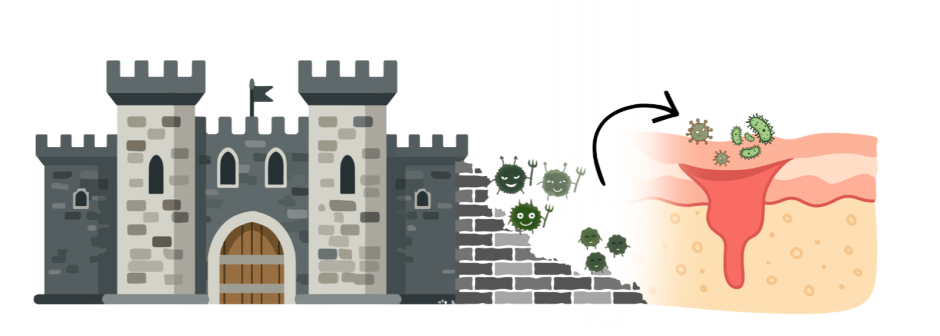
Foodborne illness is one of the deadliest types of infections, with over 1.5 million deaths worldwide. Cases are on the rise — from the recently infected lettuce that plagued multiple US grocery stores, to the worldwide contribution to mortality in young children. Food safety precautions of the modern era expose bacteria to various stressors, including high temperatures, disinfectants, and high salt levels. Despite these protective measures, some pathogens still manage to beat the system.
But how do microbes survive the intense and rapidly evolving food storage and shipment processes? Or, if they manage to beat this initial guardrail, how are they able to survive the intense gut environment?
Most efforts to study this question have investigated growth dynamics and post-ingestion tolerance of bacteria, but few have combined both. This combination of conditions is extremely important to accurately mimic the food and host environment in which these pathogens thrive. The authors of this study aimed to fill this gap in knowledge.
First, the authors performed a clustered analysis of pathogenic bacteria in various growth conditions. This analysis revealed that spatial structure — whether the bacteria were in free-flowing media or in tight communities — was a major factor in determining how well the bacteria could grow. Importantly, their study included a wide range of bacteria, including Escherichia coli, Listeria monocytogenes, Staphylococcus aureus, Salmonella enterica, and other bugs that have previously been identified to cause foodborne illness.
To mimic conditions of semi-solid foods that many people enjoy (such as mayonnaise or gelatin), the authors grew these bacteria in gelled synthetic food-medium (GSFM). Comparing growth in GSFM and planktonic growth in liquid showed that spatial structure was a major contributing factor in how bacteria respond to food-related stress conditions, such as high acidity in the human gut, or exposure to bile salts. For some bacteria, like L. monocytogenes, growth in a spatialized environment (such as the GSFM) provided protection against salt stress. Interestingly, the inverse was seen in other bacterial species. For instance, S. aureus had no improved tolerance to salt stress when grown in GSFM.
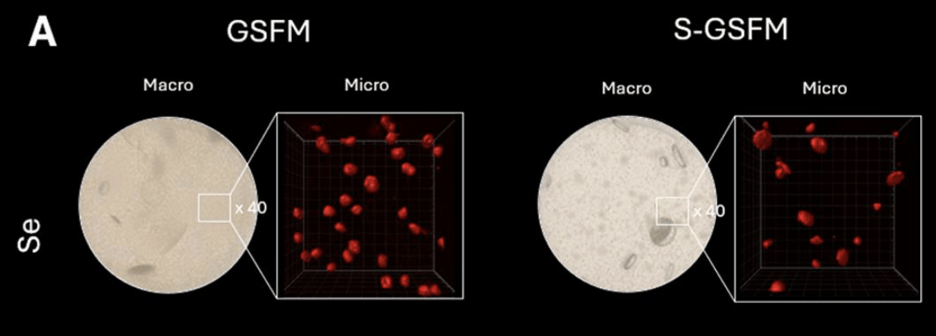
Advanced microbial communities, such as biofilms, are commonly known to contribute to resistance of bacteria to various stressors. They often achieve this by forming intricate structures around persister cells, which enter a dormant state under stress conditions. As such, the authors wanted to know if the bacteria tested here were forming complex community structures in the GSFM. To answer this question, the authors dyed the cells and performed microscopy to visualize the bacteria.
What they found was extremely interesting. Some of the bacteria, including Salmonella enterica, formed microcolonies (see figure above). These structures are often associated as a precursor to more advanced biofilm formation. These advanced biofilm structures can protect bacteria from a multitude of stressors, including conditions that the bacteria are exposed to in the gut.
But how favorable are these adaptations to survival in the gastrointestinal tract? Analysis of these bacteria in the presence of acid, oxidative, and salt stress showed that L. monocytogenes and B. cereus were protected against acid stress when previously grown in GSFM. This could suggest that these two bacteria can survive the intense acid stress of the human gastrointestinal tract based on adaptations gained when grown in this food-like gel.
Although the authors tested the ability of these pre-adapted bacteria to survive in vivo, they observed no difference between planktonic and GSFM-exposed bacteria. Future work in a model that more closely mimics the human gastrointestinal tract is needed to determine if the authors’ in vitro results are applicable in the human body.
While advances in food preservation and storage have significantly decreased the number of foodborne illnesses around the world, it is important to understand how bacteria are able to adapt to these conditions. Much like how bacteria have evolved antibiotic resistance, this article shows that if bacteria are resilient enough, they can adapt to anything.
Link to the original post: https://www.nature.com/articles/s41538-026-01006-z
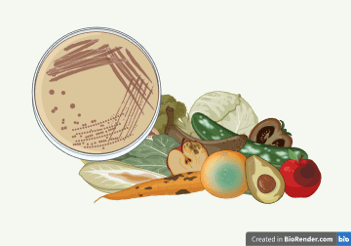
Featured image: Made by author in BioRender