
Breaking down the microbiology world one bite at a time
Root-microbes enhances plant salt stress tolerance
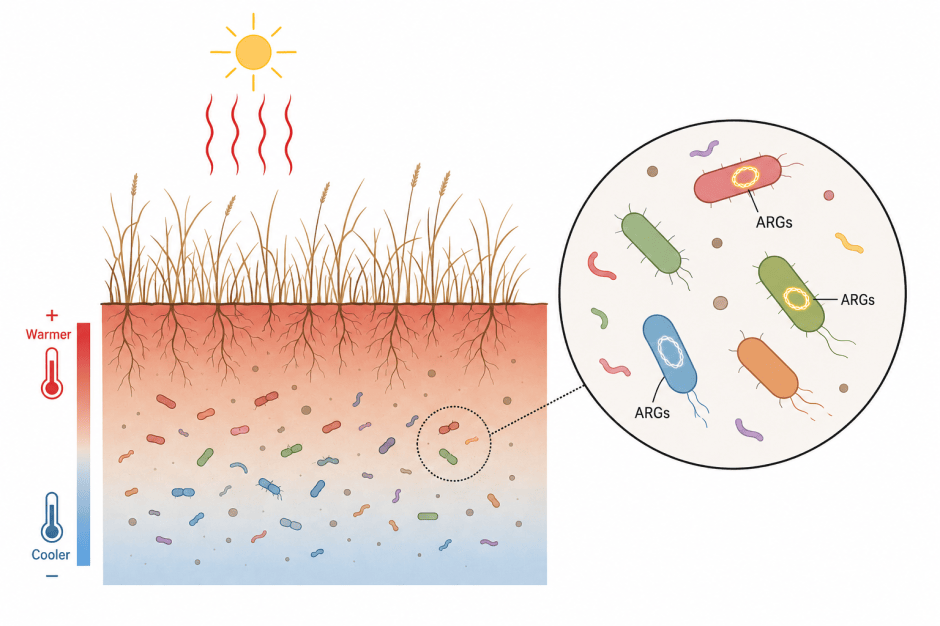
Plants regularly experience biotic stresses, such as microbial pathogens and pests, as well as abiotic stresses, such as drought and extreme climatic conditions. Salt stress is related to high levels of salt in the soil that affects plant health and reduces crop yield. Due to climate change, soil salinization is predicted to increase in the future and poses a major threat to plant diversity and food security. Plants have natural adaptive strategies to cope with salt stress such as through balancing the ions in plant cells, accumulating solutes including charged metabolites, polyols, various sugars, and regulating plant hormones. Through these mechanisms, plants manage salt stress-induced water loss and prevent toxicity caused by excessive salt ions.
The microbes living in soil, also known as the soil microbiota, can also help plants cope with salt and other stress. Recently, researchers have proposed the “cry for help” hypothesis, which suggests that plants release specific chemical compounds into the soil to attract beneficial microorganisms that help them cope with stress. For example, a previous study reported significant enrichment of the bacteria Pseudomonas was found in the roots of wild soybean (Glycine soja) that had experienced salt stress. Through this observation, researchers speculated that a plant-microbe interaction mechanism between Pseudomonas and wild soybean may exist for tolerance against salt stress.
To further study the possibility of such an interaction, researchers in China examined root-associated microbiomes of several crop plants exposed to salt stress. The genus Pseudomonas was consistently enriched around the roots of these plants. This further suggested that this bacteria may play an important role in plant adaptation to salt stress.
Next they isolated Pseudomonas species and introduced them to soybean plants. It was observed that the soybean plant with the Pseudomonas was able to withstand high salinity. The bacteria improved plant growth and root development, and their beneficial effects were also observed in field experiments.
The researchers then investigated the mechanism through which Pseudomonas was able to enhance stress tolerance of the plant. It was thought that the bacteria helped the plant by controlling the amount of sodium entering the plant tissue. However, it was observed that Pseudomonas had an influence on the production of lignin within plant tissues. Soybean treated with Pseudomonas was seen to have accumulated more lignin in their roots when exposed to salt stress. Therefore, it is possible that the plant was able to tolerate salt by strengthening their root tissues by producing more lignin.
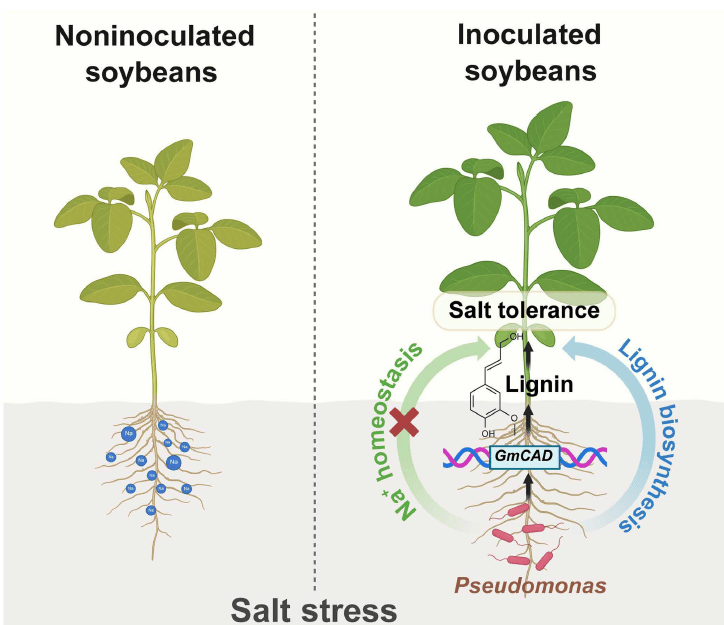
The genes involved in the production of lignin were identified in soybeans which included GmCAD, GmCOMT, and Gm4CL. When these genes were disrupted, the soybean plant was unable to withstand salt stress even in the presence of Pseudomonas. This further provided evidence that Pseudomonas was improving salt tolerance in plants through the lignin biosynthetic pathway.
Overall, the study demonstrates a prime example of plant-microbe interactions and its important association with stress tolerance. This further signifies the importance of understanding such beneficial soil microbes and how they interact as well as influence plant growth by improving stress tolerance. Understanding such interactions can later be applied in improving agriculture, by developing new strategies to improve crop yield in areas with high salinity. One possible strategy is to introduce beneficial microbes such as Pseudomonas in the soil to improve stress tolerance of the plant. The second strategy is to utilize genetic engineering to increase the activity of certain biosynthetic pathways such as those involved in lignin production in order to develop more stress resilient crops.
Link to the original post: Yanfen Zheng et al. ,Pseudomonads associated to salt-stressed plants facilitate stress adaption of soybean through enhanced lignin biosynthesis.Sci. Adv.12,eaed8447(2026).DOI:10.1126/sciadv.aed8447
Featured image: ChatGPT