
Breaking down the microbiology world one bite at a time
Your Gut, Hormones, and Brain – How Sex Changes the Conversation
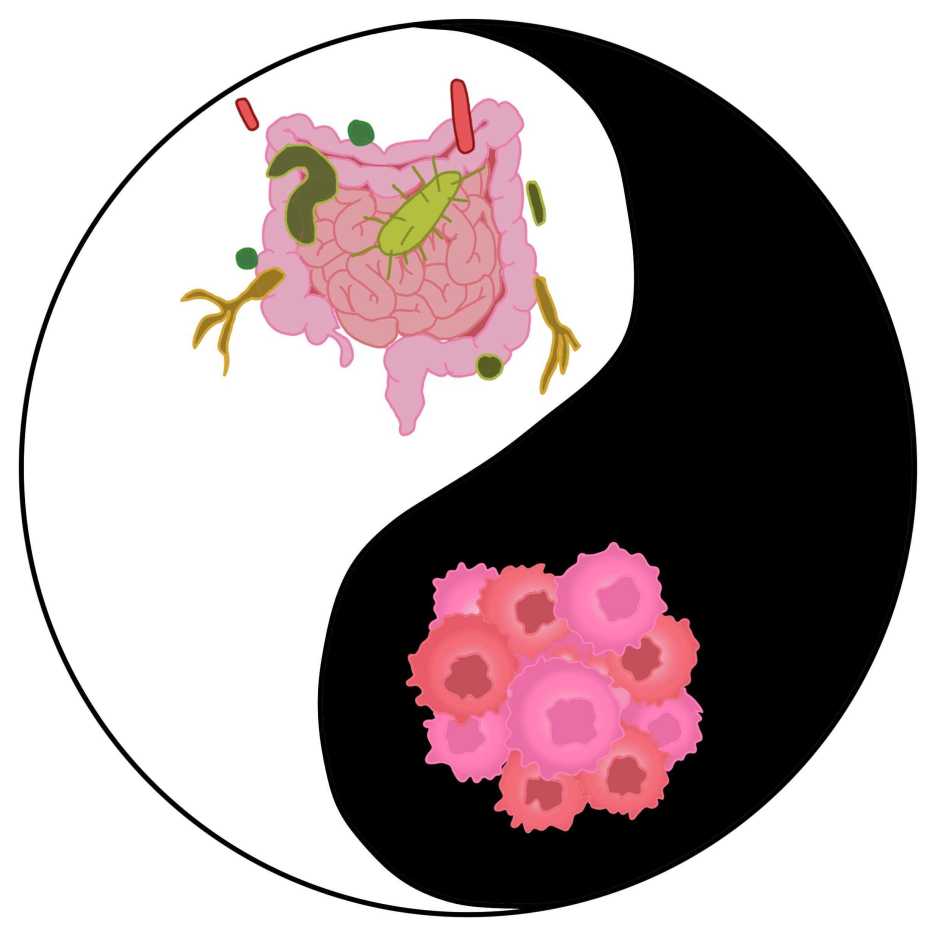
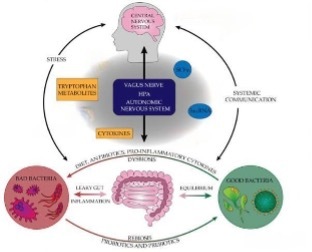
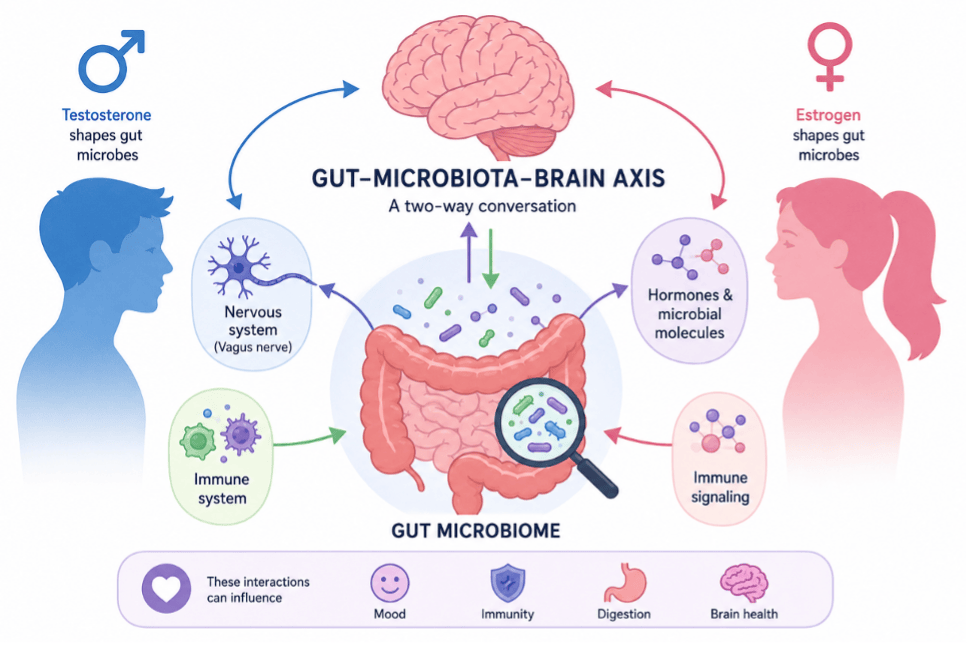
Have you ever wondered why you lose appetite when you are nervous? That happens because your gut and brain are constantly communicating with each other. This communication network is called the microbiota–gut–brain axis (MGBA). Interestingly, based on a recent review published in Trends in Microbiology, this communication changes depending on biological sex. The authors brought together findings from many studies to better understand how sex influences the connection between our gut microbes, hormones, immune system, and brain.
The gut microbiome is a community of trillions of bacteria, viruses, fungi, and other microorganisms that live mostly in the large intestine. They help digest food, produce vitamins, protect us from harmful bacteria, and support our immune system. But how do these tiny microbes communicate with the brain?
The review explains that this happens through several pathways. Gut microbes produce small molecules that interact with the cells lining our intestines. Among these are specialized cells called enteroendocrine cells, which act like tiny messengers. These cells detect signals from the gut and pass them along to nearby nerves, which form a direct communication route between the gut and the brain. Gut microbes can also influence the immune system, whose cells communicate using chemical signals that help the body respond to infections and maintain health.
Now, how does biological sex come into the picture?
The review explains that sex hormones, such as estrogen and testosterone, influence which microbes thrive in the gut. At the same time, gut microbes can also affect how these hormones are produced and processed in the body. This creates a two-way relationship where hormones shape the microbiome, and the microbiome helps regulate hormones.
These interactions may also help explain why some diseases affect males and females differently. For example, in conditions such as autism spectrum disorder (ASD), which is diagnosed more frequently in males, diagnosis is often accompanied by gastrointestinal symptoms. Scientists are investigating whether differences in the gut–brain axis contribute to these patterns. While the answers are still unclear, the review highlights the importance of considering biological sex when studying diseases involving the gut and brain.
The review also suggests that biological sex has often been overlooked in microbiome research. Many earlier studies either focused on only one sex or combined data from males and females without comparing them separately. As a result, researchers may have missed important biological differences that could improve our understanding of health and disease.
The gut microbiome is much more than a collection of bacteria helping us digest food. It is part of a complex communication network connecting the gut, hormones, immune system, and brain. Rather than working independently, the gut, brain, hormones, and immune system are all connected and understanding how biological sex influences this network could help scientists develop more personalized treatments, improve future research, and better understand diseases that affect people differently.
Link to the original post: Hokanson, K. C., Hernández, C., Deitzler, G. E., Gaston, W. J., & David, M. M. (2024). Sex shapes gut–microbiota–brain communication and disease. Trends in Microbiology, 32(2), 103–116.
Featured image: Image generated by ChatGPT