
Breaking down the microbiology world one bite at a time
The Hidden Battle of Chronic Wounds
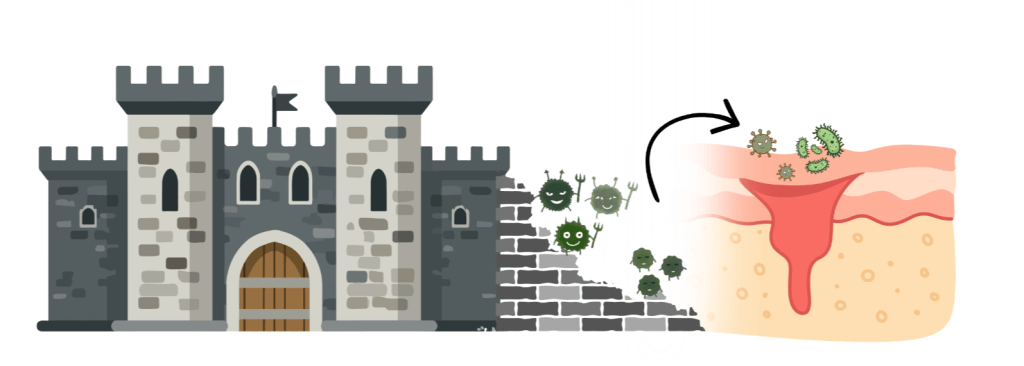
Imagine a fortress that was recently under attack. Before the kingdom can recover, its walls must be rebuilt. However, continuous attacks make any progress futile. Once these armies set up camp, securing the fortress becomes intractable. Chronic wounds are similar. They’re injuries that are not able to finish the healing process, and as a result, the wound keeps getting ‘attacked’ by pathogens. Some of these also possess the ability to form biofilms, or set up camp, which hinders the efficacy of any treatments.
Every fortress has more than a single layer of defense. Similarly, our skin is a multilayered defense system composed of the epidermis, dermis, and hypodermis. Together they act as a barrier against microbial invasion, while continuously renewing after injury.
Once the fortress is breached, repairing it becomes the kingdom’s topmost priority. Wound healing is a highly orchestrated sequence of events involving workers (cells) as well as messengers (signalling molecules). Normally, it restores the skin barrier and prevents infections. However, when this progression is affected, healing becomes incomplete and the wound becomes chronic.
Healing begins with hemostasis, where platelets rush to the site of injury and aggregate. Fibrin acts as mortar and forms a clot that prevents blood loss, creating a provisional barrier that keeps the soldiers safe from other dangers. Once the breach is secured, the kingdom’s clean-up crew arrives to remove debris and neutralise invaders. This is known as the inflammatory phase during which macrophages and neutrophils carry out these functions. The proliferative phase follows, marked by angiogenesis, fibroblast activity, and re-epithelialization as the fortress is slowly rebuilt. Finally, the extracellular matrix is reorganized and strengthened, restoring the skin’s barrier function. In acute wounds, these phases overlap seamlessly. In chronic wounds, they do not.
Not all citizens of the fortress are enemies. The skin is home to a host of commensal microorganisms that actively contribute to barrier maintenance and immune regulation. They help inhibit the growth of pathogenic species, modulate immune responses and support wound healing. When this equilibrium is disrupted by injury, disease or infection, the pathogenic species overpower our immune system and the fortress comes under attack.
So what happens if the battle never really ends?
A wound becomes chronic when it fails to timely progress through the normal healing stages. Chronic wounds can often be trapped in a prolonged inflammatory phase, characterised by repeated infection, excessive production of reactive oxygen species and continuous degradation of extracellular matrix. This creates an environment ideal for microbial persistence.
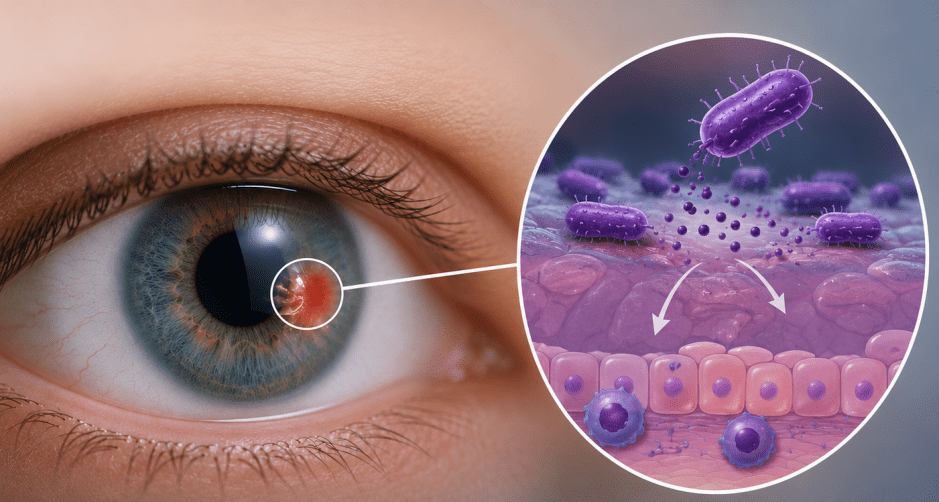
The situation worsens when the invaders stop attacking from outside and establish permanent camps within the fortress. Instead of individual soldiers, forces are organised and an organised settlement known as a biofilm is formed. Biofilms adhere to the wound surface and encase themselves in an extracellular matrix composed of polysaccharides, proteins, lipids, and DNA. This matrix shields bacteria and enables cellular communication. Once established, biofilms are difficult to eradicate as they can tolerate hostile environments, evade immune defenses, and persist for long periods. The necrotic tissues, debris and impaired immune responses favour biofilm development.
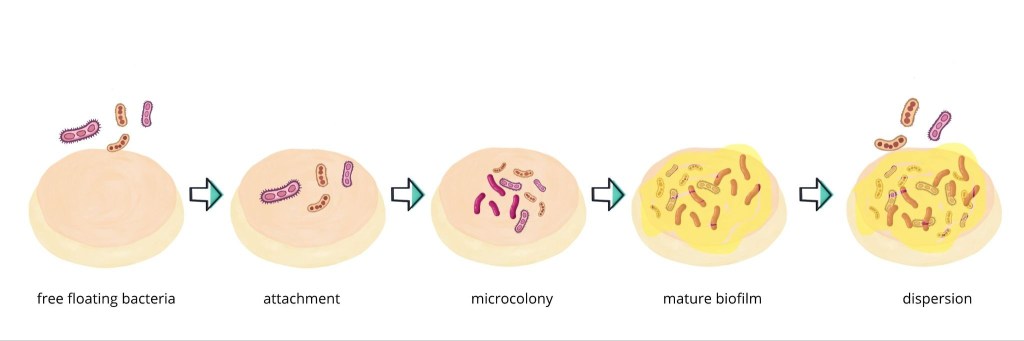
The presence of biofilms alters how wounds respond to treatments. At this point, defeating the invaders is not as straightforward as just increasing defenses. The penetration of antibiotics and antiseptics is limited by the extracellular matrix. The close proximity of bacterial cells also facilitates the exchange of resistance traits. As a result, regular treatments fail against them. Biofilms are more frequently found in chronic wounds, but because they lack any characteristic clinical signs, they are often difficult to detect and may be underestimated.
Beyond resisting treatment, biofilms also contribute to disease progression. They sustain inflammation, increase production of inflammatory mediators and promote senescence. This creates a vicious cycle wherein inflammation fuels biofilm persistence and biofilms perpetuate inflammation.
Before reconstruction can begin, the rubble from the fortress must be cleared. Clinically, this can be done via debridement which physically removes dead tissue and disrupts bacterial strongholds, giving the local army another chance to take over. However, debridement alone cannot sustain healing.
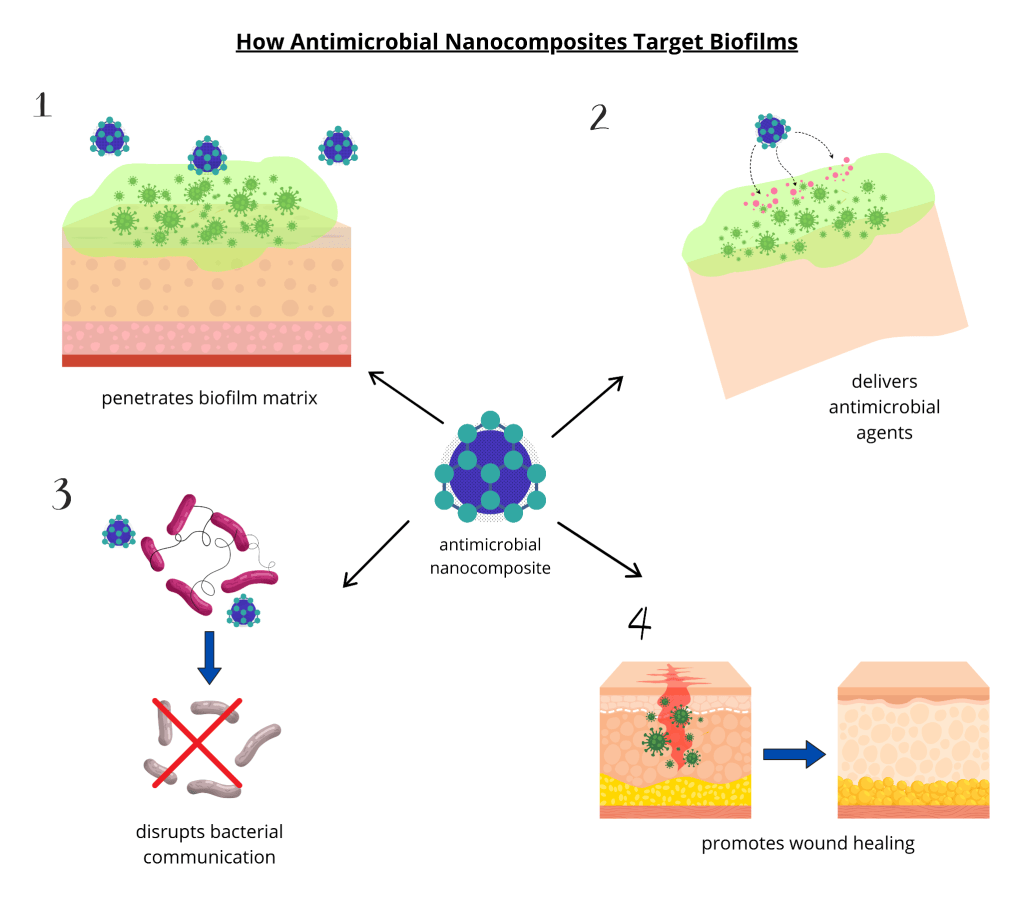
Current research aims to prevent the invaders from establishing camp in the first place while also dismantling those that already exist. One of the most recent strategies, highlighted by Guerrero-Rodriguez et al., includes the use of antimicrobial nanocomposites. These materials are designed to penetrate the biofilms while delivering antimicrobial agents directly to the microbes. Some of them interfere with the chemical communication system that bacteria use to coordinate biofilm formation which reduces the production of the extracellular matrix. Recent research emphasises on combination strategies, using multiple mechanisms within a single nanocomposite which supports wound healing more effectively than single target approaches.
Returning to the analogy, a fortress isn’t lost when its walls are breached, but when the enemy is allowed to settle within them. Chronic wounds persist not because the body has forgotten how to heal, but because biofilms continuously interfere with the repair process. The challenge is reclaiming territory entrenched by bacteria. The body’s repair crew can only succeed by dismantling these fortresses. The understanding of how these microbial communities form, persist and resist treatment is imperative to allow resumption of healing.
Link to the original post: Cavallo I, Sivori F, Mastrofrancesco A, Abril E, Pontone M, Di Domenico EG, Pimpinelli F. Bacterial Biofilm in Chronic Wounds and Possible Therapeutic Approaches. Biology (Basel). 2024 Feb 9;13(2):109. doi: 10.3390/biology13020109. PMID: 38392327; PMCID: PMC10886835.
Other references: Guerrero-Rodriguez ID, Nguyen CM, Nguyen KT, Soto-Garcia L. Targeting biofilms in chronic wounds: emerging strategies with antimicrobial nanocomposites. J Funct Biomater. 2026;17(6):282. doi:10.3390/jfb17060282 .
Featured image: Image created on Canva.com