
Breaking down the microbiology world one bite at a time
Gut Microbes: Alzheimer’s Silent Accomplice
Written by guest author Apurva Singh
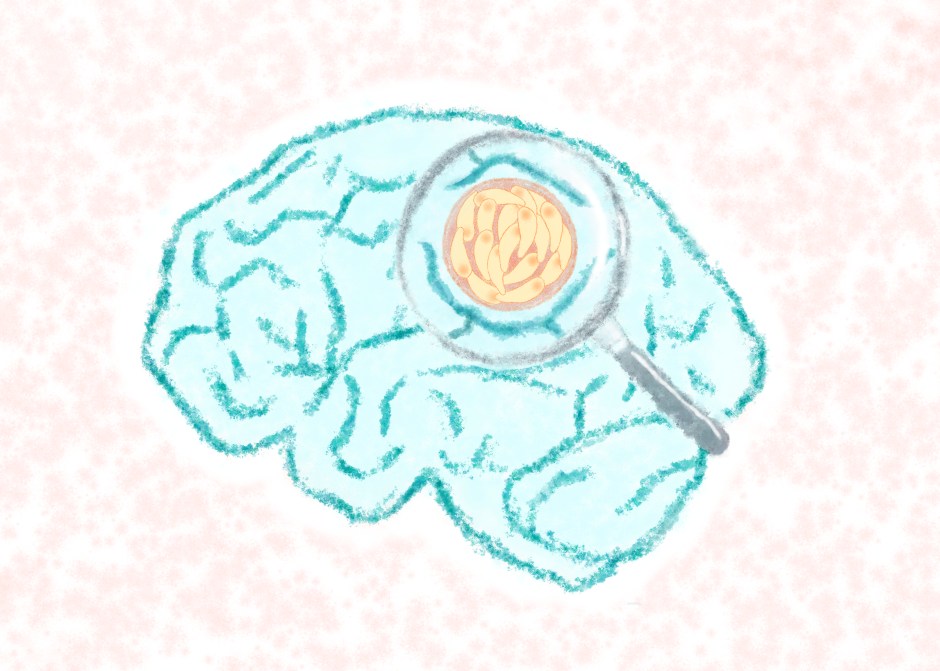
For decades, Alzheimer’s disease (AD) research has centered on a major culprit: sticky amyloid-beta plaques clogging the brain. But evidence suggests another, less obvious player may be steering the disease from an unexpected location: the gut.
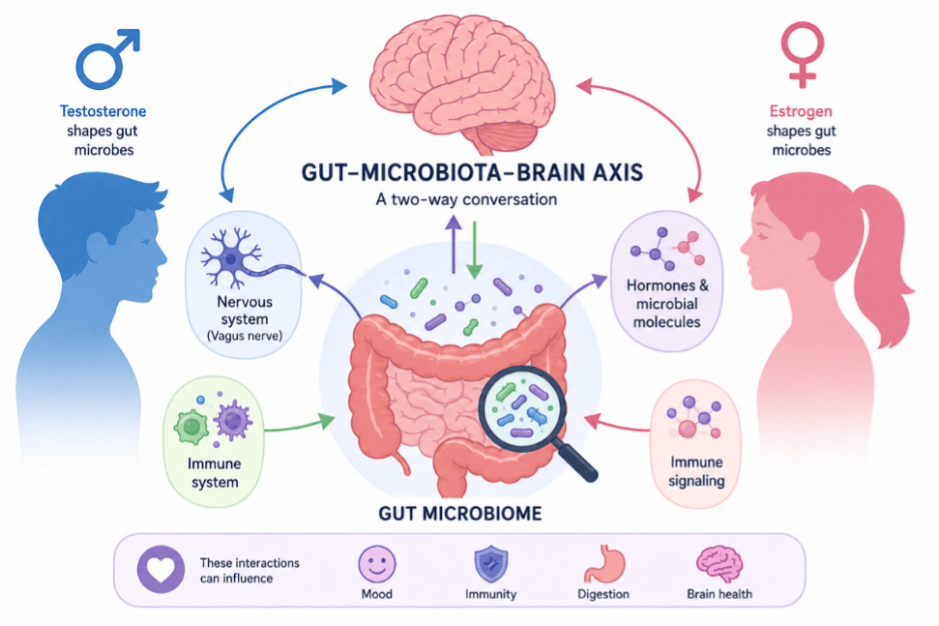
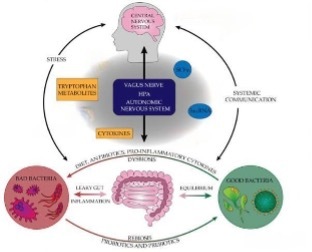
Gut bacteria communicate with the brain through what’s called the microbiota-gut-brain axis (MGBA), a two-way signaling network linking the digestive system to the central nervous system. Disruptions in this communication appear to accelerate neuroinflammation, one of the central drivers of Alzheimer’s progression, opening up a completely different theory on how the disease takes hold.
Inflammation isn’t just a side effect – it’s a driver
Neuroinflammation was once viewed as a byproduct of amyloid buildup, something that happened because of AD rather than something that caused it. However, that view is shifting. When amyloid and Tau accumulate, they activate the brain’s resident immune cells ,microglia and astrocytes. Initially, these cells try to clean up the mess, but over time, chronic activation flips them into a damaging state. This releases inflammatory molecules that injure neurons and encourage even more amyloid and Tau buildup. It becomes a self-feeding loop: more damage triggers more inflammation, which triggers more damage as illustrated in Fig 1 .
The gut’s surprising role
Here’s where things get interesting. The human gut hosts trillions of microorganisms that normally coexist peacefully, supporting digestion, metabolism, and immune balance. But when that community becomes imbalanced (a state called dysbiosis,) it can send ripple effects all the way to the brain (Figure 2).
Dysbiosis weakens the gut lining, allowing bacterial byproducts, like lipopolysaccharides (LPS), to leak into the bloodstream. These molecules can cross the blood-brain barrier, activate immune receptors on microglia, and ignite inflammatory cascades in the brain itself. Other gut-derived compounds, like trimethylamine N-oxide (TMAO) and altered bile acids, appear to promote amyloid production and worsen the toxic buildup associated with AD.
Meanwhile, a decline in beneficial bacteria that produce short-chain fatty acids (SCFAs), particularly butyrate, removes a natural brake on inflammation. SCFAs normally help maintain gut barrier strength and calm immune responses.In this study, the authors found that people with inflammatory bowel disease were nearly four times more likely to develop dementia.
One striking data point: people with inflammatory bowel disease are nearly four times more likely to develop dementia than healthy individuals (Li et al.,2025) — a strong hint that gut inflammation and brain inflammation may be more connected than previously assumed
Could fixing the gut help the brain?
If an imbalanced microbiome contributes to Alzheimer’s progression, could rebalancing it help slow the disease? Researchers are cautiously optimistic. Several microbiota-focused strategies are currently under investigation:(Li et al.,2025)
- Probiotics — beneficial bacteria strains like Lactobacillus and Bifidobacterium have shown promise in animal models, improving memory and lowering inflammatory markers, though results in human trials remain mixed.
- Prebiotics — fibers that feed beneficial bacteria, boosting SCFA production and, in some studies, correlating with lower Alzheimer’s risk.
- Synbiotics — combinations of probiotics and prebiotics designed for maximum effect.
- Postbiotics — including butyrate itself, which has shown notable success in reducing brain inflammation and cognitive decline in animal studies.
- Fecal microbiota transplantation (FMT) — transferring stool from a healthy donor to restore microbial balance, with a few compelling human case reports of improved cognition following treatment.
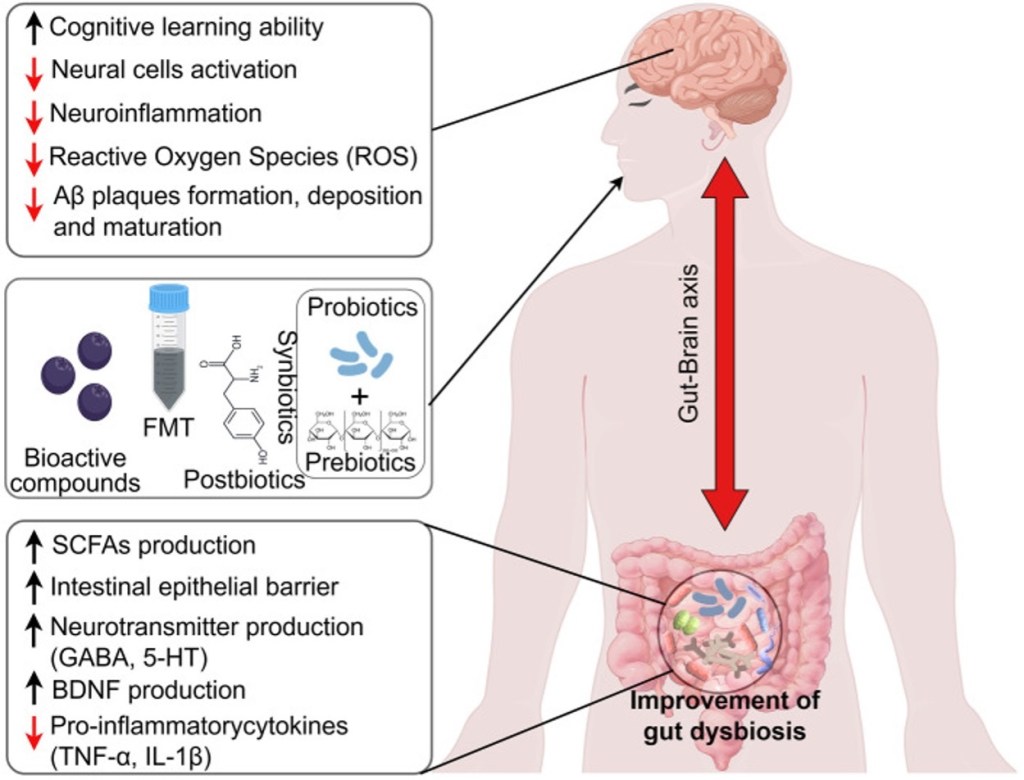
Image from original article
Most of this evidence still comes from mouse studies rather than large human clinical trials, so it’s far too early to call any of these approaches a treatment. But the direction of the research marks a meaningful shift in how scientists think about Alzheimer’s: not just as a brain disease, but as a condition shaped by the body’s broader ecosystem.
The bigger picture
Alzheimer’s is looking less like a localized brain disorder and more like a condition shaped by the body’s broader microbial ecosystem. The gut microbiome appears to be an active participant in disease progression , one that might eventually offer new avenues for intervention. While probiotics won’t replace existing treatments anytime soon, the therapeutic potential of gut-targeted approaches, from dietary fiber to fecal transplants, adds a genuinely new dimension to Alzheimer’s research.
Understanding this gut-brain relationship more deeply could open doors to therapies that work with the body’s natural ecosystems rather than only targeting the brain in isolation.
Link to the original post: https://pmc.ncbi.nlm.nih.gov/articles/PMC12241022/
Featured image: Image from original article