
Breaking down the microbiology world one bite at a time
Too hot to handle? Climate change makes antibiotic resistance rise underground
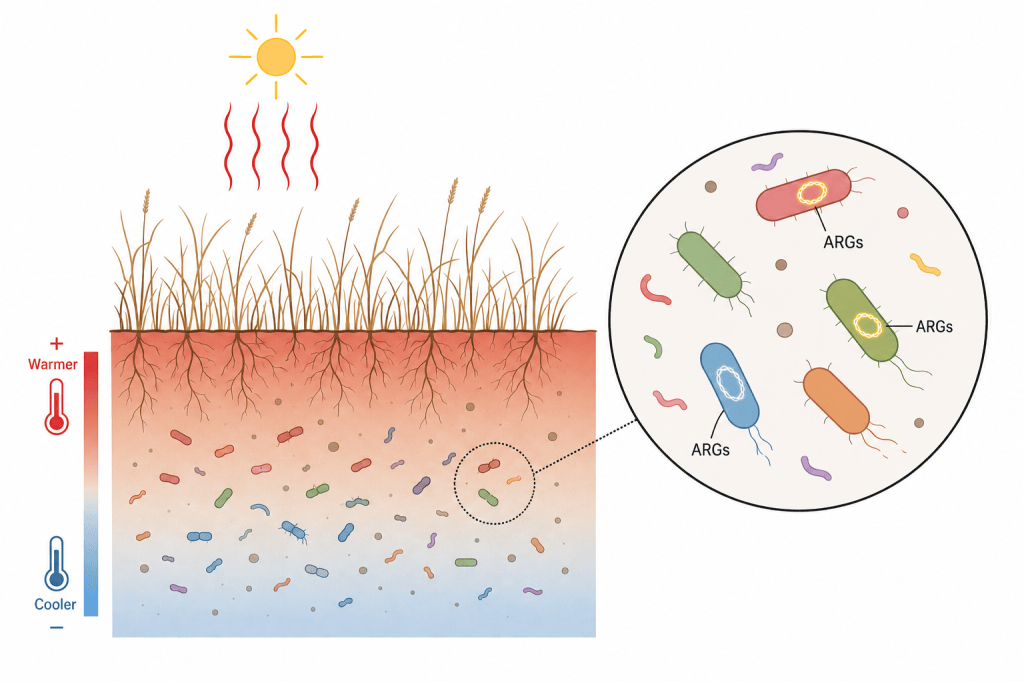
Europe is currently sweating through another summer heatwave. While we reach for fans, cold drinks, and the nearest patch of shade, another community is also responding to the rising temperatures. One hidden right beneath our feet. A new study by Wu and colleagues shows that long-term warming can substantially increase antibiotic resistance in soil bacteria. In other words, when the heat is on, microbes may gain much more than just a nice tan.
Antibiotic resistance is often thought of as a hospital problem, but many resistance genes actually originate in the environment. Soil is one of the largest natural reservoirs of antibiotic resistance genes (ARGs): pieces of DNA that allow bacteria to survive antibiotic treatment.
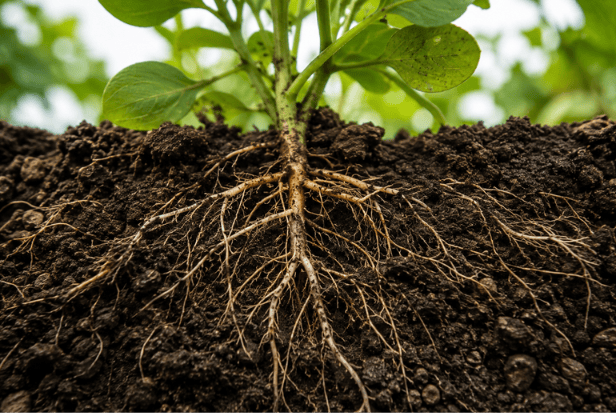
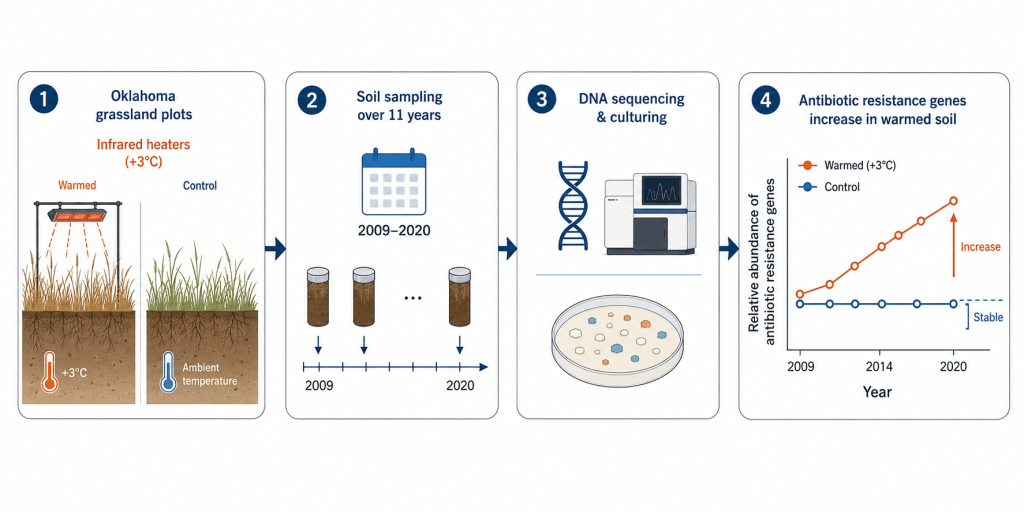
To find out how climate change affects this underground gene bank, researchers turned to a unique long-running field experiment in Oklahoma, USA (Figure 1). Since 2009, sections of grassland have been warmed by about 3°C above ambient temperature using infrared heaters. Over the next eleven years, the team repeatedly collected soil samples and combined several approaches, including DNA sequencing, functional gene analysis, and laboratory tests of bacterial resistance.
Does warming really increase antibiotic resistance?
Spoiler alert: The answer was a clear yes. Using metagenomic sequencing (a technique that reads all the DNA in a sample to identify which microbes and genes are present), the researchers detected almost 2000 different antibiotic resistance genes in the soil. After eleven years, warmed soils contained nearly 24% more ARGs than soils kept at normal temperatures. Resistance genes associated with glycopeptide antibiotics and rifamycins showed particularly strong increases.
Interestingly, warming had a much bigger effect than the other treatments included in the experiment, such as changing rainfall or clipping the grass. Temperature clearly stood out as the main driver.
Where do all these extra resistance genes come from?
To answer that question, the researchers identified which bacteria carried the ARGs. One group quickly stood out: the Actinomycetota, a large group of soil-dwelling bacteria best known for producing many of the antibiotics we use in medicine. Well-known members include Streptomyces, which are responsible for drugs like streptomycin and tetracycline. This makes sense because many Actinomycetota naturally make antibiotics to compete with other microbes. To avoid being killed by their own weapons, they also carry resistance genes. As warming favoured these bacteria, the soil resistome, which is the complete collection of antibiotic resistance genes present in the microbial community, expanded alongside them.
Fun fact: Streptomyces also produce geosmin, the compound responsible for the familiar earthy smell of soil after rain.
Genes are one thing, but do the bacteria actually become more resistant?
Finding resistance genes is one thing. Showing that bacteria themselves become harder to kill is another. So, the researchers moved from DNA sequencing to petri dishes. They isolated more than 2000 bacterial strains from both warmed and control soils. From these, they selected 213 strains representing 17 species and tested them against 22 antibiotics using the classic Kirby–Bauer disc diffusion assay. If you’ve ever seen bacteria growing on an agar plate dotted with antibiotic discs, you’ll know the basic idea (Figure 2). Antibiotics create clear circles around the discs where bacteria cannot grow. Smaller circles mean stronger resistance.
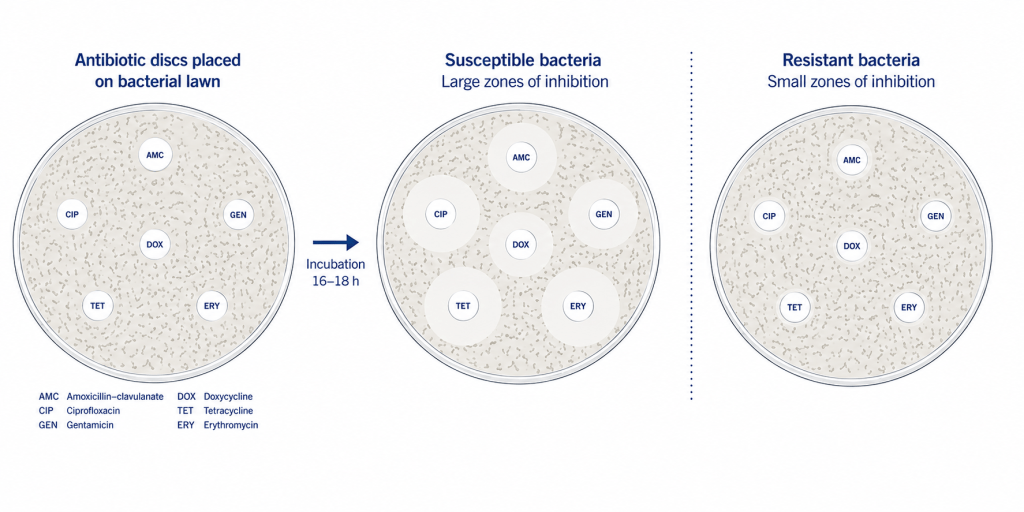
The laboratory results largely matched the DNA sequencing data. Across hundreds of bacteria–antibiotic combinations, bacteria from warmed soils frequently showed smaller inhibition zones, meaning they were more resistant. Thirteen of the seventeen tested species became more resistant after long-term warming. In particular, Streptomyces strains showed increased resistance to several types of antibiotics such as rifamycins, vancomycin, and certain aminoglycosides.
Why would heat favour antibiotic resistance in the first place?
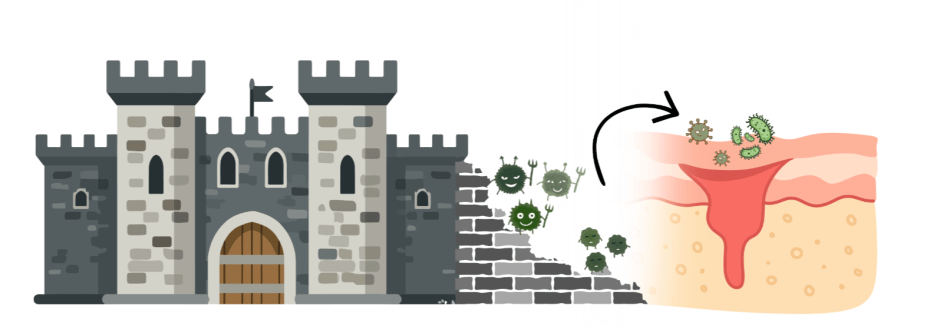
At first glance, it seems logical to think that warming directly selects for antibiotic resistance. Surprisingly, that does not appear to be the case. Instead, the researchers found evidence that resistance genes are hitchhiking (Figure 3). The researchers discovered that ARGs often sit close to genes involved in high-temperature tolerance and nitrogen assimilation (the ability to take up and use nitrogen, an essential nutrient for bacterial growth). When warming favors bacteria carrying these beneficial traits, the neighboring resistance genes come along for the ride. This process is known as genetic co-selection.
The team also discovered that warming increased the mobility of resistance genes. More ARGs were linked to mobile genetic elements, and identical resistance genes appeared in multiple bacterial species more often. This suggests that horizontal gene transfer, the process by which bacteria share genetic material directly with one another, rather than inheriting it from parent cells, helps spread resistance genes even further through the soil community.
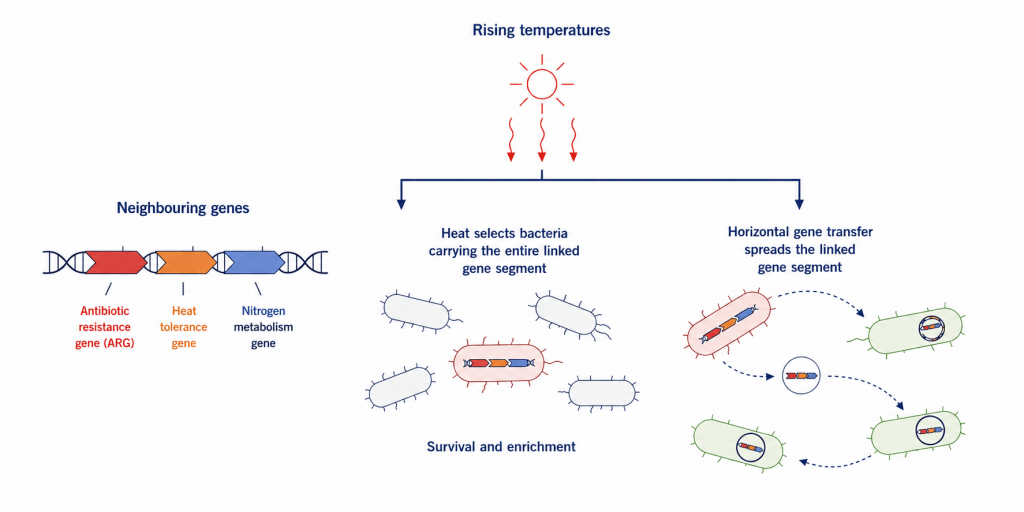
Rather than a single mechanism, warming appeared to influence antibiotic resistance in several ways at once. It favored bacterial groups that naturally carry many resistance genes, increased selection for genetic traits linked to survival in warmer conditions, and enhanced opportunities for genes to move between microbes. Because resistance genes are often physically linked to these beneficial genes, they are co-selected and increase in abundance as well.
The next time a heatwave rolls in, it may be worth remembering that climate change is reshaping ecosystems at every scale, even microbial communities in the ground, with consequences that could reach far beyond the soil.
Link to the original post: Decade-long warming accelerates antibiotic resistance in grassland soils
https://doi.org/10.1038/s41586-026-10413-x
Featured image: Created by the author using ChatGPT.