
Breaking down the microbiology world one bite at a time
Can Gut Bacteria Detect When We’re Stressed?
We aren’t the only ones affected by our stress. Researchers have discovered and reprogrammed bacteria to respond to it as well!
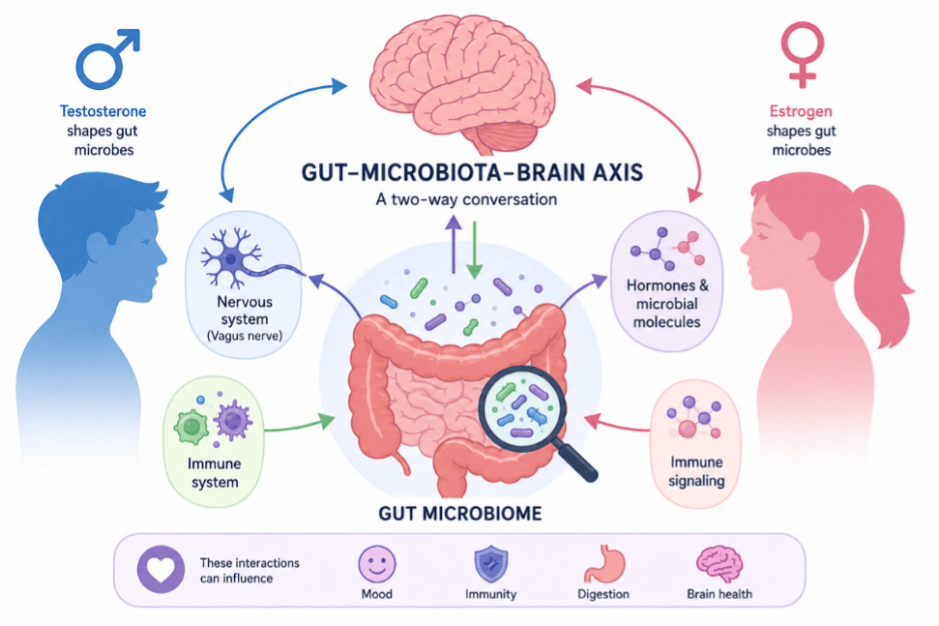
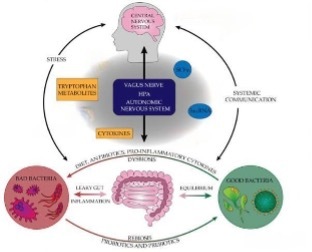
Chronic stress increases levels of neurohormones called catecholamines, which include norepinephrine and epinephrine. Not only do these hormones help coordinate the body’s response to stress, but they also reach the gastrointestinal tract to influence its environment and communication along the gut-brain axis. Yet exactly how bacteria detect and interpret these human signals remains unclear. In a recent study, researchers repurposed a stress-sensing system from a pathogenic bacterium to engineer a probiotic strain of Escherichia coli (E. coli) that could recognize stress hormones and produce a programmable response.
That gut pathogen is enterohemorrhagic E. coli, or EHEC, which uses a signaling pathway called QseBC to detect catecholamines. QseBC is a two-component system, which is a common bacterial mechanism that pairs a sensor (QseC) with a response regulator (QseB). Together, these proteins allow bacteria to detect changes outside the cell and adjust their gene expression accordingly. In EHEC, QseBC helps regulate behaviors, including movement, biofilm formation, and virulence.
The researchers wondered whether this pathogen-derived sensing system could be repurposed in a beneficial bacterium. They turned to E. coli Nissle 1917, a nonpathogenic strain commonly studied as a probiotic, and successfully introduced functional qseBC genes from EHEC.
In this system, QseC (the sensor) receives the call and QseB (the regulator) passes along the message. QseC is embedded in the bacterium’s inner membrane, with a sensor region extending into the space between its inner and outer membranes. When the sensor detects catecholamines, it activates the regulator, which can then bind to DNA and alter which genes are expressed. As hypothesized, Nissle carrying the EHEC QseBC system underwent broad changes in gene expression after exposure to the hormone. Affected genes included those involved in motility, quorum sensing, biofilm formation, and stress adaptation.
However, the initial response was not strong or predictable enough to make a useful biosensor, so the researchers had to redesign the genetic circuitry. To accomplish this, they modified a hormone-responsive promoter (a region of DNA that controls whether nearby genes are turned on) and the sensor to produce a system that responded better to increasing concentrations of catecholamines.
Detecting a hormone is useful, but the researchers also wanted the bacteria to respond. They therefore connected the optimized sensor to a secretion system. When exposed to catecholamines, the engineered bacteria released a protein containing a peptide called rCRF(9–41). This peptide is an antagonist of the corticotropin-releasing factor (CRF) receptor, meaning that it competes with the natural hormone for access to the receptor to block the signal it would normally transmit. CRF helps coordinate the body’s stress response, and in the gut, CRF signaling can promote inflammation and disrupt the intestinal barrier. In summary, when catecholamines are detected by the engineered bacteria, they release a peptide to block the CRF receptor, thereby decreasing gut inflammation.
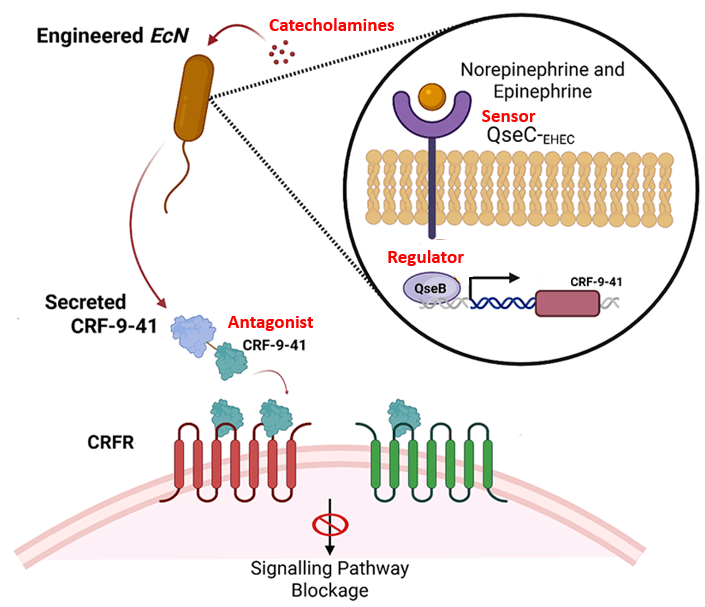
To determine whether the bacterially-produced CRF antagonist remained functional, the researchers purified it, enzymatically separated it from its secretion carrier, and applied it to cultured immune and intestinal epithelial cells. In fact, the peptide reduced several inflammatory responses triggered by CRF and limited the increase in epithelial permeability. Despite not testing the complete sensing-and-response system directly with mammalian cells, these experiments still showed that the bacteria could produce a biologically-active peptide.
When it comes to probiotics, most behave largely the same way regardless of conditions in the gut. Engineered microbes offer a designable opportunity to detect a signal associated with a particular physiological state and respond only when that signal is present. In theory, they could release a therapeutic molecule precisely where and when it is needed. Similar systems could potentially be adapted to recognize signals of intestinal inflammation, microbial metabolites, nutrient availability, or molecules produced by harmful pathogens.
However, this system is still a proof of concept. It remains unclear whether the sensor would be sufficiently sensitive and specific in the chemically complex environment of the human gut. Norepinephrine and epinephrine are also not unique markers of psychological stress, and their concentrations and accessibility in the intestine are difficult to measure. This study created a tunable, hormone-responsive microbial platform, not a probiotic treatment for stress. Still, this study is a solid foundation in microbial engineering, demonstrating that a signaling pathway borrowed from a pathogen can be rewired to connect a human hormone with a chosen bacterial output.
Link to the original post: Santosh Kumar Srivastava, S.K.; Foo, G.W.; Shen, H.; He, Y.; Wun, K.S.; Hwang, I.Y.; Goodson, M.S.; Aggarwal, N.; Chang, M.W.; Engineering inter-kingdom adrenergic signaling in commensals couples host stress hormone sensing to programmable biological outputs. PLOS Biology. (2026). https://doi.org/10.1371/journal.pbio.3003926.
Additional Sources:
To read more about stress and the gut-brain axis, click here, here, or here.
To read more about intestinal microbial interactions, click here.
To read more about QseBC, click here.
To read more about the flhDC gene, click here or here.
Featured image: https://depositphotos.com/vectors/stressed-stick-figure.html