
Breaking down the microbiology world one bite at a time
How Immune Signaling Keeps Candida albicans in Check
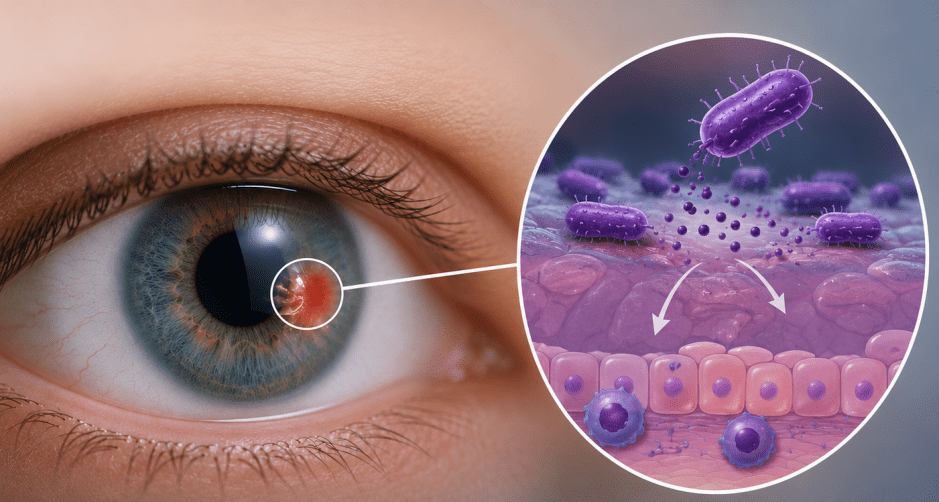
Most people carry Candida albicans in their mouths and guts without ever knowing it. This yeast is normally harmless, but in people with weakened immune systems it can invade tissue and spread through the bloodstream to organs like the liver- a complication fatal to many patients. A new study from researchers at King’s College London identifies a key defense system against this: the IL-1 family, a group of proteins which act as an early alarm and can prevent a mild mouth infection from becoming fatal.
IL-1 family members (including IL-1α, IL-1β, IL-33, and IL-36) are signaling proteins that cells use to let the body know there are foreign invaders. When mouse and human mouth tissue was infected with C. albicans, several IL-1 family genes switched on within just four hours. This response depended on candidalysin, a toxin the Candida releases as it grows. Essentially, the fungi’s own weapon tips off the immune system. Interestingly the team also confirmed that this toxin is also required for the fungus to invade and grow entirely; a strain that does not produce this toxin never spreads, even in vulnerable mice.
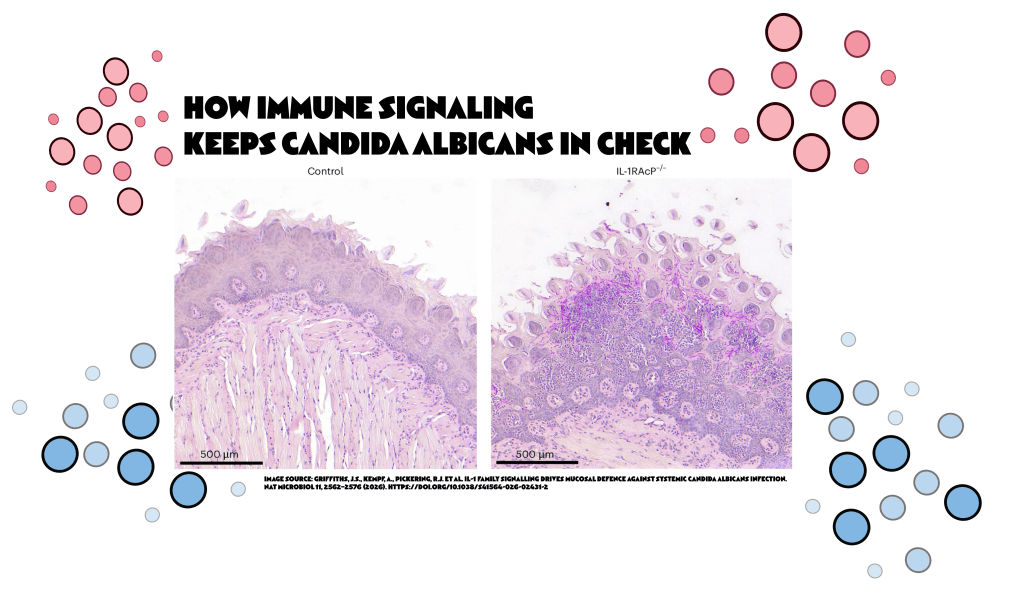
To test how important this alarm is, researchers used mice lacking a key piece that the entire IL-1 family needs to function. These mice struggled with a normally mild mouth infection: far more fungus, visible tissue damage, and weak production of both fungus-killing peptides and the protective signal (IL-17). However, the mice weren’t defenseless for long. By day three, a backup system of neutrophils (fast-acting immune cells) took over and cleared the infection, helped by a stress molecule that jumpstarts IL-17 production through a different pathway. This showed researchers that there were two arms of response, a fast one built around the IL-1 family, and a slower backup for when the first one fails.
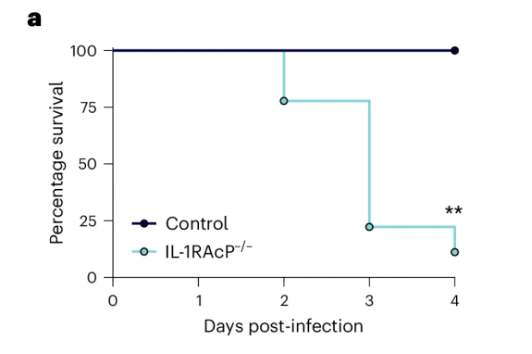
Unfortunately this backup system only works if there are neutrophils available. Many immunocompromised patients (including those undergoing chemotherapy) have too few of them, a condition called neutropenia. When researchers combined IL-1 deficiency with neutropenia, mice became critically ill and began dying within four days (as shown in survival curve below). For the first time in this kind of model, the fungus traveled from the mouth into the bloodstream and spread to the liver, spleen, kidneys, and brain, mirroring severe human disease.
This study shows that invasive candidiasis isn’t just about a “weak” immune system, but about specific, overlapping safety nets failing together. The findings suggest that measuring a patient’s IL-1 signaling could help doctors identify who’s at highest risk of dangerous fungal infection and that therapies boosting IL-1 activity might one day protect vulnerable patients.
Link to the original post: Source: Griffiths, J.S., Kempf, A., Pickering, R.J. et al. IL-1 family signalling drives mucosal defence against systemic Candida albicans infection. Nat Microbiol 11, 2562–2576 (2026). https://doi.org/10.1038/s41564-026-02431-2
Featured image: Adapted from original article