
Breaking down the microbiology world one bite at a time
Introduction to food leaves a lasting immune imprint
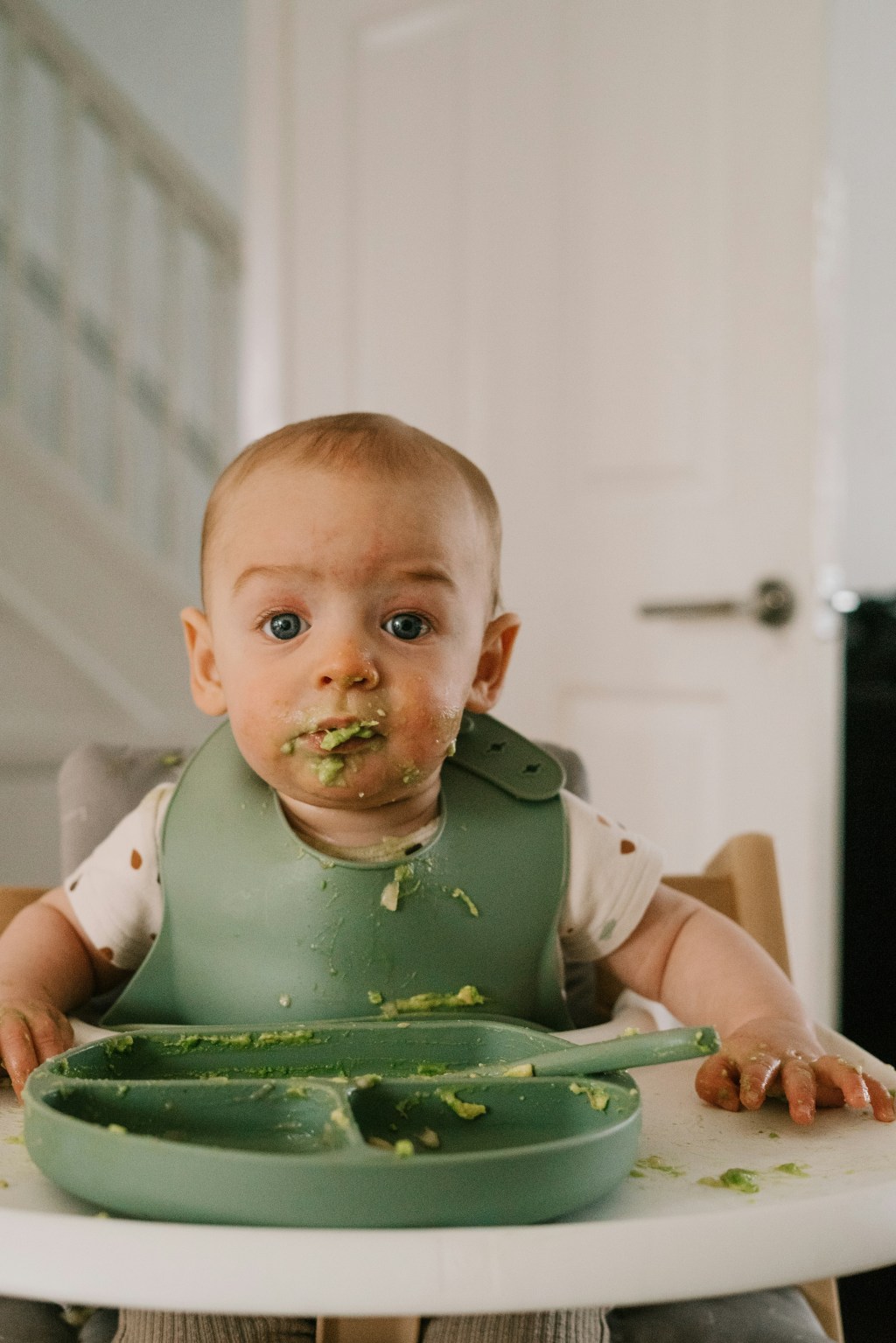
Babies experience a lot of “firsts”: a first tooth, a first step, and a first taste of solid food! That last milestone isn’t just a culinary adventure, it also plays a crucial role in shaping their developing immune system.
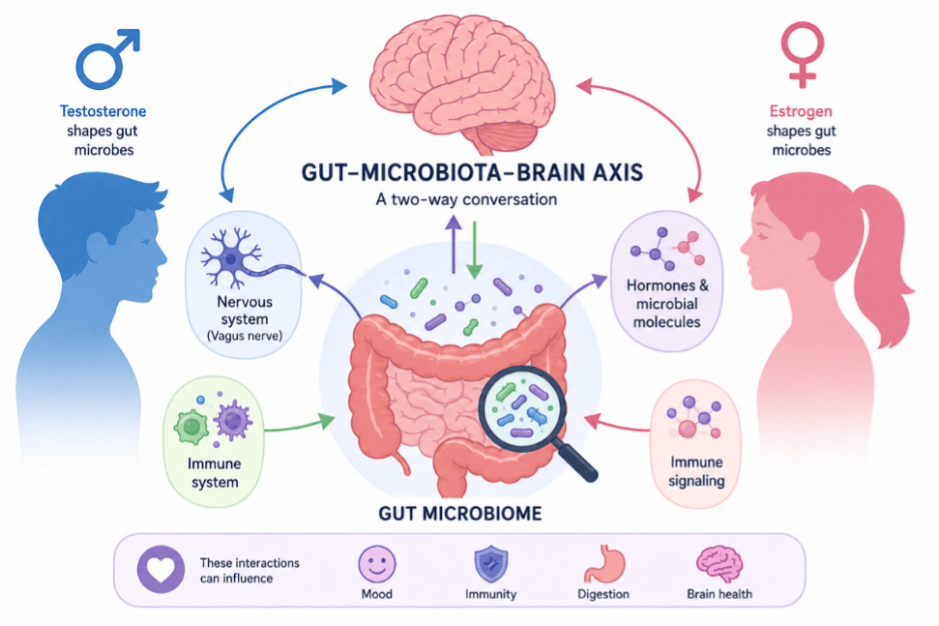
We know that the gut, the immune system, and the trillions of microbes living inside us interact closely, influencing each other from the very beginning of life. However, until recently, scientists weren’t exactly sure how, or whether the timing of these early interactions matters.
Enter the researchers at the USDA Children’s Nutrition Research Center in Houston, USA. They discovered that the gut microbiota can trigger epigenetic changes in intestinal multipotent stem cells, which provide long-term protection against harmful microbes, even later in life. If terms like “epigenetic” or “stem cells” make you dazzle: don’t worry – I’ll break them down step by step.
Epigenetics – or how your environment matters
Most of you have probably heard of DNA – the so-called “genetic code” that helps determine how you look, think, and even behave. But not everyone has heard of epigenetics. Simply put, epigenetics is the study of how your environment can influence the activity of your genes without actually changing the DNA sequence itself.
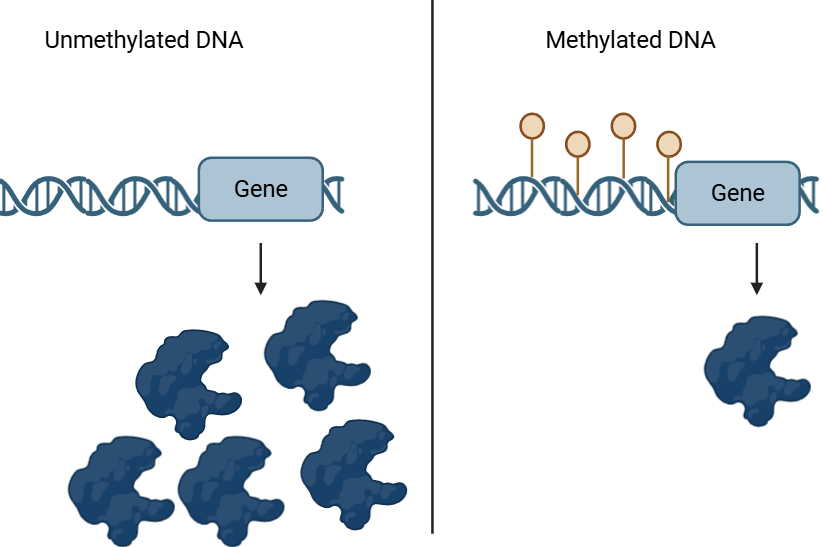
One way gene activity can be regulated without changing the DNA code itself is through a process called methylation. In methylation, a small chemical tag called a methyl group is added to specific regions of DNA. These regions often include promoters, i.e. the “start line” where we begin to read a gene, or enhancers, which act like “boosters” that increase a gene’s activity. The presence or absence of methyl groups in the promoter and enhancer regions can make genes more or less active (Figure 1).
The regenerating power of intestinal cells
The mammalian gut is a remarkably complex system. On a large scale, it is divided into the stomach, small intestine, and large intestine. But complexity also exists at the microscopic level, where a diverse range of specialized cell types work together to maintain proper function. These include enterocytes (which line the gut and absorb nutrients), goblet cells (which produce protective mucus), enteroendocrine cells (which secrete hormones), and Paneth cells (which contribute to immune defense).
Because the gut is constantly exposed to food, digestive enzymes, and vast numbers of microorganisms, its lining is under continuous stress. As a result, many of the above-mentioned cells are damaged or lost quite rapidly. To maintain an effective barrier and ensure proper digestion and absorption, the intestinal lining must renew itself every 3–5 days.
This is where stem cells come in. These cells are multipotent, meaning they are not yet specialized but retain the ability to develop into all the different cell types found in the intestinal lining. By continuously dividing and differentiating, stem cells act as a biological renewal system, constantly replenishing the gut lining and keeping it functional.
Small bites, big consequences
Now we know what epigenetics and stem cells are, we can go back to the babies and their foods.
In the paper, researchers show that a baby’s first solid food introduces an entirely new community of microbes. These newcomers don’t just pass through; they actively interact with the intestinal stem cells by reshaping the methylation patterns of certain enhancer regions. This subtle reprogramming helps gut cells respond faster and more effectively to harmful invaders.
Even more striking is how long this effect lasts. The changes triggered during those first bites can persist for years, providing long-term protection. The driving forces behind this long-term protection are the stem cells. Because these cells continuously divide and renew the gut lining, they pass the changes on to their daughter cells, allowing the effects to be maintained over time.
Experiments in mice underline how important these processes are: when the early microbes or their interactions with gut cells were disrupted, by for example antibiotic treatment, the immune system clearly suffered. The risk of conditions like IBS or colon cancer for instance increased significantly.
Overall, our first spoonfuls of food may shape our gut health far more profoundly than we ever realized. Whether the exact timing, type of food, and class of microbes are important, needs to be further investigated.
Link to the original post: Yang, L., Peery, R.C., Zhou, S. et al. Weaning drives microbiome-mediated epigenetic regulation to shape immune memory in mice. Nat Microbiol 11, 1064–1079 (2026).
Featured image: Photo by Toa Heftiba on Unsplash