
Breaking down the microbiology world one bite at a time
Uncultured and Understudied
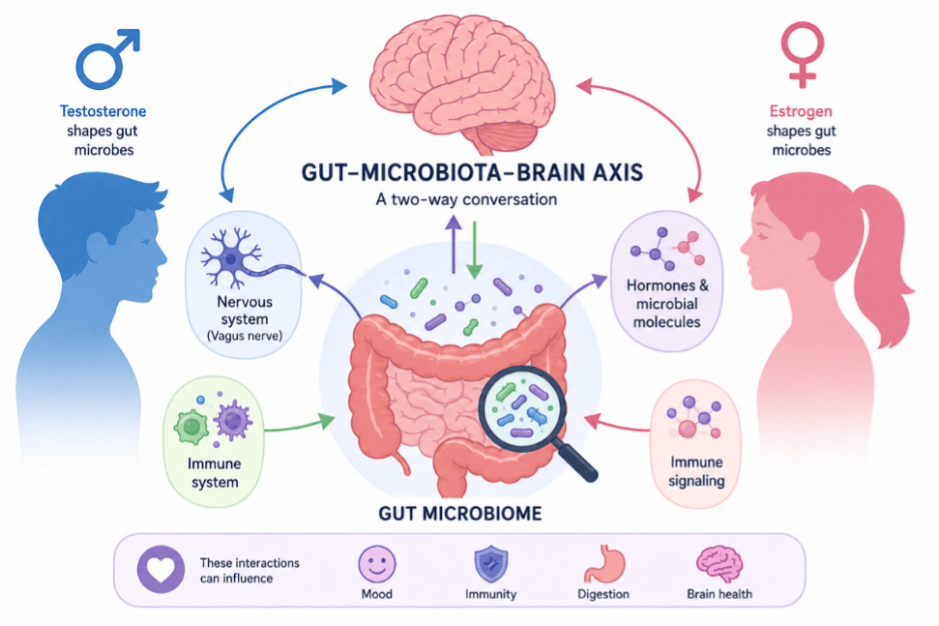
Our gut microbiome consists of trillions of bacteria, archaea, and fungi that maintain homeostasis in the digestive tract and beyond. This community of organisms work together to ensure critical nutrient absorption and resistance against unwelcome pathogens. Dysbiosis, or an imbalance of this well-oiled microbial machine, can lead to many health issues and noncommunicable diseases- including Crohn’s disease, chronic fatigue syndrome, ulcerative colitis, and obesity.
More than 60% of gut microbiome species have yet to be identified. This profound population of unknown species could hold the key to understanding disease manifestation across the globe. Just recently, researchers at the University of Cambridge successfully linked a genus, CAG-170, to healthy populations worldwide. There has finally been a shift in understanding the vast ecosystem within our bodies- but what does this mean? Let us discuss how this research was done, and what insights it provides.
Bacteria can be characterized into two groups when it comes to laboratory work: cultured and uncultured. Uncultured bacteria are those that researchers have tried to grow in the lab with no success, or have yet to be isolated. This means that scientists are not able to conduct crucial experiments or testing of this live bacteria. Due to this characteristic, these bacteria are less understood than others, and CAG-170 falls within that group. The cryptic code name CAG-170 is a placeholder name, as uncultured and newly discovered bacteria are often given temporary labels until they can be further described.
To work around this barrier of the uncultured bacteria, researchers used the genetic “fingerprint” of the genus to find traces of it throughout 11,115 samples. This large dataset of human gut metagenomic samples (meaning DNA from microbial communities in the gut) came from across the globe and ranged from healthy individuals to those with certain diseases. Using data analysis tools and code, researchers were able to sift through thousands of samples to identify those with the CAG-170 fingerprint.
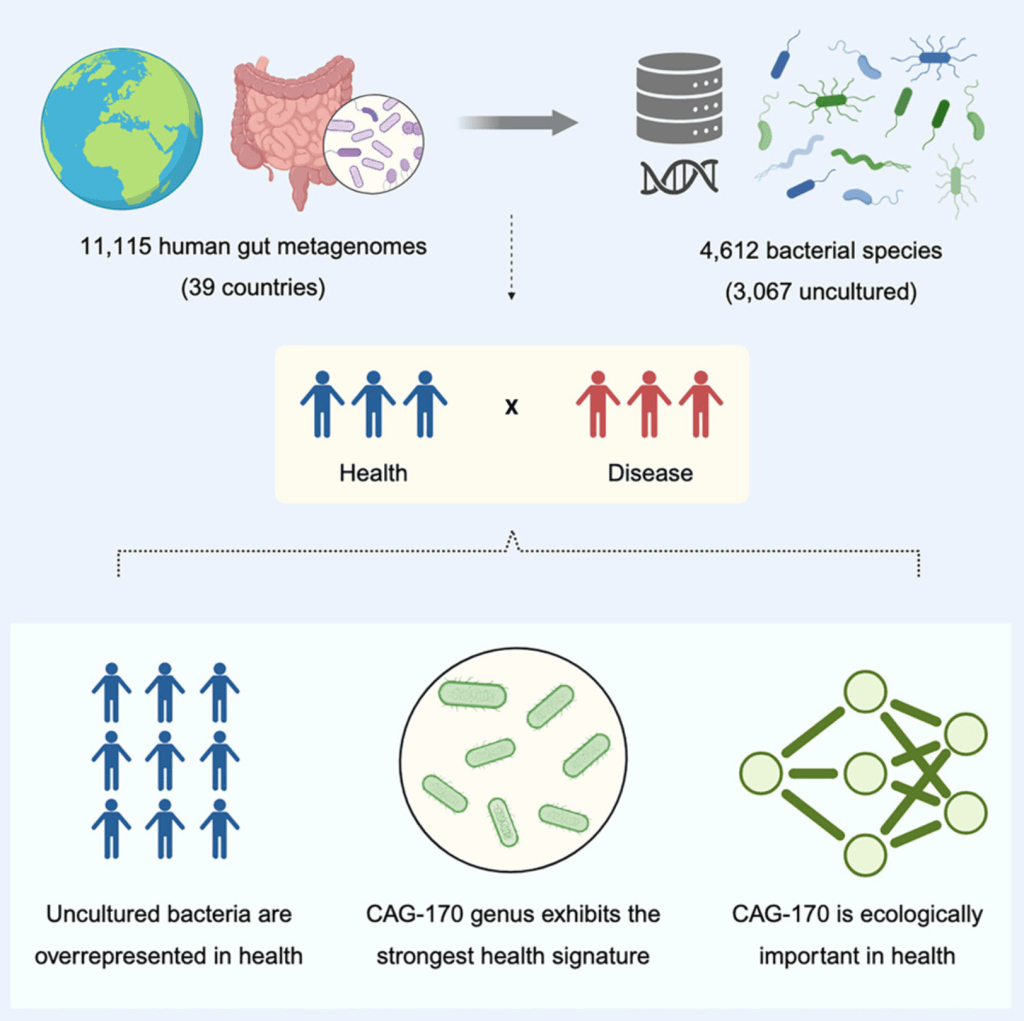
Remarkably, this genus had the strongest association with healthy populations worldwide. This means something about CAG-170 might give individuals an advantage toward a healthy life. After the initial link between CAG-170 and healthy individuals, researchers looked at the microbiome diversity of the healthy dataset as a whole. What they found was fascinating- CAG-170 was not necessarily the most common bacteria present, but it was the most interconnected. Think of this like an airport: not every traveler passes through the same small regional airport, but lots of people pass through the major hubs. CAG-170 ranked in the top 1% of species acting as these critical hubs in the gut ecosystem, consistently connecting other bacterial species across healthy individuals worldwide.
After these findings, researchers decided it was time to dive even deeper into the biological mechanisms of these bacteria. Using computational tools called gutSMASH and antiSMASH to analyze the available CAG-170 genomes, researchers were able to predict the metabolic pathways these bacteria use to break down and build molecules- providing a workaround to the barrier of not being able to grow them in the lab. The analysis revealed that CAG-170 possesses an impressive toolkit: enzymes for generating energy in the oxygen-free environment of the gut, pathways for producing a beneficial molecule called R-acetate (a short-chain fatty acid that supports gut health), the capacity to produce β-lactones (small molecules that may help fight off harmful bacteria or send chemical signals to neighboring microbes) and the ability to break down a wide variety of carbohydrates.
To understand what makes CAG-170 special, researchers compared 332 CAG-170 genomes against over 4,000 genomes from other members of its broader bacterial family, Oscillospiraceae. The most striking discovery emerged: CAG-170 genomes were uniquely enriched for genes covering the vitamin B12 biosynthesis pathway. Rather than this B12 directly benefiting us as the human host, researchers believe CAG-170 produces it as a resource for neighboring gut bacteria. The key clue is that CAG-170 is missing the very enzymes it would need to use B12 itself, while those same enzymes are found in the bacteria living alongside it. In other words, CAG-170 appears to be producing a vitamin it cannot use (essentially donating it to its neighbors) making it a keystone provider that quietly keeps the broader microbial community running smoothly.
With this distinction of the CAG-170 genus, it is now time to push for more exploration into unknown bacteria. Researchers continue to develop new techniques to grow uncultured bacteria and better understand their patterns, growth, and mechanisms. This discovery unlocks doors for understanding how significant our microbiomes are to a healthy body, and possibly ways to help those who suffer from chronic illness and disease.
Link to the original post: Ana C. da Silva, Jacob Lapkin, Qi Yin, Efrat Muller, Alexandre Almeida, Meta-analysis of the uncultured gut microbiome across 11,115 global metagenomes reveals a candidate signature of health, Cell Host & Microbe, 2026, ISSN 1931-3128, https://doi.org/10.1016/j.chom.2026.01.013.
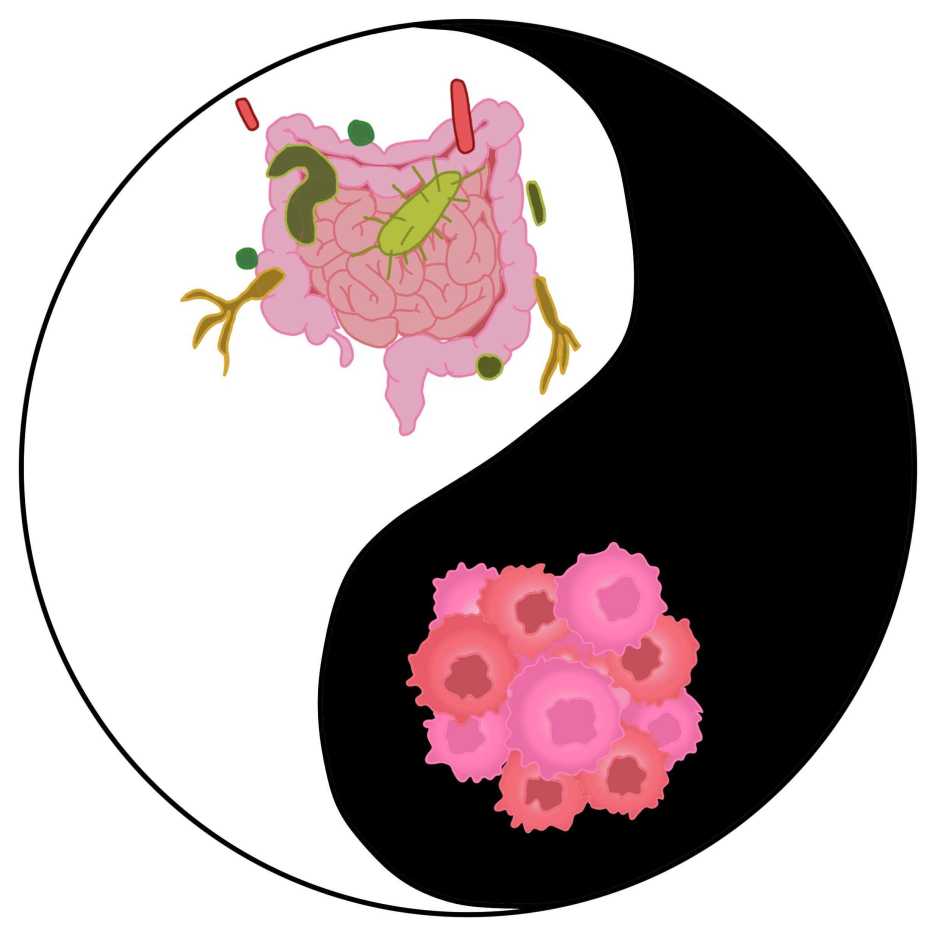
Featured image: created by author using Sketchbook software