
Breaking down the microbiology world one bite at a time
Teamwork: Fighting antimicrobial resistance
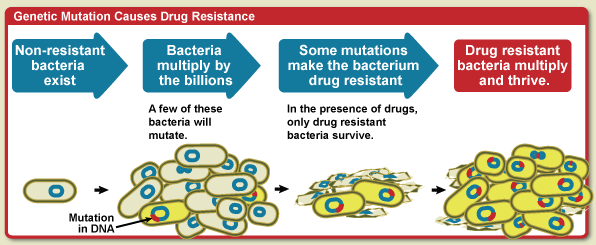
Humanity finds itself in the midst of a deadly crisis. Which one? In this case, it’s antimicrobial resistance (AMR). Antibiotics are used to treat bacterial infections. Over time, bacteria can mutate and develop resistance to a specific antibiotic. Bacteria can block the drug from killing it. With no other treatment strategy, an infection can turn deadly. And it’s not just bacteria. Fungi and viruses develop AMR too. More than 1 million people die from these infections each year, and that number is on the rise.
So what can we do? Stopping the development of AMR is a complex undertaking that clearly isn’t working—the problem keeps getting worse. If the old medicines don’t work, why not just make new ones? For practical and financial reasons, antibiotic development is lacking. No new classes of antibiotics have been discovered since the 1980’s. We’re left with the next best thing: enhancing the antibiotics that already exist.
This idea isn’t new. Several antibiotics combined with a non-antibiotic substance have been on the market for decades. Take co-amoxiclav, for example. Clavulanic acid is combined with the antibiotic amoxicillin. Clavulanic acid prevents amoxicillin from being broken down before it gets the chance to kill bacteria. With millions of prescriptions written every year, it’s likely you’ve taken it before. But these combination medicines are still few and far between.
We need new substances to combine with antibiotics. The answers might be found not just in the lab, but in the history books. For thousands of years, essential oils have been used in medicine. The first documented use was in ancient Egypt (around 4500 BC), and evidence shows they were used in traditional Chinese and Indian medicine. Bandages often contained oils to help wounds heal. They discovered antibacterial treatments before the discovery of bacteria itself!
Better together?
Researchers at the University of Teramo wanted to find out if tetracycline-resistant (Tc) Salmonella enterica could once again become susceptible to the drug—with a little help. They took a page out of the history books and tested the essential oils (EOs) of three plants: Coridothymus capitatus, Thymus capitatus L., and Thymus serpyllum. All three are species of wild thyme that grow in the Mediterranean.
They isolated 11 different S. enterica strains from pig farms. For each strain, they measured the effectiveness of the Tc and EOs using two important tests in microbiology: the minimum inhibitory concentration (MIC) and minimum bactericidal concentration (MBC). The MIC is the lowest concentration of a drug that stops bacteria from growing. The MBC is the lowest concentration of a drug that kills bacteria completely.
The testing was set up like this: Tc alone, and Tc plus each EO separately, for a total of four combinations tested against each strain. The MIC and MBC were measured after 24 and 48 hours. Ten strains were completely resistant to Tc. Of these 10 strains, all of them showed susceptibility to Tc when combined with each of the 3 EOs. In other words, all essential oils allowed the antibiotic to kill the bacteria, effectively “reversing” AMR.
To get a better understanding of how exactly the EOs worked with the Tc, they ran tests to understand the phytocomplex of each EO. Phytocomplex describes the chemical composition of each EO, identifying the substances that have antibacterial abilities. Out of over 50 chemicals identified, carvacrol was found to be the main antibacterial component in all 3 EOs. Carvacrol works by damaging the bacterial membrane, allowing the antibiotic to enter more easily. It also gives oregano its distinctive warm smell.
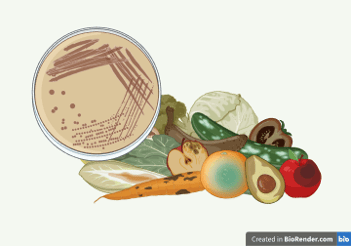
This study highlights a key aspect of AMR that’s often overlooked: human infections are only the beginning. Untreatable bacteria in agriculture can have devastating effects all along the food chain. Diseased animals and crops lead to culls, which means higher production costs. Food becomes more expensive and less available. People already living in poverty would be hit the hardest. AMR is one of the greatest challenges the world faces, and we can’t afford to ignore it. We’ve got enough on our plate.
Link to the original post: Maggio F, Lauteri C, Rossi C, Ferri G, Serio A, Vergara A, Paparella A. Combined effect of Tetracycline compounds and essential oils on antimicrobial resistant Salmonella enterica isolated from the swine food chain. Front Microbiol. 2024 DOI: 10.3389/fmicb.2024.1439286
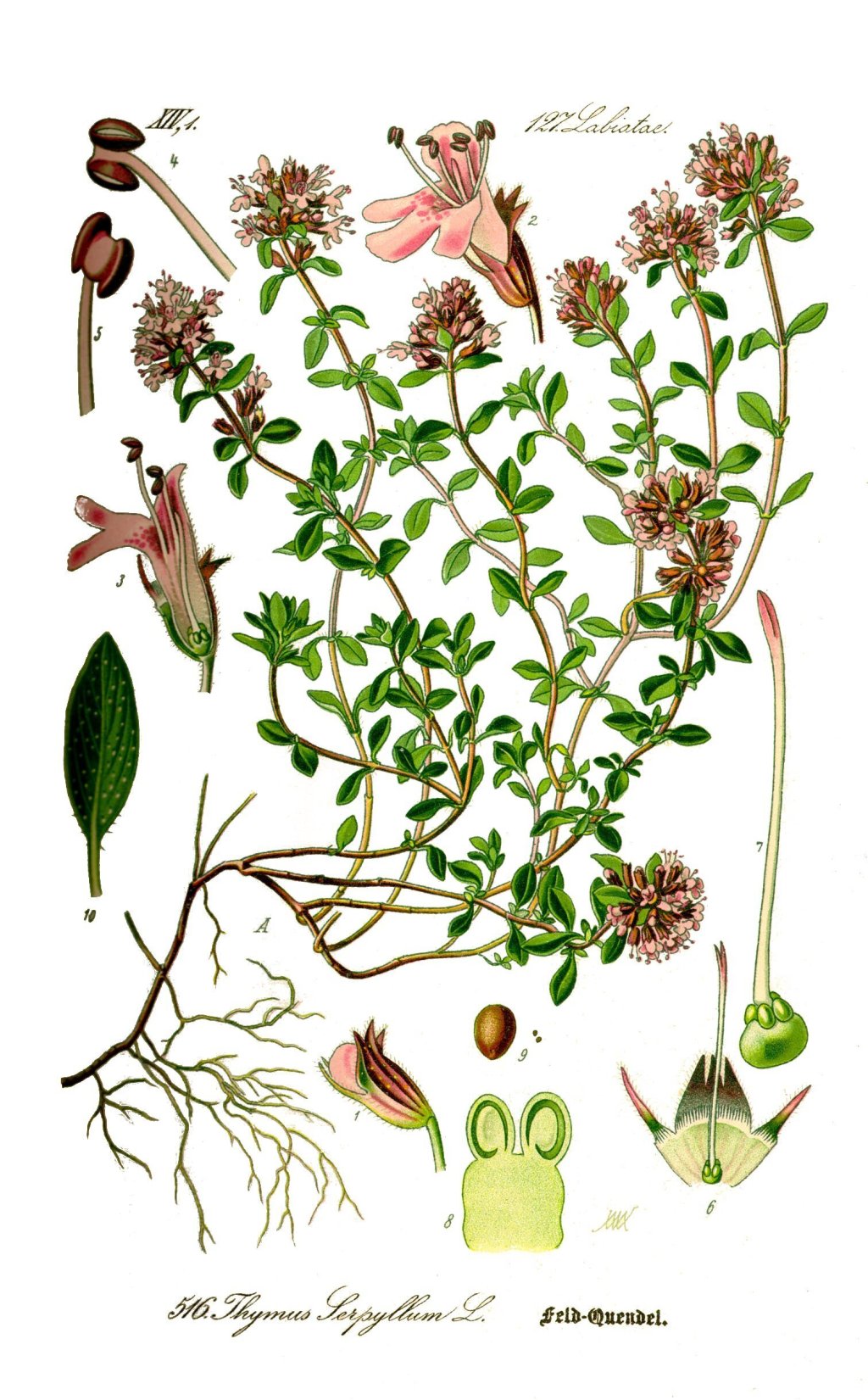
Featured image: Thymus serpyllum illustration featured in Flora von Deutschland, Österreich und der Schweiz, published 1885. Image source: Public Domain, via Wikimedia Commons.