
Breaking down the microbiology world one bite at a time
The antimicrobial benefits of Tea tree oil and its uses against infections
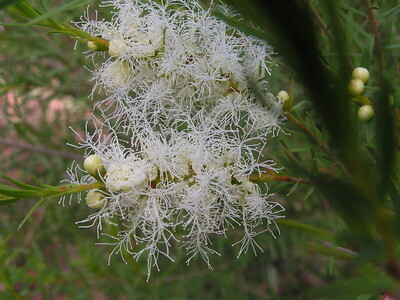
Over the years tea tree oil has been used in many different forms to treat various conditions, such as for hair growth, blemishes, acne, athlete’s foot, wounds, burns and insect bites. Tea tree oil (TTO) is extracted from the leaves of the plant Melaleuca alternifolia. Native Australians have used TTO for medicinal uses for almost 100 years. The oil is extracted by steam distillation – a separation process where the leaves are condensed by steam and is manufactured worldwide. The required concentration of TTO commercially in a product ranges between 2 to 5%, which may be purchased either over the counter or online.
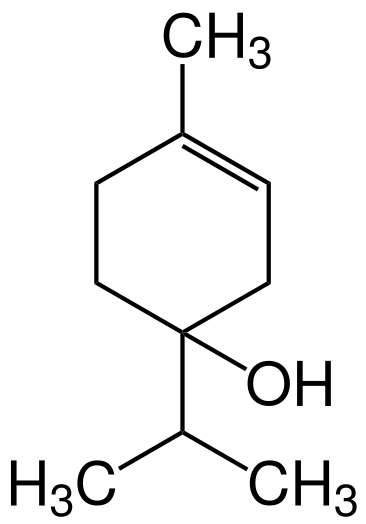
Through research the main component found in TTO is Terpinen-4-ol, which is responsible for the antimicrobial activity of the oil. Terpinen-4-ol increases disruption of the bacterial membrane by decreasing its fluidity and the release of the intracellular components. This disruption causes ion imbalance, which leads to lysis and cell death. Terpinen-4-ol is also a compound of terpineol, and a component of terpene, that has demonstrated inhibition of bacterial growth such as in Candida albicans (C. albicans). A study conducted by Tuan et al. (2025) evaluated the inhibition of C. albicans biofilm formation by TTO.
Biofilm formation occurs when a group of microorganisms attaches to a surface to create a matrix structure; the behaviour of the microorganisms is dependent on the condition of the environment. The nutrient properties within the micro-organisms are encapsulated by the hydrophilic H – bonds. Therefore, the highly hydrated surface allows the microorganisms to interact and exchange genetic information, as well as protect the microorganisms from the innate immune system. However, the process of interaction and dispersal in mature biofilms becomes optional. Stability of biofilm formation is regulated by the signals received by 3,5-cyclic diguanylic acid (c-di-GMP).
Nevertheless, a method using C. albicans demonstrated that the bacteria can form strong biofilm formation when grown in a Hansen medium with a supplement of D-glucose of approximately 2.5% concentration. Although the study also showed that higher concentrations of D-glucose at 5% and 10% also inhibited biofilm formation.
Furthermore, an experiment was conducted using various concentrations of terpinen-4-ol in TTO, specifically starting at 2 microlitres to every 1 millilitre of sterile distilled water and Tryptone Soy Both (2μL/mL) to 10μL/mL (Image-2). The experiment revealed that the higher concentrations of TTO exhibited stronger inhibitory effects and antifungal activity against C. albicans biofilm formation. Hence, Terpinen-4-ol as a terpene has the ability to change the biofilm cell membrane layer by disturbing its fatty acid chain.
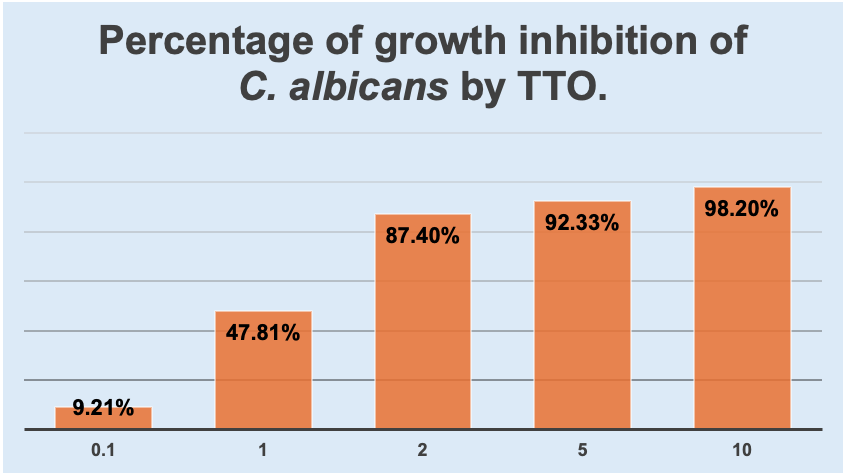
This leads to alterations in the cell state of the microorganism and reduction of adhesion for the biofilm to attach to cell surfaces. This inhibition could also imply downregulation of 3,5-cyclic diguanylic acid signals within biofilms. However further research is required to prove evidence for this hypothesis. This experiment potentially confirmed that higher concentrations of terpinen-4-ol in TTO is required for inhibition of the bacterial biofilm formation.
Another study observed the antimicrobial activity of terpinen-4-ol against another bacteria called Staphylococcus aureus (S. aureus), and the outcome also revealed that an agent was able to inhibit the biofilm formation.
The efficacy of Terpinen-4-ol as an anti-cancer agent was evaluated against cancer cells. The outcome of another study revealed that the combination of terpinen-4-ol and anti-CD42 antibodies inhibited certain prostate, pancreatic and gastric cancer cell lines as the concentration was increased. However, terpinen-4-ol can exhibit toxic effects at high concentrations towards the skin and mucosal tissue, yet these levels of toxicity are not mainly observed in common antimicrobial products.
Nevertheless, the toxicity of terpinen-4-ol was not specifically assessed in the investigation, therefore the study stated that future experiments would be required to effectively evaluate the safety of modified TTO.
To conclude, although the toxicity of TTO needs further testing and it may develop signs of an allergic reaction, the substance also has shown to have many medicinal benefits to reduce certain infections and skin conditions; this includes to moisten dry scalps and maintain healthy hair. Therefore, to ensure the safe use of TTO, further investigation is required to increase the reliability of the product and reduce the possibility of unknown future side effects.
Link to the original post: Tuan, D.A., Pham, Khuon, N.V., Ly An Binh and Masak, J. (2025). Innovative antifungal strategies: enhanced biofilm inhibition of Candida albicans by a modified tea tree oil formulation. Frontiers in Microbiology, 15. Doi:https://doi.org/10.3389/fmicb.2024.1518598.
Featured image: flickr.com
Additional sources:
Medicalnewstoday.com (2019). Tea tree oil for skin: Uses and benefits. [online] http://www.medicalnewstoday.com. Available at: https://www.medicalnewstoday.com/articles/326376#side-effects.
Barrett, H. & (2021). Tea Tree Oil: Uses & Benefits | Holland & Barrett. [online] http://www.hollandandbarrett.com. Available at: https://www.hollandandbarrett.com/the-health-hub/natural-beauty/aromatherapy/tea-tree-oil-uses-and-benefits.