

Breaking down the microbiology world one bite at a time
Dandruff as explained by forensic science
Forensic analyses are the fundamentals of criminal investigations. One of the key techniques used in forensic science is DNA technology, which identifies individuals with extreme accuracy based on their distinct genetic makeup. Saliva, blood, and hair are the most commonly used biological samples for the extraction of DNA from the crime scene.
In recent years, dandruff has emerged as a new biological source for a person’s DNA. Dandruff is a common skin condition that causes dryness and itchiness, leading to the shredding of dead scalp skin cells. A probable reason for this condition is a complex interaction between the natural microbiome of the scalp (species of Malassezia yeast), sebum (oil) production, and inflammation. Malassezia is a lipophilic resident yeast found in sebaceous-gland-enriched skin regions1. Malassezia resticta, M. globosa, M. sloofiae, M. furfur, M. obtuse, M. pachydermatis, and M. sympodialis are the seven species that have been linked to the development of dandruff2. Along with the Malassezia spp., the bacterial species, Staphylococcus epidermidis and S. aureus are also known to be associated with dandruff scalp1,3.
Possible mechanisms of dandruff formation
It has been demonstrated that M. restricta causes tissue toxicity and disturbance of the skin barrier. Research indicates that extracellular secretions from Malassezia species cause dandruff and interact directly with the host through pattern recognition receptors (PRRs). Malassezia secretes enzymes such as lipases and phospholipases that can break down sebum on the surface of the skin into fatty acids. The high concentration of unsaturated fatty acids, such as arachidonic acid and oleic acid, on the skin’s surface can cause disruption of the epithelial barrier, inflammation, and proliferation of the epidermis. Apart from excretions, the PRRs can identify Malassezia directly and trigger downstream inflammatory pathways. Further, Malassezia produces unsaturated fatty acids that raise the pH of the surrounding medium, which is ideal for S. aureus growth and attachment to keratinocytes. The relative abundance and elevated level of Staphylococcus in the scalp lesions are positively connected with both the scaly and itchy scores of dandruff and epidermal barrier degradation1.

Three etiological factors are often identified for dandruff: Malassezia yeast, sebum secretions from sebaceous glands, and individual vulnerability. Triglycerides, fatty acids, wax esters, sterol esters, cholesterol, cholesterol esters, and squalene are all complexly mixed in human sebum. These triglycerides and esters are converted into diglycerides, monoglycerides, and constituent-free fatty acids by the commensal microorganisms in the scalp. Therefore, as the activity of the sebaceous gland increases, a new food source becomes available for the Malassezia species. The lipases secreted by these organisms degrade any triglyceride in their surroundings, consuming the saturated fatty acids important for their growth and proliferation and leaving behind unsaturated fatty acids on the skin. This, in turn, results in itching and flaking of the scalp4.
Numerous factors, including over-colonization of Malassezia sp., imbalance in the bacterial species of the scalp, impairment in the functioning of the epidermal barrier, higher production of fatty acid metabolites derived from sebum and squalene peroxidation, and perivascular leukocyte infiltration, are involved in the pathogenesis of dandruff. These factors can cause mild skin inflammation and activate an immune response, either separately or in combination. This leads to the growth of basal layer epidermal keratinocytes (skin cells), which consecutively contributes to the production and shedding of corneocytes (dead skin cells). This condition is clinically characterized as dandruff5.
Dandruff in Forensic Science
The use of dandruff as a source of DNA poses several advantages. To start with, dandruff is easily accessible and is a non-invasive sample. It can be easily collected from an individual, or various personal items, such as clothing and combs. Secondly, when compared to other samples, dandruff is more stable and less susceptible to degradation. Further, dandruff contains a higher concentration of DNA, thereby making it a valuable crime scene sample and an excellent source for the analysis of DNA. In addition to criminal investigations, dandruff samples can also be used to extract DNA for the identification of victims of a mass disaster, or missing people, or to study genetic variations in a population.
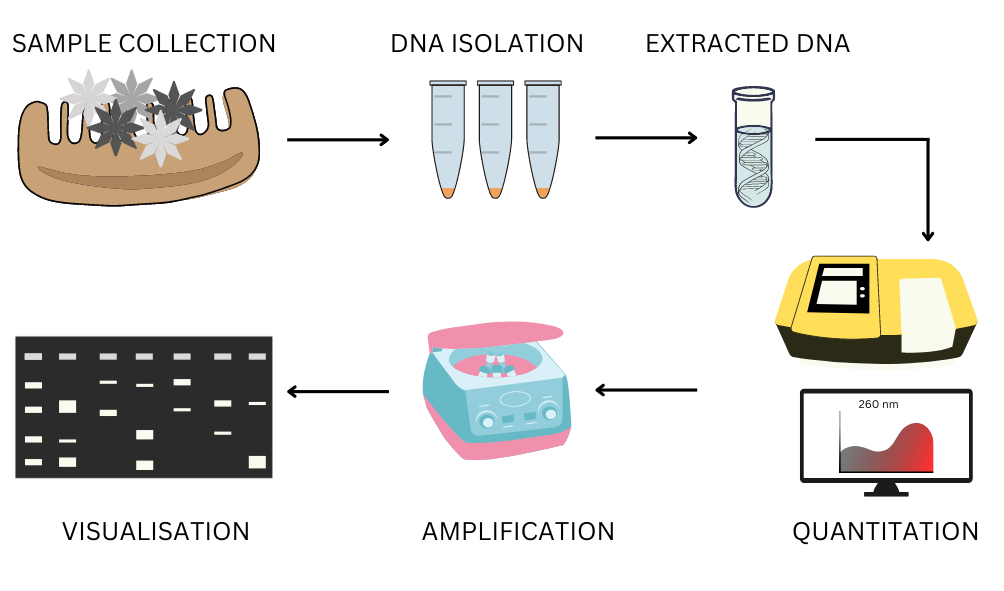
Recently, Pawan Mandal and Isha Rajput provided a simple and cost-effective method that can be used in forensic investigations for the isolation of high-quality DNA from samples of dandruff. For this study, dandruff samples were collected from 50 individuals using sterile combs. A 10% bleach solution was used to remove any contaminants from the samples. The air-dried samples were then used to extract DNA using a commercial kit for DNA extraction. The DNA was further analyzed for quantity and quality and amplified by polymerase chain reaction to generate enough copies for further examination. The amplified DNA was visualised using gel electrophoresis. The DNA extracted using this method was high in concentration and purity making it suitable for downstream processes, such as sequencing and genotyping. Furthermore, this method generated strong and reproducible profiles for all the dandruff samples tested.
Case study
In 2004, a British man, Andrew Pearson, was sentenced to 12 years of prison for robbery and 3 consecutive years for possession of a firearm. The proof of his presence at the crime scene was found by matching the DNA from his saliva sample with the DNA from his dandruff flakes found in the stockings he had worn as a mask at the time of the robbery in 19936.
Link to the original post: Original article: P. Mandal, and I. Rajput, Isolation and extraction of DNA from dandruff: A novel approach for forensic science, International Research Journal of Engineering and Technology, 10(5), 481-487, May 2023. DOI: 10.13140/RG.2.2.20518.29766
Additional sources:
- R. Tao, R. Li, R. Wang. Skin microbiome alterations in seborrheic dermatitis and dandruff: A systematic review. Experimental Dermatology, 30(10), 1546-1553, October 2021. DOI: 10.1111/exd.14450.
- S. Ranganathan and T. Mukhopadhyay. Dandruff: The most commercially exploited skin disease. Indian Journal of Dermatology, 55(2), 130-134, April-June 2010. DOI: 10.4103/0019-5154-62734.
- R. Saxena, P. Mittal, C. Clavaud, D.B. Dhakan, P. Hegde, et al. Comparison of healthy and dandruff scalp microbiome reveals the role of commensals in scalp health. Frontiers in Cellular and Infection Microbiology, 8, October 2018. DOI: 10.3389/fcimb.2018.00346.
- B.I. Ro and T.L. Dawson. The role of sebaceous gland activity and scalp microfloral metabolism in the etiology of seborrheic dermatitis and dandruff. Journal of Investigative Dermatology Symposium Proceedings, 10(3), 194-197, December 2005. DOI: 10.1111/j.1087-0024.2005.10104.x.
- S.L. Limbu, T.S. Purba, M. Harries, T.C. Wikramanayake, M. Miteva, et al. A folliculocentric perspective of dandruff pathogenesis: Could a troublesome condition be caused by changes to a natural secretory mechanism? BioEssays, 43(10), 2100005, October 2021. DOI: 10.1002/bies.202100005.
- https://www.cbsnews.com/news/bandit-undone-by-his-dandruff/
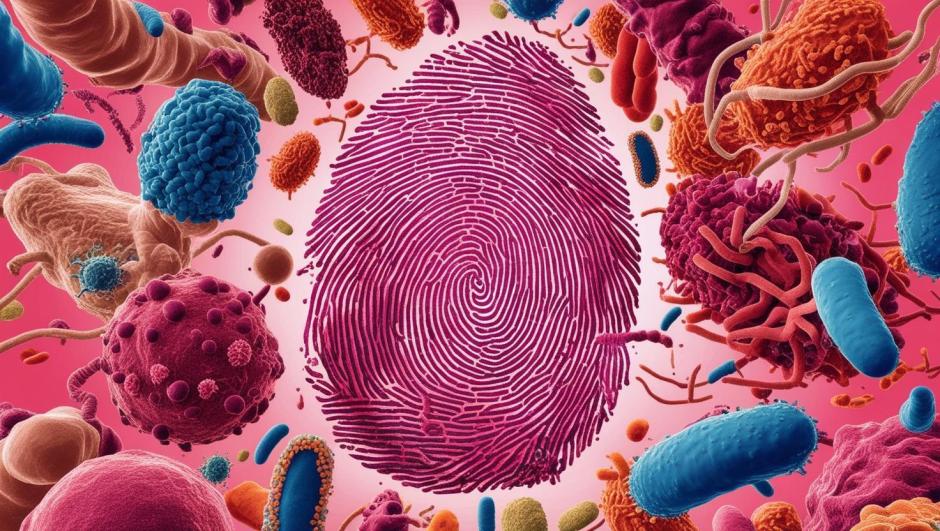
Featured image: Created by the author using Canva














































 micro-bites.org