

Breaking down the microbiology world one bite at a time
Minimalism in the microbial world
In today’s consumer economy, there is frequent discussion about adopting a minimalist lifestyle — one where individuals purchase and enjoy only what they truly need, and nothing beyond, hence leaving the excess behind.
Minimalism and bacteria
In the natural existing microbial communities, we don’t often come across minimalism. Microbial genomes are full of genes, the role of some yet unknown to humankind. The versatile nature of these genes helps the microbes utilise them both under normal and adverse conditions. For years the research community has been trying to create minimalist versions of many microbes and apply them for the development of engineered strains capable of producing beneficial bio-products. By removing non-essential genes and retaining only the necessary ones, scientists can design microbes for specific tasks, such as bioremediation, biofuel production, biopreservation agents and even vaccines. But, as we all know, everything evolves, just like us humans who have evolved from typewriter specialists to ones who almost live inside their fancy gadgets. Jokes aside, humans evolved by gradually developing traits that helped them survive and thrive in different environments over a very long time. Similarly, bacteria evolve, but at a much faster pace than humans, or at least it appears that they evolve fast, because their life span is smaller than humans!
A question that has bothered many in the scientific community is how a minimalist cell evolves. It is hard to study the evolution of microbes with non-minimal genomes given the sheer amount of genes. However, it is relatively easy to study the evolution of microbes with minimal genomes, because with fewer genes, it is easy to track which ones drive the evolution. At an application level, it is important to understand evolution of all microbes, minimal or not. In our daily lives we rely on several microbial products like cheese, probiotics and vaccines, to name a few. Even under seemingly constant conditions, all microbes evolve including the ones that are present in the products that we consume. Hence, it is crucial to understand the evolution of these microbes, enabling us to grasp the potential health risks or benefits they present. This understanding is essential for anticipating their behavior in adverse circumstances (competition with other microbes; heat, temeprature and pH change) or even in a stable environment.
Recently, a group of scientists investigated the evolution of minimalistic bacterial cells of Mycoplasma mycoides (M. mycoides), consisting of only 493 genes compared to its non-minimal version (901 genes). The minimal genome has tinkered DNA replication fidelity genes. The latter genes are crucial for all organisms. They proofread and correct mistakes every time a genome replicates and contribute to the genome’s overall stability. In the current study, there were multiple findings, 2 of which will be discussed in this blog:
- The fitness spectrum is not linear or even progressive for the minimal cells.
- The minimal genome has an equivalent mutation rate to complex genomes.
To explain the above two points better, we have to look at the existence of a bacterium from the perspectives of life, health and death..
What does it mean for a bacterium to be fit?
Fitness is a different concept in the bacterial world compared to what we commonly know. For humans, fitness means taking care of our health and keeping ourselves active. Most of this also correlates to our body’s ability to utilize the nutrients, carbs, proteins and fats to their best capacity. For bacteria, fitness refers to their ability to not only utilize the nutrients better but also to replicate (in other words reproduce) faster. A human life span is far bigger than that of bacteria. That is why it is easy to observe bacterial replication under experimental conditions. This is also why microbiologists/scientists talk about bacterial life spans in ‘generations’. 1 week in a human lifespan can mean thousands of generations for bacteria. The authors of the study found that the bacteria initially lost nearly 50% of their fitness capacity. They attributed it to the genome loss of these minimal cells. After growing M. mycoides repeatedly in the lab for 2000 generations, the authors found that this lost fitness was regained and was similar to the non-minimal M. mycoides. In simple words, the minimal genome of M. mycoides is not doomed. It can even perform comparably to that of the non-minimal genome after undergoing the ‘fitness’ roller-coaster ride.

Mutation rates of bacterial genomes
Compared to 3 billion base pairs on 23 chromosomes of the human genome, bacteria have a small genome size. For instance, M. mycoides’ genome has 1 million base pairs on a single chromosome. The size, however, does not impact the complexity of the metabolic processes and the related proteins encoded in those genes. However, the size, especially reduction in the genome over time, does impact mutation rates (the number of mutations per nucleotide per generation) (food for thought). This observation is not true for all organisms though. In the current study, the authors found that the mutation rate was not affected by genome reduction, even if this reduction involves the deletion of genes related to DNA replication fidelity. The authors attributed this observation to the inherently high mutation rate of non-minimal M. mycoides and the low population size used for their experiments. Incidentally, this observation matches with the drift-barrier theory, which says that the population mutation rate is primarily dictated by the population size. Generally, larger populations are anticipated to exhibit lower mutation rates compared to smaller populations. And this is exactly what the authors of the current study noticed in their experiments.
What does it all mean? Why are we even studying a minimal bacterial cell?
The answer to this question is tricky! Studying minimal genomes aids in identifying the genes essential for an organism’s basic functions. This understanding enhances our knowledge of fundamental biological processes crucial for life. Simplifying systems makes it easier to study individual gene functions and interactions. This approach enables the creation of organisms tailored for specific purposes, such as producing biofuels, drugs, or enzymes, and contributes to the exploration of potential drug targets. This understanding also proves valuable even for non-minimal microbes as we contemplate situations with increasing human-microbe interactions, be it during an epidemic, through probiotics, or in agricultural products. Overall, such studies offer a mere glimpse into the myriad of observations awaiting discovery within the microbial research community!

Link to the original post: Moger-Reischer, R.Z., Glass, J.I., Wise, K.S. et al. Evolution of a minimal cell. Nature 620, 122–127 (2023). https://doi.org/10.1038/s41586-023-06288-x
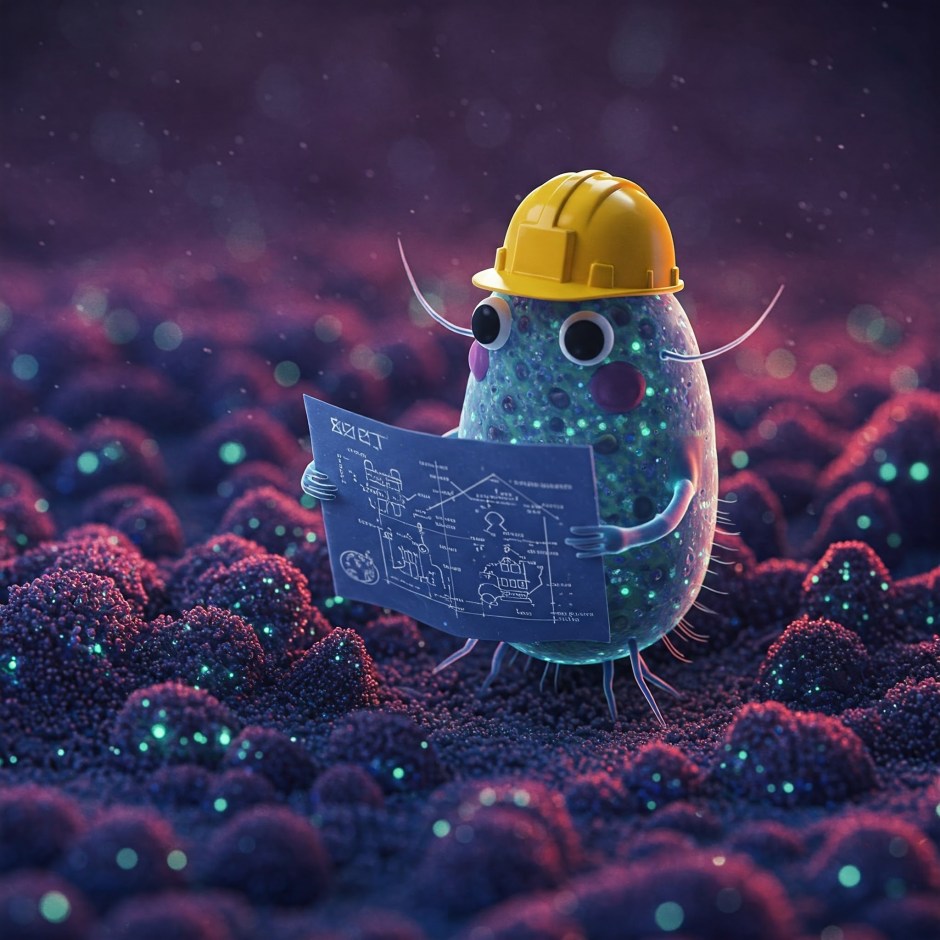
Featured image: Image created by author in Midjourney AI.



















































 micro-bites.org