
Breaking down the microbiology world one bite at a time
International Microorganism Day: An ode to van Leeuwenhoek

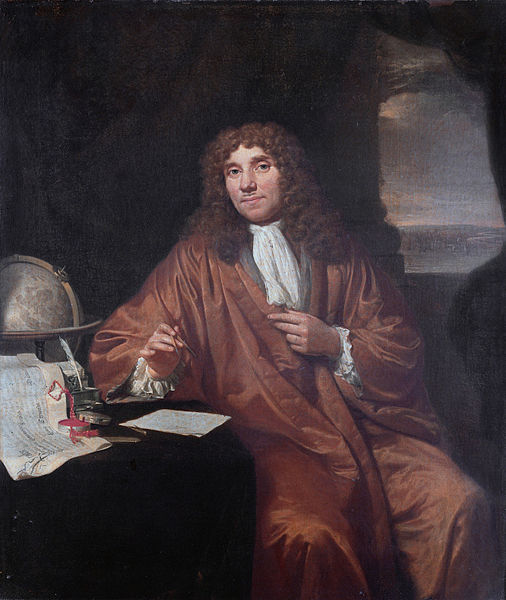
In the annals of scientific history, there are few figures as intriguing and influential as Antoni van Leeuwenhoek. Born in Delft, Netherlands, in 1632, this unassuming draper is often hailed as the “Father of Microbiology” for his groundbreaking work in microscopy. With little more than a curious mind and handmade microscopes, van Leeuwenhoek revolutionized our understanding of the invisible world, forever changing the course of science.
Image source
Humble beginnings…
Leeuwenhoek’s journey into the world of science was far from conventional. His primary occupation was that of a draper, selling fine textiles in his shop in Delft. It was during his spare time that he became enamored with lenses and began crafting his own microscopes (literally translated to ‘small see-er’). These hand-held devices were unlike anything the world had seen before, magnifying objects to hundreds of times their original size.
Microscopic Pioneering
Leeuwenhoek’s microscopes were remarkably simple yet astonishingly powerful. By grinding and polishing tiny glass spheres into lenses, he created microscopes capable of revealing the hidden details of the natural world. In 1674, he turned his lens to a drop of water from a nearby lake and observed what he described as “wee animalcules” – single-celled organisms. This marked the first documented sighting of bacteria, laying the foundation for the field of microbiology.


Unveiling the Secrets of Life
Over the years, Leeuwenhoek meticulously documented his observations in letters to the Royal Society of London. His descriptions of microorganisms found in a wide array of substances, including blood, saliva, and feces, challenged the prevailing belief in spontaneous generation and supported the idea of life arising from pre-existing life.
Image: Drawings from a Leeuwenhoek letter on 17 September, 1683 illustrating human mouth bacteria. Source
A Legacy that Lives On
Van Leeuwenhoek’s pioneering work in microscopy not only expanded our understanding of the microscopic world but also paved the way for countless scientific discoveries. His observations set the stage for the eventual development of modern microbiology and the germ theory of disease, revolutionizing fields like medicine and agriculture.
Today, his legacy endures in the scientific community, and his name is synonymous with precision and meticulous observation. The microscope, once a novelty, has become an essential tool in countless scientific disciplines.
Conclusion
Antoni van Leeuwenhoek’s contributions to science were profound, considering his humble background and the rudimentary tools at his disposal. His unrelenting curiosity and innovative spirit helped unlock the hidden universe of microbes and transformed the way we view the natural world.
As we celebrate the life and work of this scientific pioneer, we are reminded that curiosity knows no bounds. van Leeuwenhoek’s story serves as an inspiration for all aspiring scientists, proving that groundbreaking discoveries can emerge from the most unexpected of places and that the pursuit of knowledge is a journey with no limits.

International Microorganism Day (IMD)
International Microorganism Day, celebrated on and around September 17th, is a global tribute to the fascinating and often unseen world of microorganisms. Why this day, you might ask? On this day in 1683, Antoni van Leeuwenhoek wrote to the Royal Society about his teeth being the home to “many very little animalcules”. During IMD, scientists, educators, and enthusiasts worldwide come together to raise awareness about the vital role these tiny organisms play in our lives.
From the bacteria that aid in digestion to the microbes that recycle nutrients in the soil, microorganisms are the unsung heroes of the natural world. This day serves as a reminder of the immense diversity and importance of these microscopic life forms and the groundbreaking research that continues to uncover their secrets. It’s a time to appreciate the profound impact microorganisms have on our planet and to inspire future generations of scientists to explore the hidden realms of microbiology.
This year, IMD events are held in more than 25 countries! If you’re interested in something nearby, check out each event (in alphabetical order). Some members of the MicroBites team will be joining the IMD event in Brussels!
| Country | Date (2023) | Where |
| Argentina | 15 September, 2pm | National University of La Plata |
| Brazil | 6 and 17 September 4-6pm | Federal University of Maranhão, Lagoa da Jansen Square, and Rangedor Ecological Park |
| Belgium | 16 September (entire day) | Museum of Natural sciences, Brussels, Belgium |
| Benin | 20 September | Idriss Deby Building, University of Abomey-Calavi |
| Chile | 12 September | Liceo Bicentenario Provincial Santa Teresa de los Andes, Colina, Santiago |
| China | 17 September, 9am-12:30pm | Guangdong Technion – Israel Institute of Technology (GTIIT), Shantou |
| Colombia | Across September | Universidad Libre, Barranquilla and local schools |
| Croatia | 16 September, 11am-3pm | University of Zagreb Faculty of Food Technology and Biotechnology |
| Greece | 17-19 September | International conference in Larissa |
| India | Across September | 9 different initiatives in different areas (check link) |
| Italy | 16 September | Scuola Superiore of the University of Catania |
| Japan | 17 September | Life Science Center for Survival Dynamics, Tsukuba Advanced Research Alliance (TARA), University of Tsukuba |
| Kenya | 17 September | University of Eldoret |
| Liberia | 18 September, 9am-2pm | Bella Casa, Monrovia, Liberia |
| Mexico | 13, and 21-22 September | Universidad Autónoma de Campeche, Centro de Investigaciones en Microbiología Ambiental y Biotecnología, Campeche. AND Universidad Autónoma de Nuevo León |
| Malaysia | 25 September – 15 December | Faculty of Science and Mathematics, Universiti Pendidikan Sultan Idris, Malaysia and Tabika Perpaduan Klang, Selangor |
| New Zealand | 17 September | Tūranga Library, Central Christchurch |
| Nigeria | 15-18 September | Three different events, see link |
| Nepal | 17 September | B.Sc. Microbiology Department- ‘Seminar Hall’, Balkumari College, Narayangarh ,Chitwan |
| Paraguay | 19 September | Escuela Básica 4189 San Miguel Arcangel, San Lorenzo City |
| Portugal | 11-17 September | Different initiatives, see link |
| Romania | 19 September | Bastionul Maria Theresia, Galeria 2, Str. Hector, nr. 1, Timișoara |
| Pakistan | 19-20 September | Institute of Medical Technology (IMT), Dow University of Health Sciences, Ojha Campus Karachi. AND University of Veterinary and Animal Sciences (UVAS), Lahore (Ravi Campus, Pattoki) |
| Turkey | 18 September | SİFİGU Science Cafe Marmaris, Muğla |
| USA | 17 and 21 September | Iowa City Public Library, Louisiana (primary schools) AND University of Tennesse Southern campus in Pulaski and Online |
| Ukraine | 17 September | Kyiv |
| UK | 20 September 6:30-8:00PM | Online |
| Venezuela | 18-19 September | Facultad de Ciencias, Universidad Central de Venezuela. Caracas |



































 micro-bites.org


