

Breaking down the microbiology world one bite at a time
How do group-living spiders transmit their microbiome?
This article is written by Ritika Siddiqui
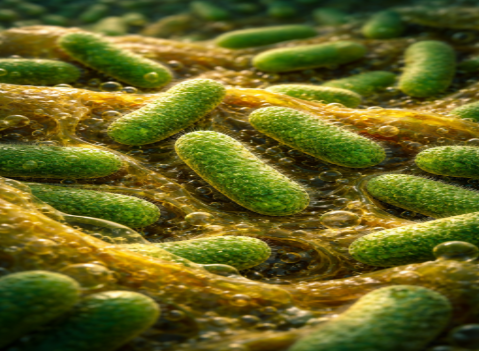
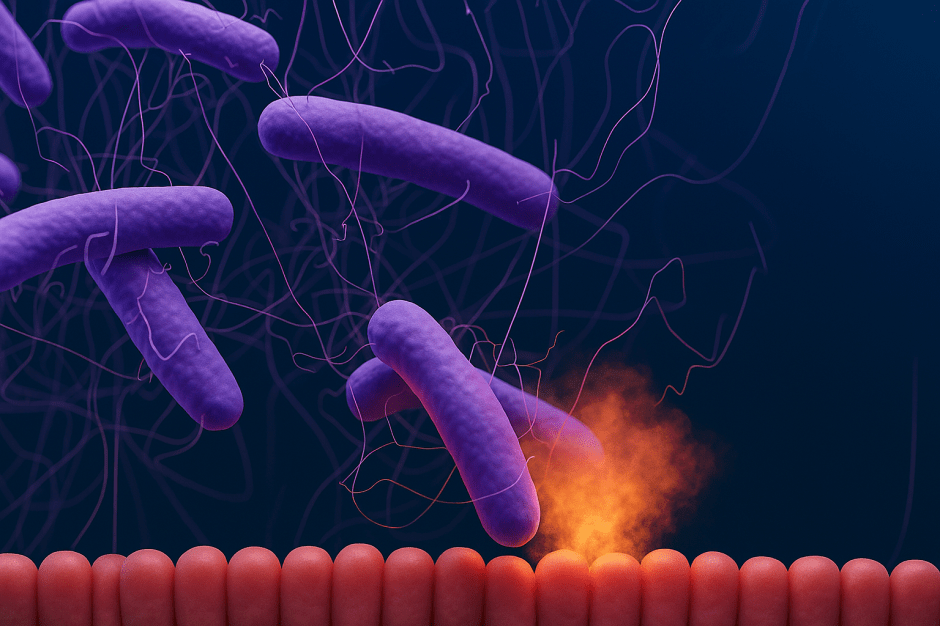
Microbiome! This word has caught a lot of limelight in recent years. We’ve all heard about the microbiome and the role it plays in maintaining our health. The term ‘microbiome’ basically refers to the various groups of bacteria which colonise our body, both inside and outside. Recent studies have shown that our microbiome can influence various aspects of our body including immunity, mood, and social behaviours.
But how do we acquire our microbiota? There are mainly two modes of transmission for the microbiome, vertical and horizontal. Vertical transmission basically refers to the transmission of bacteria from parents to babies – their offspring (that is, from one generation to the next generation). Mammals, such as humans, are a good example of vertical transmission, where babies grow inside their mother’s womb in a completely germ-free environment. However, during their journey through the birth canal, newborns get coated by the microbiome of their mother’s birth canal. Such a mode of transmission allows for reliable transmission of the microbiome to the next generation. In the case of horizontal transmission, the microbiota can be acquired from the environment, or members of the same generation through social contacts. This kind of transmission has the advantage of allowing for far greater variation. However, the stability of the microbiome over generations comes with some doubt.
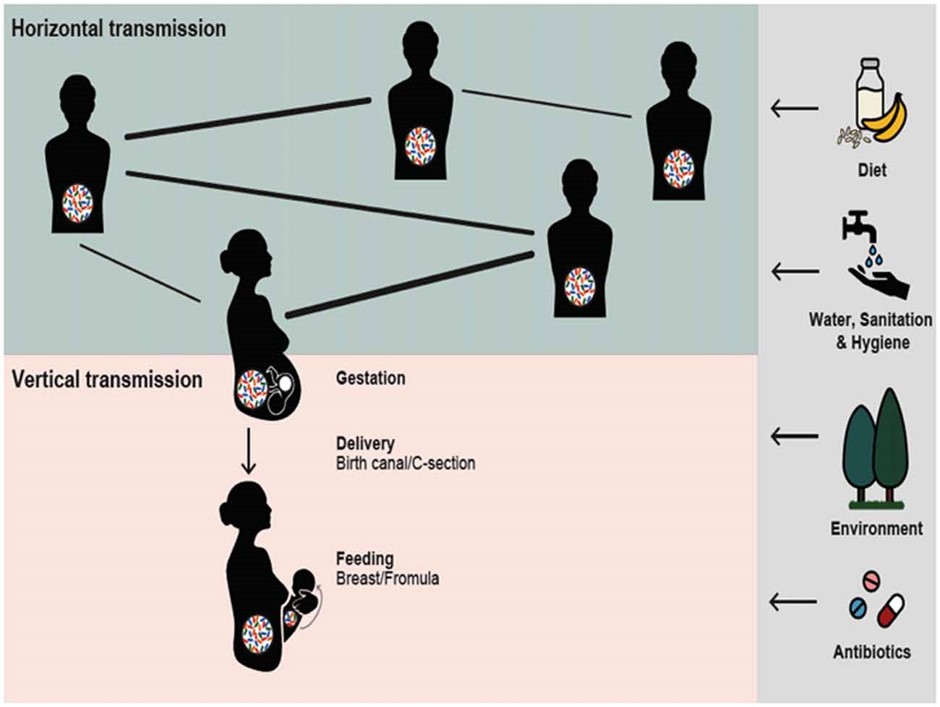
Which mode of microbiome transmission is more advantageous?
Since the microbiome plays a crucial role in maintaining the health of individuals, it is essential to transmit the microbiome with high fidelity. Now intuitively, it feels obvious that the vertical mode of transfer is more stable, as babies will get the same microbiota as their parents for sure, with minimal chances of disruption. However, what about the scenario where all the individuals are not reproductive? Organisms like bees, ants, and spiders live together in the form of social groups. In such groups, just one or a few of the females reproduce, while the rest of the population does not reproduce and contributes to maintaining the structure and stability of the society. In an instance like this, if the worker picks up some microbes from the environment, that may be beneficial for the members of the society, will it get lost when those individuals die?
To understand the transmission of the microbiome among such organisms, Rose et al. studied the transmission of the microbiome among the group-living spiders, Stegodyphus dumicola. These spiders are known to build communal nests and cooperate among themselves to capture prey and take care of the babies. The life cycle of Stegodyphus dumicola begins in the form of eggs, which are encapsulated by an egg sac formed of spider silk. These spiders go through 9 larval stages which are called instar 1-9, finally forming into an adult. The egg hatches to become instar 1 inside the egg sac. Instar 2 emerges out of the egg sac, giving the instar the opportunity for social interactions. These spiders show interesting social interactions and behaviours, where the offspring are fed by the caregiver via regurgitation. It is a process in which the mother vomits a mixture of digested prey and intestinal lining, and the offspring feeds on it. They also show matriphagy, where once the offsprings are ready to capture prey (instar 5-7), they feed on their mothers. Such interactions allow the offspring to acquire the microbiome from the members of their group.
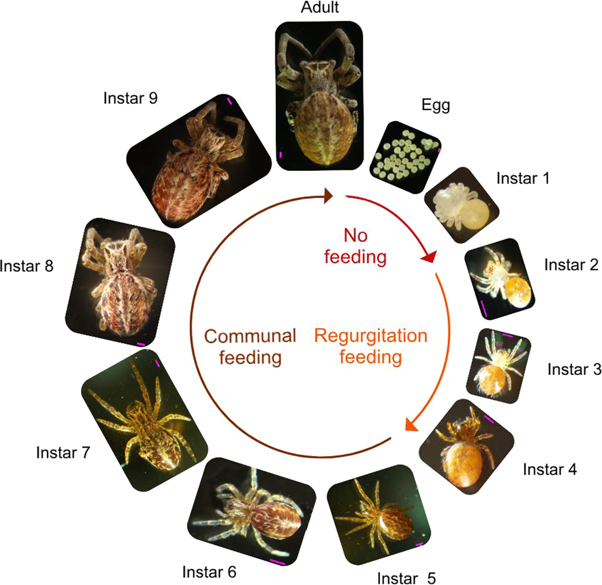
To find out how and when these spiders acquire their microbiome, the researchers checked the microbiome of different stages of the spiders. They did not find the presence of any bacteria in eggs or instar 1. From instar 2 onwards, the researchers were able to detect the presence of bacteria. This shows that, unlike humans, spiders do not have a transfer of the microbiome directly from the mother to the eggs (transovarian transfer) or from the egg sacs to the instar. However, from earlier research, it is known that group-living spiders have quite stable microbiomes within a group. So, how do spiders maintain such high-fidelity transfer of their microbiome? Is it possible for the offspring to get their microbiome from the regurgitated food from the mother? To answer this question, the researchers performed a cross-fostering experiment. In this experiment, the egg along with the egg sac was transferred to a cage with female adults coming from a nest with a different microbiome from the natal nest. The researchers found out that the instar developed in the presence of a foster mother acquired the microbiome of the foster mother. This shows that social interactions can act as a high-fidelity mode of vertical transfer of the microbiome.
To understand if the microbiome can be altered at a later stage in the life cycle, the researchers mixed the adults from two nests with different microbiomes for 39 days. They found that when they combined the individuals from two nests in the same ratio, the microbiome of the two combined and homogenised. This shows that even horizontal mode of transmission plays an important role in acquiring the microbiome in group-living spiders.
However, when the individuals were combined in unequal ratios, only some bacterial members of the microbiomes were able to spread to the other individuals, while others remained lower in abundance. This shows that social interactions during the adult life stage can transmit the microbiome, but only a singular mixing event will not have a lasting effect on the microbiome of the group. The different relative abundance of various members of the microbiome upon mixing in unequal ratios indicates that there is some sort of in-host competition. This could be a direct competition between the members of the microbiome, or it could be due to the selection pressure provided by the host’s genetic background. However, the latter seems unlikely as earlier studies have shown no correlation between the host genetics and the microbiome.
This study showed that in group-living creatures like spiders, both vertical and horizontal modes of transmission play an important role in the maintenance of the microbiome. While vertical transmission allows for a high-fidelity transmission of the microbiome from the (foster) mother to the offspring, social interactions allow for horizontal transmission, providing individuals with the benefit of acquiring microorganisms from other group members.
Link to the original post: Rose, C., Lund, M.B., Søgård, A.M. et al. Social transmission of bacterial symbionts homogenizes the microbiome within and across generations of group-living spiders. ISME COMMUNICATION. 3, 60 (17th June, 2023). https://doi.org/10.1038/s43705-023-00256-2
Featured image: Christoph Schütz from Pixabay




































 micro-bites.org