

Breaking down the microbiology world one bite at a time
A new game-changing Approach to Antibiotic Testing
Have you ever watched one of those medical dramas when the patient is failing the doctor and the patient would not respond to any of the conventional antibiotics? So the doctor requests a test to know more about the cause of the disease ….. But don’t these test results take like 24 hours to be available? This test that the doctor requests is what you call an antibiotic susceptibility test. Antibiotic susceptibility refers to how susceptible a particular bacterium is to the effects of antibiotics. This test helps doctors prescribe a more specific antibiotic when the patient fails to respond to conventional antibiotics. The failure to respond is due to the pathogens responsible for the disease, developing a resistance towards the antibiotics used to treat that disease aka antibiotic resistance.
In our battle against infectious diseases, antibiotics have long been our most potent weapon. What if I told you that this arsenal is slowly losing its effectiveness? The rise of antibiotic-resistant bacteria poses a grave threat to global health, making it increasingly difficult to treat common infections. As we stand on the brink of a public health crisis, a remarkable breakthrough offers a glimmer of hope. A ground-breaking technique promises to revolutionize antibiotic susceptibility testing and reshape the fight against antibiotic resistance. This innovation comes at a crucial time, addressing one of the fundamental problems in diagnostics: the lack of fast methods to test for antibiotic sensitivity.
What is Antibiotic susceptibility testing?
Antibiotic susceptibility testing (AST) is the measurement of a bacterium’s susceptibility to antibiotics. It helps healthcare professionals determine which antibiotics are most effective in treating a bacterial infection and guides them in choosing the appropriate antibiotic treatment.
Despite developments in the field of diagnostics, certain basic problems persist. Did you know that it takes a month to grow the bacterium responsible for tuberculosis, making it almost impractical for timely diagnosis and treatment? Even the most simple traditional ASTs take at least 24 hours. This delay in time leads to the doctor prescribing medicine based on experience without knowing the exact cause of the disease, which may prove to be fatal in certain conditions. In the past few years, there have been some fast ASTs that have been developed like whole genome sequencing, MALDI-TOF spectrometry, and Fourier transform infrared spectroscopy. However, these methods are complex and need sophisticated and costly equipment.
So do we have a solution?
The researchers at the Ecole Polytechnique Fédérale de Lausanne seem to have a solution: Optical Nanomotion Detection (ONMD). This technique offers a fast, accessible, and cost-effective method for rapid AST. It utilizes the microscopic oscillations or “signatures of life” exhibited by microbes. Bacteria vibrate in response to their metabolic activity, and these oscillations persist as long as the organism is alive, ceasing immediately after death. This property is exploited in ONMD.
ONMD involves immobilizing microbes on a cantilever sensor. Think of this cantilever as a beam or rod supported only at one end and which can carry a load at the free end. Here the microbes are immobilized on the free end of the cantilever. The microbes when alive, carry out metabolic activities and thus produce oscillations. Their nano motion is picked up by the sensor, and the oscillations are recorded over time. Once an antibiotic hinders the metabolic activity of the bacteria, the fluctuations decrease considerably. The cantilever transduces the movements of the samples and further, the deflections of the sensor are detected and recorded. The resolution of detection is as small as 10-9m. The nano motion is recorded by a camera attached to an optical microscope. ONMD has been successfully applied to clinically important bacteria such as Escherichia coli, Staphylococcus aureus, Lactobacillus rhamnosus, and Mycobacterium smegmatis, determining their sensitivities to antibiotics like ampicillin, streptomycin, doxycycline, and vancomycin in less than two hours.

Left: Before the attachment of the living specimens to the sensor: the fluctuations are small.
Center: When the specimens are immobilized on the sensor: fluctuations increase.
Right: killed microorganisms on the sensor: revert to small fluctuations. Source:https://doi.org/10.1073/pnas.1415348112
ONMD has proven its applicability beyond testing for metabolically active (live) and inactive (dead) organisms upon exposure to different chemicals. It can also detect variations in bacterial metabolic levels induced by different nutrient concentrations. Additionally, the technique is not limited to bacteria that can move using metabolic energy, making it a versatile tool for many bacterial species.
The introduction of ONMD in antibiotic susceptibility testing brings numerous advantages:
- Speed: The technique provides results within 1 to 2 hours, enabling faster diagnosis and treatment decisions.
- Affordability and accessibility: ONMD only requires a simple optical microscope and a camera/mobile phone, making it accessible to healthcare facilities with limited resources.
- Sensitivity: The technique can detect even a single cell of a microbe, ensuring accurate and reliable results.
- Ease of Use: ONMD does not require complete characterization of the specimens under investigation to detect their presence and viability, meaning one can perform ASTs of unknown bacteria.
In a race against antibiotic resistance, ONMD emerges as a beacon of hope. By providing a rapid and reliable way to identify the most suitable antibiotic for a particular disease, this technique aims to tackle the misuse and overuse of antibiotics which are also the major reasons for the development of antibiotic resistance. With its rapid and accessible approach to antibiotic susceptibility testing, ONMD has the power to reshape the future of infectious disease treatment.
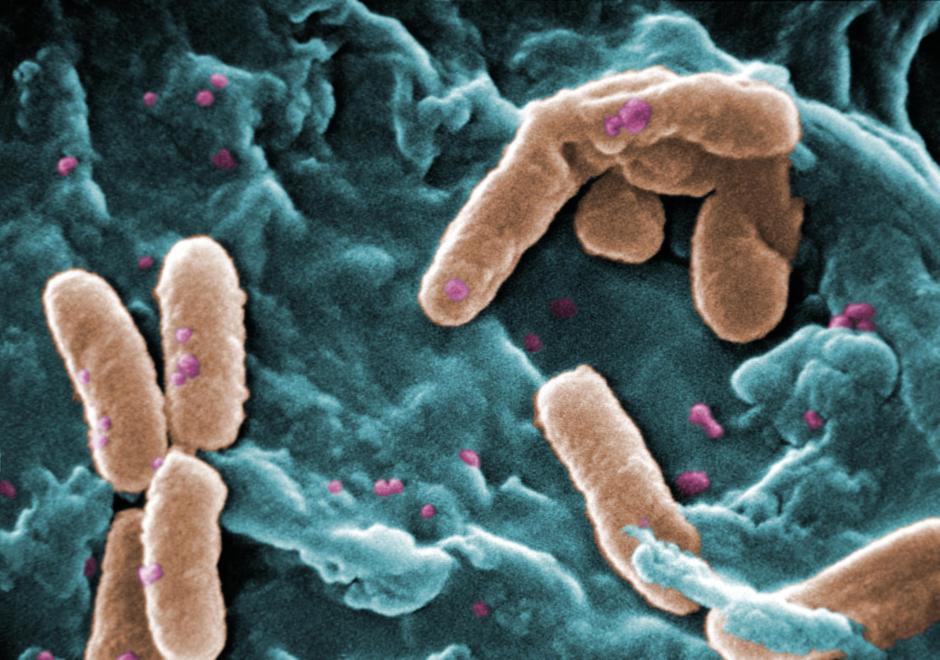
Featured image: Image taken from en.Wikipedia.org































































 micro-bites.org