
Breaking down the microbiology world one bite at a time
Is the Microbiome Overrated?
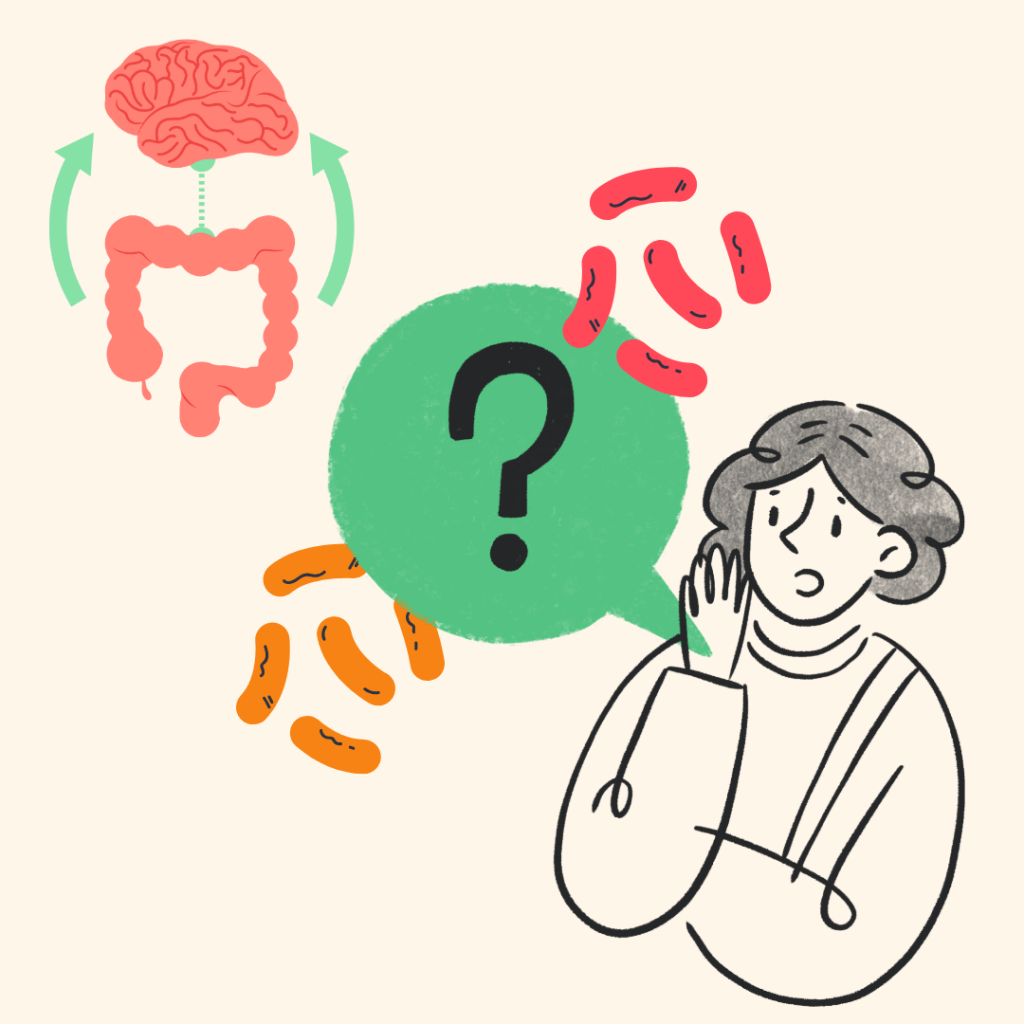
In the past decade, the human microbiome (the trillions of bacteria, fungi, and viruses living in our bodies) has gone from a niche topic to a global scientific sensation. You’ve probably seen headlines promising that gut microbes can cure depression, prevent obesity, or even change your personality. But a new paper from researchers at the University of Copenhagen takes a step back and asks an uncomfortable question: Are we expecting too much from microbiome science?
The study, published in Nature Humanities and Social Sciences Communications, looks not at the biology of the microbiome but at the language used to describe it. According to authors Tine Friis, Louise Whiteley, and Adam Bencard, microbiome research has become what they call a “promissory field”. This is a scientific area filled with hope, excitement, and sometimes hype about its ability to fix major health and social problems.
Their analysis of academic papers and popular science books found that microbiome research is often presented as a kind of holistic revolution, one that could finally connect the dots between mind and body, humans and their environment, and even science and philosophy. But the authors warn that this big-picture language, while inspiring, may also create what cultural theorist Lauren Berlant called “cruel optimism”: a situation where people cling to an ideal that may never fully deliver on its promises.
The paper identifies four major “promises” that appear repeatedly in how microbiome research is discussed:

- Mind-body holism: Scientists often claim that microbiome research blurs the line between mental and physical health. The idea that gut bacteria might influence anxiety or depression, for instance, challenges the old notion that the mind and body are separate. But the authors warn that such claims risk reducing complex psychological issues to simple biological explanations. They feel it is essentially swapping one extreme (psychological only) for another (biological only).
- Body-environment holism: The microbiome is sometimes used as proof that humans are ecosystems, not individuals. We’re constantly interacting with bacteria in food, soil, and water. While this idea promotes sustainability and interconnectedness, it also risks romanticizing microbes and ignoring the real dangers of infection or antibiotic resistance.
- Holistic self-concept: The notion that we are “more than human” has become popular in science writing. Books often describe the microbiome as reshaping our very sense of identity. “Who am I?” becomes “Who are we?”. This framing encourages empathy and ecological awareness, but it can also make the concept of the “self” so vague that it loses meaning.
- Holistic scientific paradigm: Many scientists describe microbiome research as revolutionary, often comparing it to the Copernican Revolution or Darwin’s theory of evolution. These comparisons raise expectations sky-high, suggesting that microbiome science could redefine all of medicine. However, the authors argue that the field is still young, and such comparisons can border on overstatement.
Optimism itself isn’t a bad thing; science thrives on curiosity and ambition. But the authors caution that the way microbiome science is communicated can lead to “cruel optimism.” For example, people inspired by the promise of “gut healing” sometimes experiment with risky home treatments like do-it-yourself fecal transplants or untested probiotics. Others may feel guilty if they can’t “fix” their health through diet alone, believing they’ve failed their microbes rather than recognizing broader social or medical factors.
On a societal level, governments and funding agencies may overinvest in microbiome research as a “silver bullet” for public health challenges like obesity or mental illness, while overlooking social and environmental causes. The danger, the authors suggest, is not false hope, but misplaced responsibility.
Seeing the body, mind, and environment as one interconnected system (holism) sounds appealing. But the authors argue that much of what is being described as holism in microbiome science is illusory. For instance, while many papers call for collaboration between biology, psychology, and the social sciences, in practice, biology tends to dominate. Philosophers and anthropologists might be “invited into” labs, but their role often remains secondary to existing molecular research. This imbalance creates what Friis and colleagues call an illusion of integration. Similarly, claims about the microbiome “uniting” mind and body may reduce mental health to solely biological factors, overlooking cultural, social, and emotional dimensions of illness.
Microbiome science has already transformed how we think about health, and its discoveries are genuinely exciting. Yet, this article reminds us it’s important to stay grounded. Science is a process, which means not all the envisioned promises will be kept, but progress will still be made. Friis and her coauthors don’t dismiss microbiome research, rather they invite readers and researchers alike to think critically about how scientific stories are told. Microbiome research is full of fascinating potential, but the hype around it often promises more than science can currently deliver. Staying curious without falling into “cruel optimism” may be the healthiest approach of all.
Link to the original post: Friis, T., Whiteley, L., & Bencard, A. (2025). The allure of microbiome research: promises of holism and the potential for cruel optimism. Humanities and Social Sciences Communications, 12(1), 1-13.
Additional sources:
- Ruse, M. (1975). Charles Darwin’s theory of evolution: an analysis. Journal of the History of Biology, 219-241.https://www.jstor.org/stable/4330635
- Brown, N., & Michael, M. (2003). A sociology of expectations: Retrospecting prospects and prospecting retrospects. Technology analysis & strategic management, 15(1), 3-18. https://www.tandfonline.com/doi/abs/10.1080/0953732032000046024
- Berlant L (2011) Cruel optimism. Duke University Press https://www.dukeupress.edu/cruel-optimism
- Dunne, K. J. (2008). Introduction: A Copernican Revolution. In Perspectives on localization (pp. 1-11). John Benjamins Publishing Company. https://www.degruyterbrill.com/document/doi/10.1075/ata.xiii.01dun/html
Featured image: Created by the author using Canva Pro.





 micro-bites.org