

Breaking down the microbiology world one bite at a time
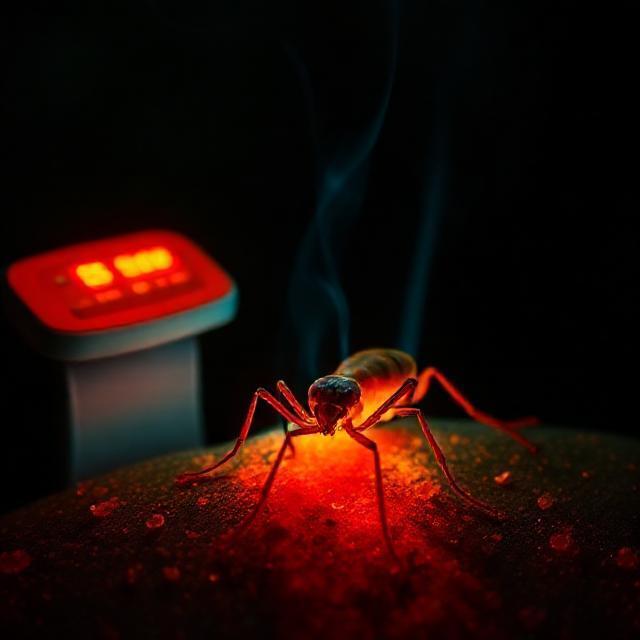
Global warming is a summer vacation for the dengue virus
Global warming is transforming multiple aspects of the world, including both human health and the environment. One of the greatest concerns is that mosquitoes have rapidly adapted to diverse environments and thrive under warm conditions. Mosquitoes are considered the deadliest animals, as they transmit numerous pathogens to humans, including viruses and parasites. Among these, dengue has emerged as the most significant arboviral disease, causing an estimated 300 million cases annually, a number that has steadily increased over the past 30 years.
Insects cannot regulate their own body temperature, meaning that environmental temperature directly influences multiple aspects of mosquito physiology and their interactions with microorganisms such as the dengue virus. Warmer conditions not only accelerate mosquito reproduction but also impact viral dynamics. Recently, Fhallon Ware-Gilmore and collaborators demonstrated that the dengue virus can adapt to different temperatures. In their study, the virus was maintained in mosquito cells at either cooler (26 °C) or warmer (32 °C) conditions. When temperatures were switched, striking differences were observed: viruses initially kept at 26 °C and then transferred to 32 °C replicated more rapidly than those maintained exclusively at 26 °C. In contrast, viruses kept at 32 °C and then shifted to 26 °C showed reduced replication compared with both constant-temperature controls. These findings reveal that dengue virus adapts more efficiently to warmer conditions, highlighting the potential consequences of global warming on viral transmission dynamics.
The researchers also discovered that viruses maintained at warmer temperatures accumulated several mutations that altered viral protein sequences, whereas viruses kept at cooler temperatures showed only mutations that did not affect protein structure. Interestingly, some of the mutations arising under warmer conditions are already known to influence viral replication and infectivity in both humans and mosquitoes. This suggests that warmer temperatures importantly influence the viral evolution, which allows it to survive at extreme temperatures.
In summary, the findings of Fhallon Ware-Gilmore and collaborators demonstrate that the dengue virus adapts to temperature changes; however, it thrives more effectively under warmer conditions. A previous blog article has also shown that dengue has adapted to its host by favoring codons that are suboptimal for the host itself. In other words, the virus not only adjusts to adverse conditions but also exploits them to its advantage. While global warming poses serious challenges for many living organisms, it appears to be favorable for dengue, almost like an endless summer vacation.
Link to the original post: Fhallon Ware-Gilmore, Matthew J Jones, Austin J Mejia, Nina L Dennington, Michelle D Audsley, Matthew D Hall, Carla M Sgrò, Theresa Buckley, Ganesh S Anand, Joyce Jose, Elizabeth A McGraw, Evolution and adaptation of dengue virus in response to high-temperature passaging in mosquito cells, Virus Evolution, Volume 11, Issue 1, 2025, veaf016. DOI: 10.1093/ve/veaf016
Featured image: Image sources:bing.com











 micro-bites.org