
Breaking down the microbiology world one bite at a time
Microbial collectibles from mosquitos
You may be familiar with collectibles. Some people collect baseball cards, while others collect toys such as dolls, cars, or postal stamps. A collection helps preserve memories, friends, or simply information for the future.
But how can a collection also impact science?
In recent research, Foo and collaborators obtained a collection of 392 bacteria associated with mosquitoes and sequenced their genomes.
Mosquitoes are among the most dangerous animals. They transmit several pathogens that cause vector-borne diseases worldwide, including Dengue (read more here or here), Zika (read more here, here or here), Oropuche (read more here ), Chikungunya, and parasites such as Plasmodium, the malaria parasite. When the mosquito “gets sick” with these pathogens, the associated microbes can positively or negatively affect how they transmit them. Thus, it is crucial to understand which microbes are associated with them to develop strategies to combat mosquitoes and how this may impact the interaction with human pathogens.
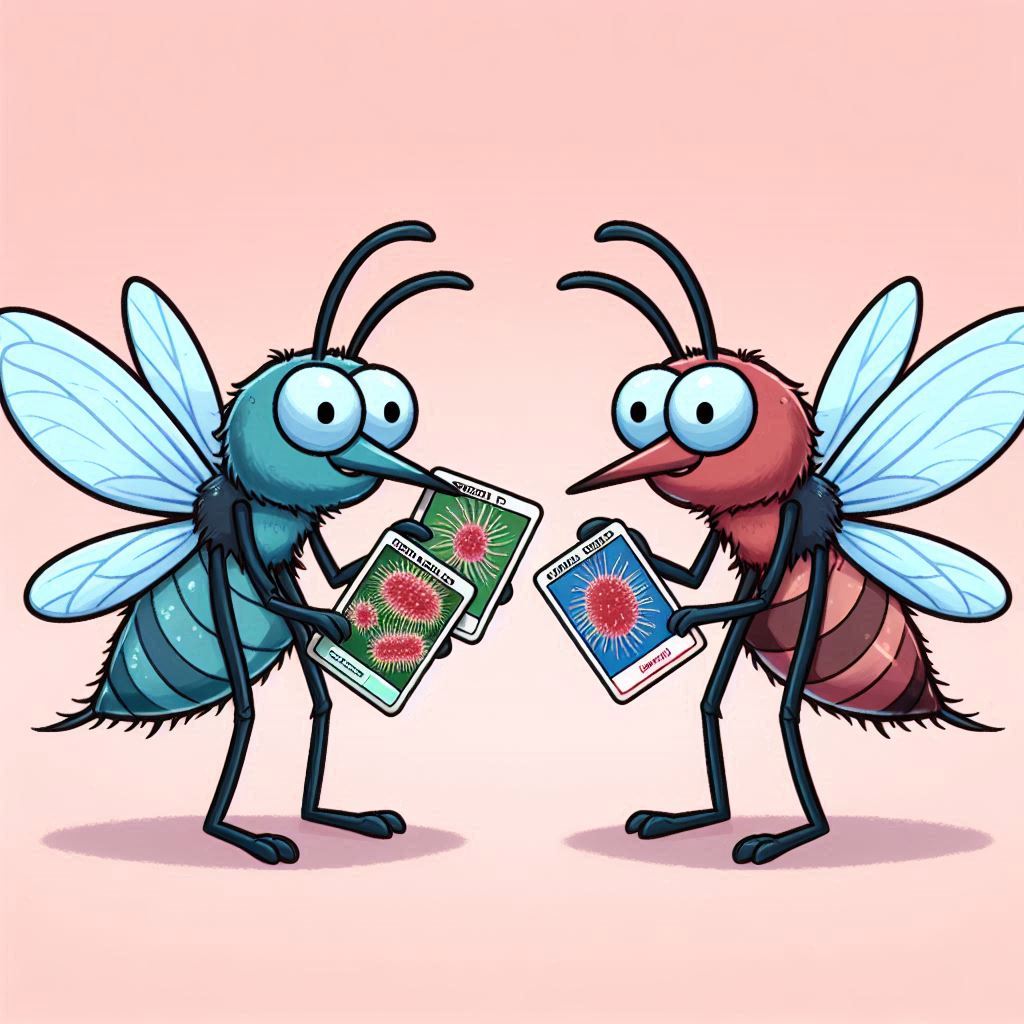
The bacteria collection from Foo and collaborators was named MosAIC, which means Mosquito-Associated Isolate Collection and contains 142 species across 29 bacterial families obtained from several mosquito species and diverse environments. It is fascinating that each bacteria isolate has a high-quality genome assembly and extensive information about the collection and origin of the sample. In other words, it is as if every isolate has a baseball card but with bacteria names instead of player names, indicating information about their genomes instead of numbers of home runs or games. This resource will facilitate genomic analyses and functional studies of the microbes associated with mosquitoes for other researchers.
In the figure below, we observe a maximum likelihood tree, which is a type of family tree for bacteria. Scientists created it by comparing sequences of a gene called 16S ribosomal RNA (16S rRNA), which helps identify different bacteria. In this “tree,” each point or node represents a species, and the colors show which bacterial class they belong to. Moreover, the study also closely examined three types of bacteria: Enterobacter, Serratia, and Elizabethkingia. Scientists found that certain groups of these bacteria were linked to different mosquito species across multiple laboratories around the world.

Finally, the physical bacterial samples and their genetic information (genomic data) from the MosAIC collection are publicly available, providing a valuable resource for the scientific community to study bacterial colonization and mosquito adaptation. It is like going to the museum and seeing an exhibition of these cards!
Featured image: Image generated by the author using Microsoft Bing







 micro-bites.org