

Breaking down the microbiology world one bite at a time
Micro Feast
Are you what you eat?
The saying “you are what you eat” often emphasizes how diet shapes overall health; however, this extends beyond just the macronutrients and micronutrients we consume. Our food is teeming with millions of microscopic organisms which play a crucial, though often overlooked, role. Eating is a universal activity, and as a result, every person’s microbiome is shaped by a unique set of factors, with diet being a key influence.
The microbes we ingest through food have a significant impact on the communities of microbes living within us, commonly referred to as the gut microbiome. However, the diversity of microbes in the food we eat remains largely unexplored. Understanding this microbial diversity is essential, as it directly influences the composition of our gut microbiome and, by extension, our health.
Analysis of large-scale food metagenomes:
A study by Niccolo Carlino and group has tried to bridge this gap by generating and analysing large-scale food metagenomes. Metagenomes are comprehensive analysis of genetic material recovered from environmental samples, to investigate these microbiomes in terms of diversity and characteristics.
Food-associated microbes account for about 3% of the adult gut microbiome, showing a link between the dietary microbes and human microbiome. This study provides an example of Lactobacillus paracasei, commonly found in fermented dairy products. This bacterium is also found in the human gut sample, implicating its survival through the digestive system to colonize the human gut. A deeper exploration of L.paracasei showed that not only can these strains enter from food into our gut, but they may also persist and integrate into the gut microbiome. Once in the gut, they interact with a wide range of resident gut microbes, supporting digestion and influencing immune function..
It is interesting how these microbes colonize the gut. Several factors such as type of food, microbial load, resilience of the microbes to stomach acid and bile, and the individual’s gut environment play a role in whether these microbes establish themselves in the gut or just pass through transiently. In the human digestive system, the transmission of food-associated microbes to the human gut involves multiple stages. These include surviving the digestive tract’s harsh conditions, adhering to the gut lining, competing with resident microbes, and interacting with the host’s immune system. Some fermented foodborne microbes are better equipped to endure the above mentioned stages and may become permanent members of the gut microbiome, influencing gut health and overall well-being. Understanding these mechanisms helps in the development of dietary interventions and probiotic therapies aimed at promoting a healthy gut microbiome.
What’s new?
The results demonstrated 320 newly found species in addition to the 10,112 prokaryotic and 787 eukaryotic genomes. This discovery shows the vast diversity of foods, which includes fermented and non-fermented items. Even more intriguing is the fact that the recently discovered genomes have not been previously found in environmental microbiomes (such soil or water), human, or animal microbiomes. This suggests that they may be unique to a given geographic area or food fermentation process. They have been categorized as unknown species-level genome bins (SGBs), meaning that they do not have a reference genome in the existing database.
These microbes span across several bacterial phyla but were especially prevalent in Actinomycetota, Bacillota and Pseudomonadota.
Certain types of food yielded a high number of these newly discovered species, particularly those prepared traditionally or have an artisanal fermentation process. Among these were cheese, cheese Brine, water kefir, milk kefir, fermented seeds and tubers. For example, cheese contained Corynebacteriaceae, and cheese brine had Microbacteriaceae and Brevibacteriaceae.
This study marks a major advancement in understanding the diversity of microbes present in food and their connection to the human microbiome. It uncovers previously unexplored array of microbial species in our diet, paving the way for new insights into how these microbes can affect human health, food quality, and safety.
Additionally, this research introduces a novel data resource: the curated Food Metagenomic Data (cFMD), offering the global scientific community a valuable tool for further investigation into microbial diversity across various food categories. This resource holds great potential for applications in public health, food industry innovations, and safety measures.
Link to the original post: Carlino, N., Blanco-Míguez, A., Punčochář, M., Mengoni, C., Pinto, F., Tatti, A., Manghi, P., Armanini, F., Avagliano, M., Barcenilla, C., Breselge, S., Cabrera-Rubio, R., Calvete-Torre, I., Coakley, M., Cobo-Díaz, J. F., de Filippis, F., Dey, H., Leech, J., Klaassens, E. S., … Pasolli, E. (2024). Unexplored microbial diversity from 2,500 food metagenomes and links with the human microbiome. Cell, 187(20), 5775-5795.e15. https://doi.org/10.1016/j.cell.2024.07.039
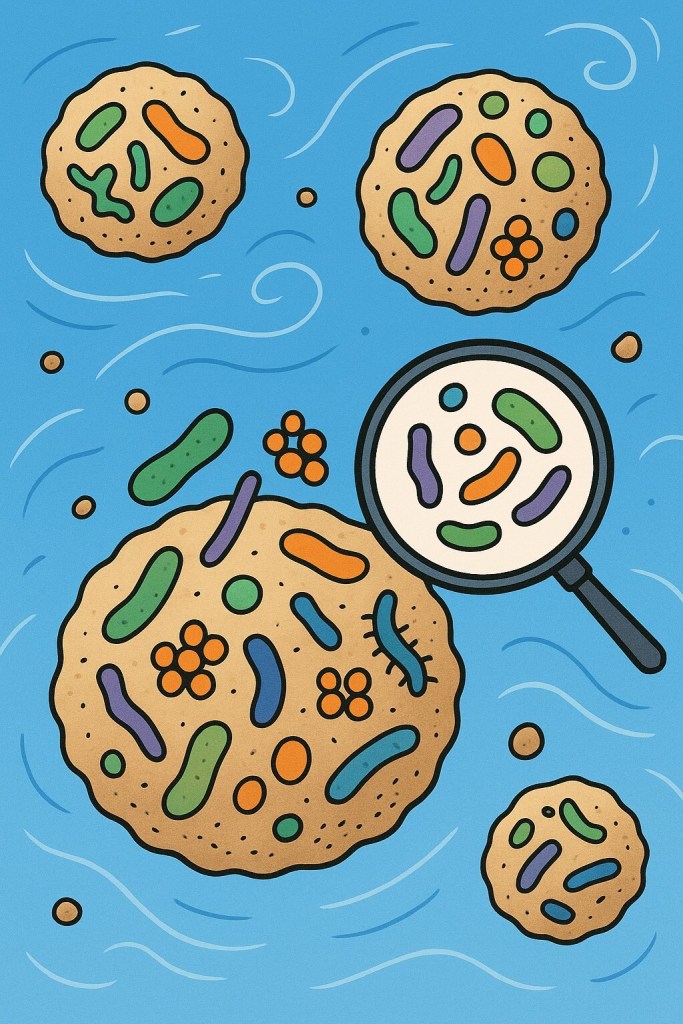
Featured image: Food and its associated Microbes: The Metagenome Connection. Image source: Created with biorender






 micro-bites.org