

Breaking down the microbiology world one bite at a time
Infectious cooperation in joint and bone implants
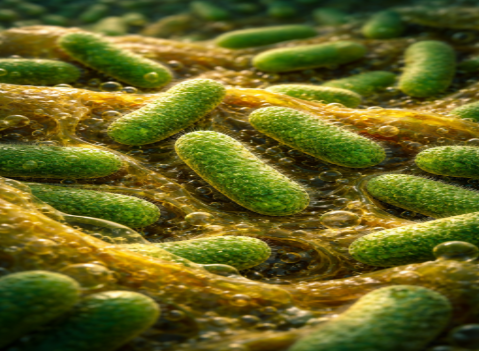
Patients receiving an implant (such as a prosthetic joint, a cardiovascular device, or a breast implant) are at risk of developing a bacterial infection. Such an infection is usually worse and harder to treat when the bacteria form biofilms: a kind of protective structure of bacteria sticking together. Dental plaque, for example, is a biofilm, and so are those slippery layers on stones in stagnant water. How could such infectious biofilms be prevented? And could microbial cooperation play a role in this phenomenon? Let’s find out!
Multiple species
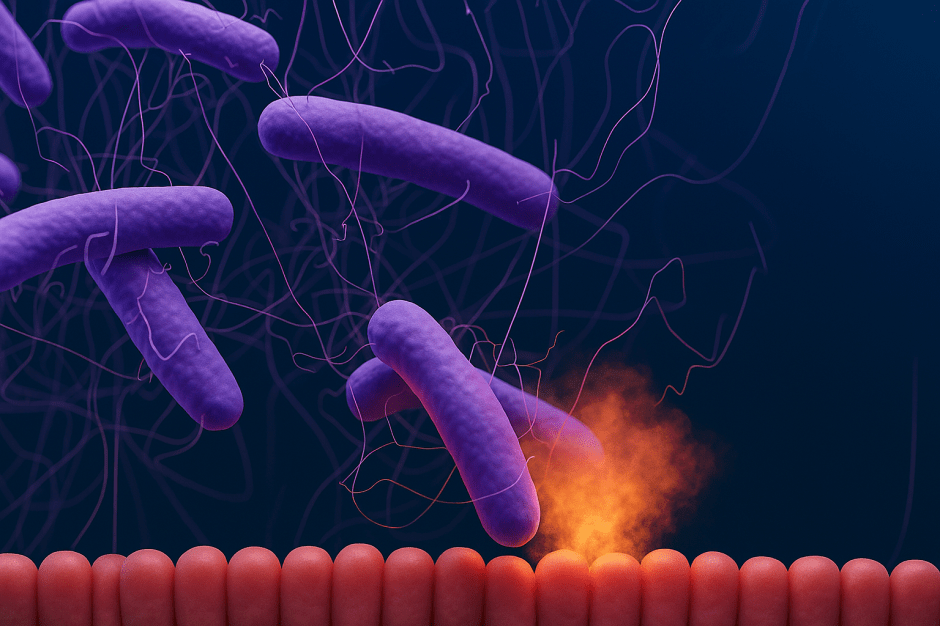
Biofilms often consist of multiple species of microbes, and implant infections are no exception. For example, it was shown that orthopedic device-related infections involve multiple phylotypes (types of bacteria that belong to the same species but are genetically different) of Cutibacterium acnes. In this study, the researchers isolated two types of Cutibacterium acnes from an elbow implant infection. The phylotypes (hereafter called type A and type B) each contained more than 200 unique genes not found in the other.
The researchers wanted to know how these bacterial types interact, if they do. Do they help each other to form a biofilm? Or do they grow independently? Answering these questions could help understand implant associated infections and therefore prevent or cure them.
Better together
First of all, the researchers compared the ability to form biofilms for type A, type B, and a mix of the two. They grew the bacteria on titanium discs, to simulate the conditions they would face when growing on an orthopedic device, and showed that the mix of two types covered a bigger part of the discs in biofilms than each type in isolation. This implies that the bacteria benefit from growing together rather than in isolation. But what does this cooperative biofilm look like?
Visualisation
To visualise the location of each type in the biofilm, the research used a technique called FISH (Fluorescence In Situ Hybridization). By attaching a distinct fluorescent marker to each of the bacterial types, they could observe that type B (purple) was more abundant at the top of the biofilm, indicating that it was better at attaching to the biofilm. Could this be because type B was better to adapt its growth strategy to the biofilm environment?

Gene expression
To find out whether there was a difference in the way the different Cutibacterium types adapted their gene expression to growth in the cooperative biofilm, the researchers compared the transcriptomes of type A and B. They investigated whether the types turned on or off certain genes when growing in a structured biofilm as opposed to a liquid mixture.
Interestingly, it was shown that type A changed its gene expression a lot more than type B. This has two possible explanations: either type B is already better adapted to biofilm growth, or alternatively it is less good at adapting its gene expression. The fact that type B was more abundant in the biofilm suggests that the first explanation is closer to the truth.
A future without infections?
Clearly, multi-typic infections are complicated and are far from being understood entirely. However, this study brings us a step closer to understanding the role of biofilms and bacterial cooperation in such infections and could help improve their diagnostics as well their treatment.
Link to the original post: Bjerg, C.S.B., Poehlein, A., Bömeke, M. et al. Increased biofilm formation in dual-strain compared to single-strain communities of Cutibacterium acnes. Sci Rep 14, 14547 (2024). https://doi.org/10.1038/s41598-024-65348-y
Featured image: Bjerg et al. 2024









 micro-bites.org