
Breaking down the microbiology world one bite at a time
Ultra-Processed Foods: Brain’s Arch Nemesis
This article was written by Aditi Manjare
In recent years, there has been a growing concern about the impact of our diet on our overall health. Researchers have been delving deeper into different diets to identify which ones are beneficial and which ones may lead to health problems. A healthy diet contains all the essential nutrients our body needs to function optimally. However, certain diets high in processed foods can harm our health. These ultra-processed foods (UPFs) are often rich in unhealthy ingredients such as sugars, fats, and artificial chemicals, but lack essential vitamins and fiber. Overconsumption of UPFs has been linked to various severe health issues like obesity, diabetes, and heart disease. Interestingly, a diet that is high in UPFs can also increase the risk of dementia and other brain-related problems.
The role of gut microbiota, or the microorganisms living in our gut, is critical in maintaining our health and well-being. Certain foods can alter the composition of these gut microbes, consequently affecting our mood and memory, and risk of diseases like depression and anxiety. The additives used in food, such as artificial sweeteners and emulsifiers, can also interfere with our gut microbiota and the functioning of our brains. It is crucial to pay close attention to the food we eat and its ingredients to maintain the health of our gut and brain.
Gut microbiota and Brain health:
Our bodies are home to over 30 trillion microorganisms, including bacteria, viruses, fungi, and yeast. These tiny creatures live in various parts of our bodies, but most reside in our intestines. The gut microbiota, as we call them, consist of more than 1,500 species and play a crucial role in our health. They help us digest food, absorb nutrients, and even produce vitamins. Additionally, they interact with our immune system, protecting us from harmful pathogens.
However, when the balance of these gut bacteria is disturbed, it can lead to various health problems. For example, an imbalance in microbial diversity has been linked to obesity and inflammatory bowel diseases. Scientists have recently discovered that our gut microbiota also influences our brain health. Conditions like depression, anxiety, and even neurodegenerative diseases like Parkinson’s and Alzheimer’s may be influenced by the gut microbiota.
This connection between our gut and brain is known as the microbiota-gut-brain axis (MGB axis). It’s a complex system of communication between the gut and brain, involving immune, neuronal, and endocrine pathways. For instance, the gut microbiota can produce substances that affect the nervous system directly or indirectly. They can also interact with the immune system, triggering responses that affect the brain.
The MGB axis operates through multiple pathways. One pathway involves the vagus nerve, which connects the gut to the brain and regulates mood and eating behavior. Another pathway involves the release of hormones and neurotransmitters that can affect brain function. Through these pathways, the gut microbiota can influence our emotions, cognition, and even our stress response.
Recently, there has been growing interest in how our diet, particularly the consumption of ultra-processed foods (UPFs), affects the MGB axis. UPFs are foods that are heavily processed and contain additives and preservatives. Studies have shown that diets high in UPFs can disrupt the balance of gut microbiota, leading to inflammation and other health problems. This disruption of the gut microbiota may contribute to the development of neurological disorders and cognitive decline.
UPFs: Gut-Busting Culprits or Brain-Draining Delights?
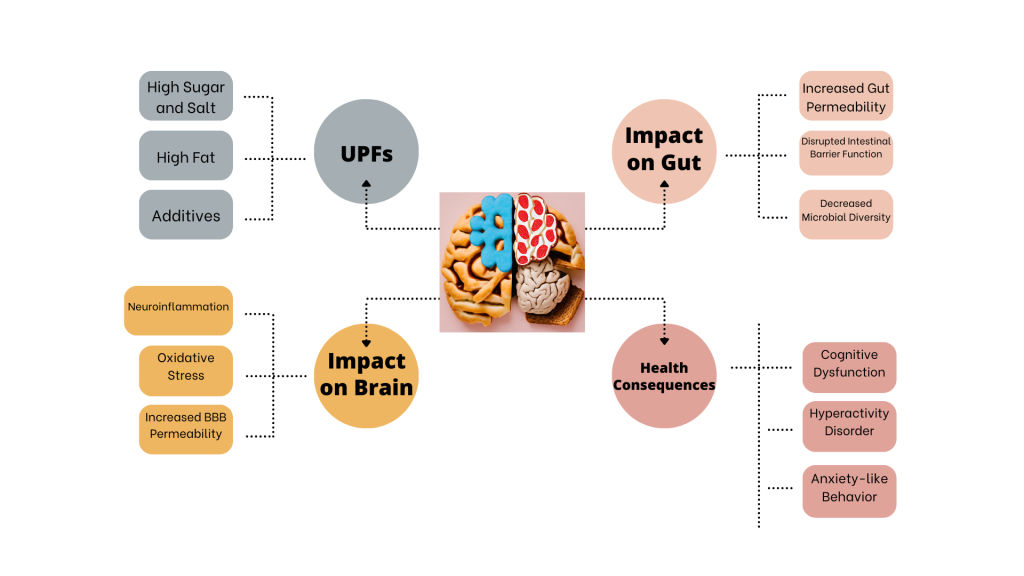
In recent decades, ultra-processed foods (UPF) have become prevalent in modern diets, containing high amounts of added sugars, salt, saturated fats, and various additives. These ingredients can disrupt the gut microbiota, compromise intestinal barrier function, and alter neurotransmitter metabolism in the gut and brain, impacting brain function and behavior. In a recent review, scientists have gathered what we know about UPFs and their adverse effects. Here’s a summary of their key points:
- High Sugar: Excessive sugar consumption, common in UPF, can lead to metabolic derangements, inflammation, and brain health issues. Sugar impacts brain areas regulating appetite and eating behavior, triggering dopamine release and potentially leading to overeating and metabolic disorders. Moreover, high-sugar diets can alter gut microbiota composition, leading to inflammation and neuroinflammation, and affecting memory and cognitive functions.
- High- and Low-Fat: High and low-fat UPF can negatively impact gut and brain functions. High-fat diets induce gut and brain inflammation, affecting cognitive functions, while low-fat diets may also alter gut microbiota composition and impair cognitive abilities.
- High Salt: High salt intake, common in processed foods, can induce oxidative stress and inflammation in the intestines and brain, leading to memory impairment and cognitive dysfunction. Salt-rich diets also affect gut microbiota composition, potentially influencing brain function through immunity pathways.
- Food Additives: Emulsifiers, sweeteners, colorants, and preservatives commonly found in UPF can disrupt gut microbiota composition and function, influencing brain health. For instance, emulsifiers can alter gut microbiota diversity, while sweeteners may trigger glucose intolerance and impact microbiome composition. Colorants and preservatives have been linked to hyperactivity and cognitive dysfunction, with some affecting gut microbiota and metabolic health.
In conclusion, our understanding of the intricate relationship between what we eat, the gut microbiota and brain health has expanded significantly in recent years. Through the microbiota-gut-brain axis, we now recognize the profound influence that diet, particularly the consumption of ultra-processed foods, can have on our overall well-being. The research outlined in this article sheds light on the detrimental effects of excessive sugar, high- and low-fat diets, high salt intake, and the additives commonly found in processed foods on both gut microbiota and brain function. However, it also presents promising avenues for intervention, such as manipulating plant-microbe communication systems. By harnessing the power of this secret language between plants and microbes, we may one day develop innovative strategies to improve crop yields, enhance nutrient absorption, and mitigate the risk of neurological disorders. As we continue to uncover the complexities of the microbiota-gut-brain axis, it becomes increasingly evident that paying attention to what we eat is crucial not only for our physical health but also for the well-being of our minds.
Link to the original post: Song, Zheyi, et al. “Effects of Ultra-processed Foods on the Microbiota-gut-brain Axis: The Bread-and-butter Issue.” Food Research International, vol. 167, 2023, p. 112730 (2023). https://doi.org/10.1016/j.foodres.2023.112730.
Featured image: Canva’s AI image generator










 micro-bites.org