
Breaking down the microbiology world one bite at a time
Trust Your Gut, It’s Working Out
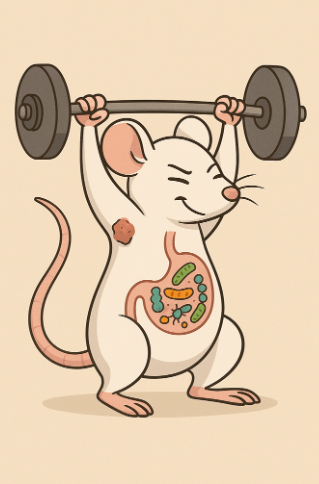
You have likely been told that to maintain good health, you need at least 7,000 steps a day, and for a good reason! Regular movement supports your heart, lifts your mood, and builds your muscles. Excitingly, recent research suggests that exercise can strengthen something a little less obvious: your immune system. Specifically, new findings published in Cell by Phelps, C.M. et. al. reveal that exercise reshapes the gut microbiome – the trillions of microbes living in your intestines that influence everything from digestion to inflammation – in ways that enhance the immune system’s ability to fight cancer.
Let’s start with the immune system’s disease-fighting defenders: cytotoxic T lymphocytes, or CD8 T cells for short. These white blood cells specialize in identifying and eliminating infected or cancerous cells. Once they recognize a threat in the form of an abnormal cell or foreign bacterial matter, CD8 T cells quickly divide into cytotoxic effector cells, killing their cell targets.
CD8 T cells are central to the adaptive immune system, meaning they “learn” and evolve in response to specific invaders. Their activity plays a key role in the success of cancer immunotherapies. Take immune checkpoint inhibitors, for example: a class of groundbreaking cancer drugs that help T cells attack tumors. These immune checkpoint therapies only work well when CD8 T cells are already primed and functioning. Without active CD8 T cells, these therapies are ineffective.
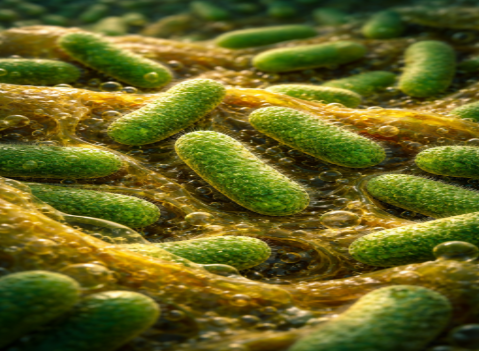
So, where does exercise fit into this equation? There is growing evidence that exercise promotes antitumor immunity, and it is increasingly being recognized in oncology as a beneficial addition to traditional cancer treatments. Until this study, the mechanisms underlying this benefit were unclear. Researchers placed mice on a treadmill training program and observed significant changes to their gut microbiomes. The exercised mice had higher levels of specific bacterial strains that produce formate, a short-chain fatty acid metabolite. Formate production was not just a side effect, but a key mediator in the immune-boosting effects of exercise. Examples of formate-producing microbes found in our guts include Monoglobus pectinilyticus and Desulfovibrio desulfuricans.
When formate was administered directly to mice with melanoma (a form of skin cancer), tumor growth slowed and their CD8 T cells became more active. Even more striking, the mice responded better to immune checkpoint inhibitors (specifically anti-PD-L1 therapy). To establish the role of the gut microbiome specifically, the researchers transplanted stool from human donors into mice. Those that received fecal transplants from high-formate-producing donors experienced greater tumor suppression and more robust CD8 T cell activity than those who received transplants from low-formate-producing donors. In essence, the immune-boosting effects of exercise were transferable and directly linked to formate-producing gut microbes (Figure 1).
As to how formate enhances immunity, the answer lies in a cellular pathway controlled by a transcription factor called Nrf2. Researchers found that formate activates Nrf2 in humans, causing it to “turn on” genes that protect cells from stress and damage (Figure below). In CD8 T cells specifically, Nrf2 activation leads to greater proliferation and tumor-killing ability. Importantly, when Nrf2 was genetically removed or chemically inhibited, formate lost its immune-enhancing effects, confirming that the Nrf2 pathway is essential for the observed increased antitumor immunity.

While the majority of this study was conducted in mice, the authors also analyzed data from nine separate human melanoma cohorts treated with immune checkpoint inhibitors. Across these studies, people who responded well to immunotherapy on average had gut microbiomes rich in formate-producing bacteria. These findings suggest that the same gut-immune mechanism in mice may be operating in humans. To test the connection more directly, the researchers measured formate levels in blood and stool samples from healthy individuals and cancer patients. Elevated formate levels in human serum correlated with longer progression-free survival during immunotherapy, complementing the fact that higher fecal formate levels were associated with stronger tumor suppression in mice.
This important discovery offers novel possibilities for cancer care, suggesting that exercise isn’t just a healthy habit, but could also be a therapeutic asset. By reshaping the gut microbiome, exercise helps train the immune system to recognize and attack tumors more effectively. Exercise also opens up promising new treatment avenues; microbiome-based interventions could be a powerful tool to supplement cancer treatment.
Could we develop precision diets to promote the growth of formate-producing bacteria? Could we offer “super-donor” fecal transplants alongside immunotherapy? Or even formulate formate-based supplements to support immune responses in patients who can’t exercise? While these ideas are still in early stages, the evidence is clear: the microbiome is an active participant in cancer immunity, and exercise only improves that outcome. This compelling new chapter in the fight against cancer gives the phrase “trust your gut” a whole new meaning.
Link to the original post: Phelps, C.M.; Willis, N.B.; Duan, T.; et. al. Exercise-induced microbiota metabolite enhances CD8 T cell antitumor immunity promoting immunotherapy efficacy. Cell 2025. Volume 188, 1-21.
Additional Sources:
To read a review on formate’s role in health, click here.
To read more about how exercise regulates the tumor microenvironment, click here.
Featured image: Image generated using ChatGPT.









 micro-bites.org