

Breaking down the microbiology world one bite at a time
Soil Bacteria: Protozoan Prey or Potential Pathogen?
Antibiotic resistance has been a known global burden desperately needing attention for years, described as one of the most pressing health threats of the 21st century by the World Health Organization in its Review on Antimicrobial Resistance in 2014. Despite plans to control this threat, progress has been stifled as antibiotic resistance and resistant infections continue to grow. In 2021 alone, antibiotic resistant bacterial infections were directly responsible for 1.14 million global deaths and contributed to 4.71 million deaths.1 With the continuously growing threat of antibiotic resistant bacterial infections, it is a public health concern to understand what factors encourage the spread of antibiotic resistance genes within bacterial populations.
When a bacterium attains antibiotic resistance from a random mutation, it can spread that resistance gene to other bacteria through horizontal gene transfer. One of the main methods of transferring DNA between bacteria is conjugation of plasmids. Plasmids are small, circular pieces of DNA that often contain genes contributing to their host’s survival. Not only may plasmids contain antibiotic resistance genes, but they can also contain genes allowing survival in the presence of heavy metals or other toxins. Plasmids can also carry virulence factor genes, which increase the ability of their host to cause disease.2
During conjugation, bacteria can transfer plasmids through direct cell-to-cell contact, effectively spreading any resistance or virulence genes they may contain. As these factors can promote the survival and adaptation of bacteria, plasmid conjugation is often driven by environmental factors such as low sources of energy or predation. In a natural environment like soil, the main predators of bacteria are protozoa. In this study, Lin and their team investigated what effect protozoan predation might have on the spread of antibiotic resistance genes in the soil bacteria community.
In the presence of two types of protozoan predators, the frequency of conjugation within the soil bacterial community increased 4.5 to 5 times the frequency seen without the presence of protozoans. This was further supported by the increased expression of conjugation-associated genes when in the presence of protozoan predators in comparison to the protozoan-free group. These results suggest that this predation pressure drives bacterial conjugation in an attempt for survival.
In addition to increased conjugation, protozoan predation led to increased reactive oxygen species (ROS) levels and ROS-related gene expression. ROS are molecules produced naturally during aerobic respiration that can build up under stress. These species can cause major damage to the DNA, proteins, lipids, and other major molecules of the cell.3
To account for these reactive molecules, the expression of antioxidant defense genes (which reduce particular ROS) and SOS-response genes were also increased in the presence of protozoans. The SOS response is a DNA repair mechanism to account for excessive DNA damage. This response has been associated not only with DNA repair, but also with increased genetic mutations and induction of conjugation.4 Thus, their results suggest that protozoan predation initiates stress responses of soil bacterial populations, which can encourage the expression and transfer of plasmids potentially containing antibiotic resistance or virulence factor genes in an attempt to survive.
Should these soil microbial environments be exposed to antibiotic resistance genes, it is likely that natural protozoan predation will select for these resistant bacteria as conjugation increases in the population, which increases the risk of these bacteria entering the human community. Studies have shown a rise in environmental antibiotic concentrations, or “antibiotic pollution”, stemming from improper treatment of human wastewater, the widespread, undiscerning nature of current medical antibiotic use, and the growing presence of microplastics in the environment. The antibiotic pollution could increase the distribution and development of antibiotic resistance genes in environmental microbial communities.5, 6, 7
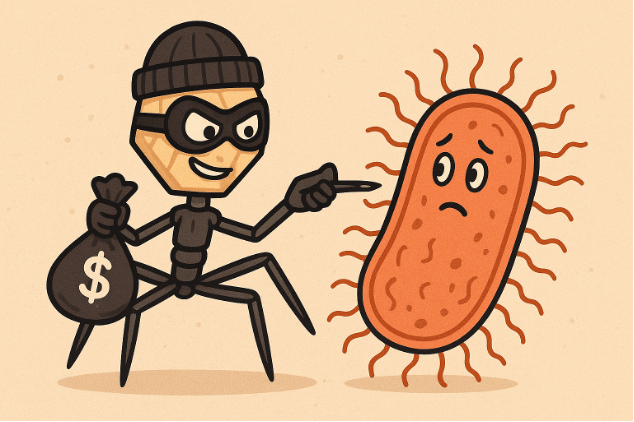
Overuse of antibiotics without a prescription or for unsuitable purposes, such as viral infections, risks the development of antibiotic resistance genes in patients. In addition, improper disposal of antibiotics in the medical, agricultural, and veterinary fields have increased antibiotics found in wastewater and soil, which leads to increased prevalence of bacteria with antibiotic resistance genes or other virulence factor genes.5 Wastewater treatment plants have been shown to be reservoirs of bacteria carrying antibiotic resistance genes, and studies suggest that microplastic particles may also act as surfaces capable of transporting antibiotic resistant microorganisms into the environment.6, 7 With this range of sources of antibiotic resistance genes and the natural predation of protozoans, it is only a matter of time before the major environmental bacteria populations harbor these devastating genes, becoming a looming threat no longer confined to the medical field (Figure 1). Thus, it is imperative that research continue into methods of limiting both the evolution of antibiotic resistant bacteria through overexposure to antibiotics and the spread of antibiotic resistance through environmental pressures and improper waste disposal.

Link to the original post: Lin C, Li L, Yang K, Xu J, Fan X, Chen Q, Zhu Y. Protozoa-enhanced conjugation frequency alters the dissemination of soil antibiotic resistance. ISME J. 2025 Jan;19(1):wraf009. .
Featured image: Created by the author with Clip Studio Paint









 micro-bites.org