

Breaking down the microbiology world one bite at a time
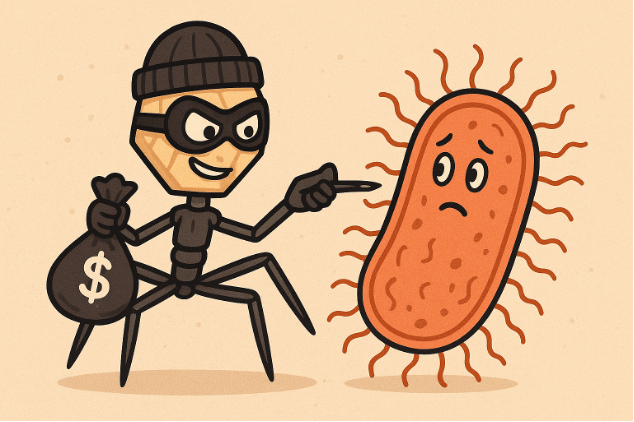
Codon Trash? Dengue Calls It Treasure!
Dengue virus (DENV) causes a disease, currently endemic in around 100 countries. Along with other flaviviruses such as Zika and West Nile virus, it is transmitted through the bites of infected mosquitoes belonging to the Aedes genus. Although historically, those diseases were confined to the tropical and subtropical regions due to mosquito-vectors there, climate change and mosquito migration have resulted in their geographical expansion, with dengue cases now being reported in more than 30 non-endemic countries.
Virus-host interactions are a complex, dynamic process— a constant battle during which the virus “tries” to replicate and the host tries to fight it off. In mosquito-borne diseases, the virus has two different hosts: humans who suffer the symptoms of disease, and mosquitoes, which carry the microbe without getting sick. However, in both organisms, immune systems adapt to the invading organism by constantly updating their defenses.
In this context, a recent study proposes that dengue virus favors codons for its replication that are not preferred by either of the hosts. The data show that this strategy may benefit the virus but also raises multiple fascinating questions that remain to be addressed such as: whether the host benefits from the virus, observed uncommon codon preference, molecular mechanisms underlying these altered preferences and their trigger.
But what are the codons, anyway?
In biological systems, translation is the process of converting a coded message from the DNA to protein, translating into functional proteins. Proteins do almost everything in the cell, and the instructions to build them are encoded in our DNA! You can think of DNA as a string of three-letter words called codons, with each codon representing an amino acid (a building block in the protein language). To “read” this genetic message, the cell uses molecular “vehicles” called tRNAs. Each tRNA matches a specific codon and carries the correct amino acid — the building block of proteins. As the tRNAs line up along the genetic message, they deliver their amino acids one by one, gradually building a protein word by word, like assembling sentences from a foreign script .
In some cases, some protein words (amino acids) have synonyms in the DNA language, meaning more than one codon can be found for the same amino acid. But cells do not treat all codons equally. Some codons are used much more often and are translated more efficiently, while others are rarely used, like fancy or formal synonym words you might save for special occasions.

Dengue virus prefers something less desirable by the host.
Dengue virus seems to favour the usage of what the host would normally consider “inefficient.” The virus consistently uses non-optimal codons, ones translated less efficiently in both human and mosquito cells. In their experiments, scientists observed that this preference actually intensifies during infection, suggesting an evolutionary advantage. Interestingly, they also found that infection boosts the levels of tRNAs carrying these rare codons, along with host genes that use them.
Why would dengue virus adopt such a strategy?
The exact reasons remain unclear, but one possibility is that rare codons slow down viral protein production just enough to stay under the radar of the host’s immune system. Another is that tweaking the host’s tRNA pool might subtly rewire the cell’s response in ways that favor the virus.
Returning to our language metaphor: imagine you’re having a conversation using simple, familiar words, while someone else keeps tossing in obscure synonyms. You might understand them eventually, but you’d hesitate, process more slowly, and lose the rhythm of the exchange. That disrupted communication might be exactly what the virus is counting on; to use this trash language into a valuable replication treasure not used by the either of the two hosts
Link to the original post: Castellano, L. A., McNamara, R. J., Pallarés, H. M., Gamarnik, A. V., Alvarez, D. E., & Bazzini, A. A. (2024). Dengue virus preferentially uses human and mosquito non-optimal codons. Molecular Systems Biology, 20(10), 1085-1108.
Featured image: Image generated with Google Gemini.













 micro-bites.org