
Breaking down the microbiology world one bite at a time
The infectious viral loops
The human immunodeficiency virus or HIV is a virus that affects the body’s immune cells, specifically the CD4+ T cells, weakens its ability to fight infections and diseases, and causes a highly advanced infection called AIDS. HIV-1 is a retrovirus whose main genetic material is RNA.
RNA (abbreviation of ribonucleic acid) is a type of nucleic acid and is a vital part of all living organisms. It plays an important role in various cellular processes, especially protein synthesis. There are different types of RNAs present in the body, but in this article, we will only talk about mRNA, miRNA, and circRNA.
The HIV-1 RNA genome transforms into DNA, fuses into the cellular genome, and is then again transcribed into a single main RNA. This RNA is subsequently processed similarly to most cellular transcripts by a process called splicing.
RNA splicing is the process by which a freshly generated precursor messenger RNA (pre-mRNA) transcript is changed into a mature messenger RNA (mRNA). This entails connecting the coding regions (exons) together and eliminating the non-coding portions (introns). This process is mediated by a complex of proteins and RNA, known as the spliceosome.
Over 50 alternatively spliced mRNA isoforms are produced by the complicated HIV-1 alternative splicing pattern. Viral pathogenicity, infectivity, and replication depend on the balanced expression of the spliced and unspliced transcripts.
This article focuses on the role of a specific type of RNA, circular RNA (circRNA), in facilitating viral infection. Before moving on to the role of circRNAs, let us first understand their basic features and why it is important to study them. CircRNAs are a family of non-coding RNAs that originate from a non-canonical splicing event, named backsplicing. Here, the upstream (5’) and downstream (3’) splicing sites of an RNA transcript become linked to form a closed loop of RNA as opposed to the typical linear structure of mRNA transcripts. The lack of 5’ and 3’ termini makes circRNAs highly resistant to degradation by nucleic acid-degrading enzymes, resulting in their hyperstability and extremely long half-life (time taken by a substance to attain 50% degradation). These characteristics make circRNAs excellent candidates for diagnostic biomarkers and therapeutic targets. More information on circRNAs can be found in the ‘Additional Sources’ section.

The single pre-mRNA can be back-spliced with the 5’ terminus of upstream (before the splicing site) exon 2 ligated to the 3′ terminus of downstream (after the splicing site) exon 3 to generate a circRNAs.
Otherwise, the exons of the pre-mRNA can be joined colinearly by canonical splicing to form mRNAs or LncRNAs.
Image source: Yu and Kuo (2019)
The body cannot eliminate HIV, and there is currently no proven treatment for the virus. Fortunately, antiretroviral therapy is an effective HIV medication. Thus, scientists are constantly searching for more and better ways to improve the patient’s quality of life and minimize the consequences of the infection. In their recent article, Mauer, Paz, and Caputi have uncovered a previously undiscovered mechanism that allows HIV-1 to circumvent the body’s defences and utilise it to aid in its multiplication and survival.
Loophole mechanism
The first ever experimental proof of HIV-1 producing circRNAs from an integrated retroviral genome is represented by the ‘loophole’ mechanism, a biological process involving circRNAs. Certain miRNAs are normally found in trace amounts, but when an individual has HIV, their levels rise, to try and fight the virus. HIV responds by producing circRNAs. Because of their looping structure, circRNAs are significantly more stable and can function as sponges, absorbing miRNAs and stopping them from carrying out their normal functions, such as regulating which genes are activated or inactive.
circRNAs generated by backsplicing in HIV
Multiple circRNAs may be produced by backsplicing of the primary viral transcript in HIV-1, as evidenced by the existence of multiple alternatively spliced exons that are controlled by the RNA-binding proteins and the alternative use of various weak splice sites. A weak splice site is an area where the RNA splicing machinery has a lower chance of correctly identifying and removing the intron (a non-coding DNA sequence) and joining the neighbouring exons (coding DNA sequences). The splicing process is less effective at these sites because they are not as well matched to the canonical splicing consensus sequences. The authors have identified 15 HIV circRNAs that were detected in CD4+ T Cells, a group of immune cells produced by the thymus gland. They showed that a subset of these circRNAs promote viral replication by functionally interacting with two specific cellular miRNAs.
One of the miRNAs, called miR-4722-3p, has been demonstrated to have established roles in T cell functions and HIV-1 replication. On the other hand, another miRNA, called miR-6727-3p, has also been linked to various diseases. Following integration and expression of the proviral genome, the HIV circRNAs’ functional interaction with miR-6727-3p and miR-4772-3p suggested that these miRNAs may contribute to viral replication. In general, these miRNAs are known to inhibit viral replication. However, as observed by the authors of the present study, HIV-1 virus produces circRNAs in response to these miRNAs, which inhibit their function. This inhibition of miRNA function thus leads to increased viral replication.

In the general scenario, HIV-1 infection promotes miR-6727-3p and miR-4722-3p expression, which restricts viral replication.
In the present study, however, it has been reported that processing of the viral transcript leads to the production of a series of circRNAs that can sponge miR-6727-3p and miR-4722-3p and inhibit their functions, which in turn increases viral replication.
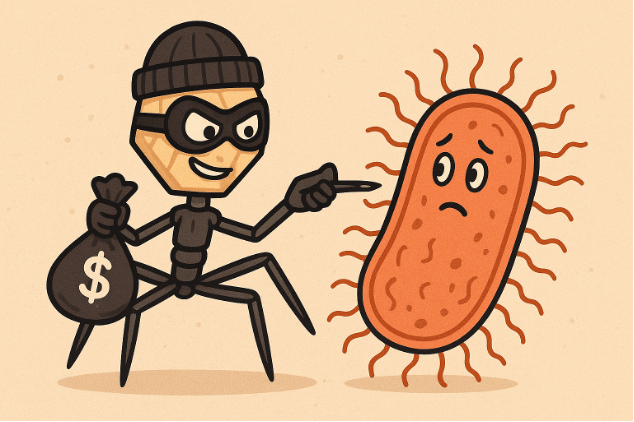
Image source: Created by the author using Canva.
Findings of this study suggest a new survival strategy for the virus, offering a fresh target in the battle against one of the most durable diseases in the world. The results also imply that individual differences in circRNA production can impact variations in viral persistence and dissemination. The availability of RNA-binding proteins required to generate circRNAs and the way host cells process RNA may be the causes of this diversity. In particular, RNA-binding proteins have the ability to either directly interact with circRNA-forming sequences or encourage the development of secondary structures that aid in back-splicing, which is how circRNAs are produced. Different circRNA isoforms can also be produced as a result of differences in the way host cells process RNA, such as alternative splicing.
Link to the original post: C. Mauer, S. Paz, M. Caputi. Backsplicing of the HIV-1 transcript generates multiple circRNAs to promote viral replication. npj Viruses, 3, 21, March 2025.
Additional Sources:
- C.Y. Yu, H.C. Kuo. The emerging roles and functions of circular RNAs and their generation. J Biomed Sci, 26, 29, April 2019. DOI: 10.1186/s12929-019-0523-z.
- L.S. Kristensen, M.S. Andersen, L.V.W. Stagsted, K.K. Ebbesen, T.B. Hansen, J. Kjems. The biogenesis, biology and characterization of circular RNAs. Nat Rev Genet, 20, 675–691 November 2019. DOI: 10.1038/s41576-019-0158-7.
- W.Y. Zhou, Z.R. Cai, J. Liu, D-S. Wang, H-Q. Ju, R.H. Xu. Circular RNA: metabolism, functions and interactions with proteins. Mol Cancer, 19, 172, December 2020. DOI: 10.1186/s12943-020-01286-3.
Featured image: Image created by the author using Canva.









 micro-bites.org