
Breaking down the microbiology world one bite at a time
HD5: The Secret Trick of Shigella Infection
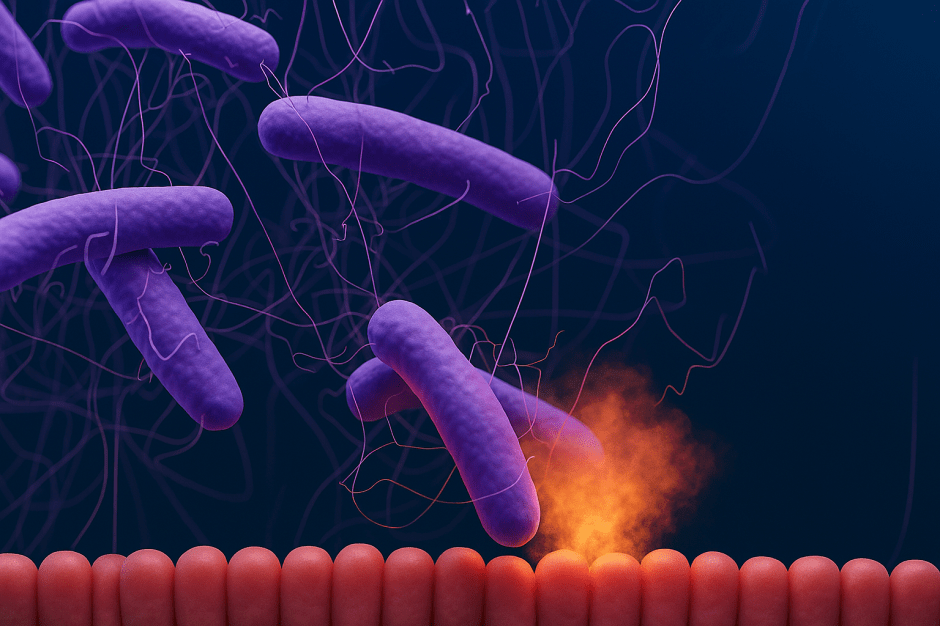
On the surface, shigella infections (or Shigellosis) may seem relatively mild. Symptoms usually only persist for a week or less and rarely require antibiotics. However, Shigella nonetheless causes 450,000 infections and $93 million in direct medical costs each year in the United States alone (1). This pronounced level of infectivity has puzzled scientists, as Shigella in the lab fails to enter host cells with anywhere near the efficiency suggested by its infection rate outside the lab. One explanation for this discrepancy is that Shigella invades the host by interacting with the filopodia of host cells, which are thin projections of the cellular surface that cells use to move and interact with the surrounding environment. In the lab, filopodia tend to be relatively sparse and fragile, meaning that Shigella can no longer successfully use filopodia to infiltrate the target cell.

However, cells in the human body behave much differently than they do in an isolated experimental environment. In reality, cells interact with one another and secrete a wide variety of different molecular signals. Xu and colleagues have shown that one of these molecules, human enteric α-defensin 5 (HD5), is the secret to how Shigella is so infectious. HD5 is normally supposed to be a protective component of the body’s immune system, but shigella can “hijack” it from this intended function to help facilitate their way inside the host. Indeed, simply treating the host cells with HD5 is sufficient to massively increase filopodia sprouting, which the scientists refer to as ‘HD5-induced filopodial extensions’ (HIFE). Shigella successfully used these HIFE to increase the uptake rate into host cells. The researchers confirmed that this phenomenon occurs in a variety of different epithelial cell lines, which are the types of cells that make up the outside lining of many organs, including the intestine and the colon.
The next step of this research was to identify exactly how HD5 causes HIFE to sprout. Using a combination of data science and molecular biology techniques, the researchers were able to identify the cellular receptor P2Y11 as the target of HD5. Excitingly, they were able to go beyond just identifying this receptor to finding a drug called NF157 that can prevent HD5 from interacting with P2Y11 and creating HIFE. Not only did this happen in experiments, but NF157 was also able to block Shigella infection in Guinea pigs. NF157 was also able to do the same in a “gut on a chip”, which is a synthetic model of the human digestive system that more closely mimics a real body compared to isolated cells in a flat dish.

While this research is fascinating simply for its applications to better understanding and preventing Shigellosis, the applications are even greater. Other pathogens, including human immunodeficiency virus (HIV), have been shown to also utilize HD5 to increase infectivity, so better understanding of this mechanism may lead to better treatments for a variety of different illnesses. This goes to show that understanding even seemingly “basic” aspects of microbiology can end up having huge impacts down the line.
Written by Dana Creasman
Link to the original post: Xu, D., Guo, M., Xu, X. et al. Shigella infection is facilitated by interaction of human enteric α-defensin 5 with colonic epithelial receptor P2Y11. Nat Microbiol 10, 509–526 (2025).
Additional Source: Centers for Disease Control and Prevention. (2024, January 10). About Shigella Infection. Centers for Disease Control and Prevention. https://www.cdc.gov/shigella/about/index.html
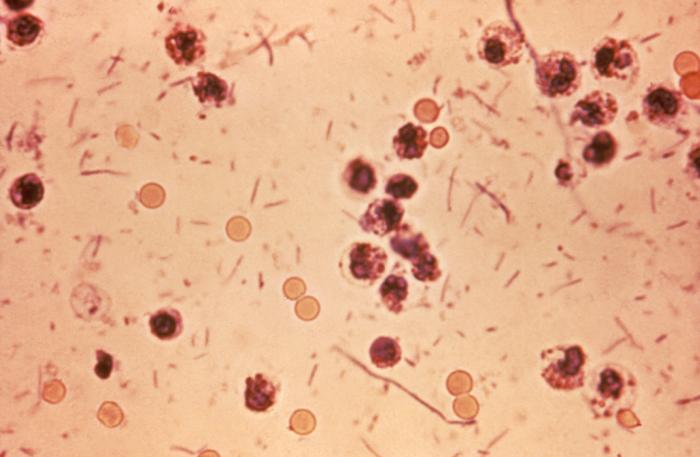
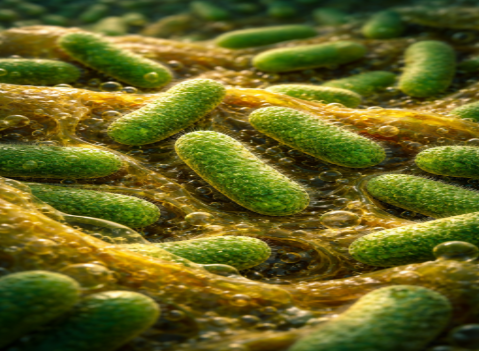
Featured image: Image of Shigella found in a stool sample, courtesy of the Centers for Disease Control and Prevention Public Health Image Library https://en.wikipedia.org/wiki/Shigellosis#/media/File:Shigella_stool.jpg






 micro-bites.org

