

Breaking down the microbiology world one bite at a time
Brain Boosting Bugs? How Gut Archaea May Increase Cognitive Performance
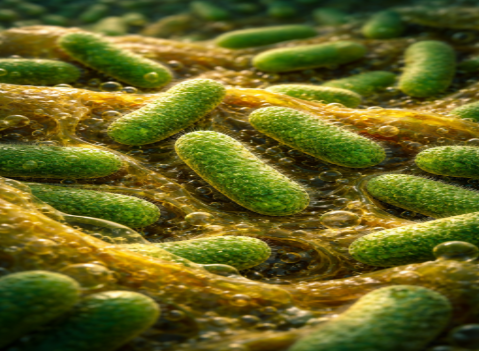
When I mention the microbiome, most people assume that I am talking about bacteria. However, the microbiome entails all the microorganisms in our guts, including fungi, viruses, bacteria and archaea. Archaea are a lesser-known branch of life, distinct from both bacteria and eukaryotes (like fungi or humans). They look similar to bacteria under the microscope, but genetically and biochemically, they’re different. They are ancient microorganisms that first appeared on Earth billions of years ago, long before animals (or even plants) were a thing. Some of their relatives still thrive in extreme environments like hot springs and salt flats, while others live in our guts. New research suggests that these ancient organisms, specifically Methanobrevibacter smithii, might be quietly influencing our brain power. Could tweaking our gut archaea be the key to boosting cognition?
For a long time, scientists weren’t sure archaea played a meaningful role in human health. But a few small studies hinted otherwise. Some showed that people with malnutrition had fewer archaea, while others linked M. smithii to metabolic differences and even subtle shifts in inflammation.
A recent study explored how M. smithii, a type of methanogen (a microbe that generates methane in the gut), is linked to cognitive function. Cognition is everything that involves using your brain, like attention, memory and other important functions. Using DNA sequencing technology (metagenomics) and psychological testing, researchers discovered that people with higher levels of M. smithii performed better on tests measuring attention, memory, and cognitive flexibility. These individuals also had a distinct gut microbiome composition, with an abundance of beneficial bacteria like Verrucomicrobia and Lentisphaerae, while potentially harmful groups such as Proteobacteria were reduced. The findings were consistent across two large human cohorts (over 900 people), making a strong case for a gut-brain connection involving archaea.
It all comes down to metabolism (the chemical reactions that make stuff happen in your body). Researchers found that people with more M. smithii had increased production of butyrate, a short-chain fatty acid known to support brain health by reducing inflammation and fueling brain cells. Butyrate has been linked to improved cognitive function, making it a prime suspect in M. smithii’s brain-boosting effects. The study also found shifts in histidine and linoleic acid metabolism—processes involved in muscle function, energy production, and even neurotransmitter balance. This suggests that M. smithii may influence cognition by optimizing gut microbial interactions and metabolic pathways.

To test if these effects were causal, researchers performed fecal microbiota transplants (FMT) in mice. Mice that received gut microbes from high M. smithii human donors showed improved cognitive flexibility, reduced weight, and changes in brain metabolites associated with enhanced mental performance. This experiment suggests that manipulating gut archaea could directly impact brain function.
These findings open the door to exciting possibilities. Could we harness M. smithii as a probiotic for cognitive health? Could future treatments for age-related cognitive decline or metabolic disorders involve tweaking gut archaea? While more research is needed, this study highlights the potential of an underappreciated group of microbes in shaping brain function. So, next time you think about gut health, remember—it’s not just about bacteria! The ancient and mysterious archaea might be key players in keeping our minds sharp.
Link to the original post: Fumagalli, A., Castells-Nobau, A., Trivedi, D., Garre-Olmo, J., Puig, J., Ramos, R., … Mayneris-Perxachs, J. (2025). Archaea methanogens are associated with cognitive performance through the shaping of gut microbiota, butyrate and histidine metabolism. Gut Microbes, 17(1). https://doi.org/10.1080/19490976.2025.2455506
Featured image: Created by author using Canva Pro.
Additional sources
Bokoliya SC, Dorsett Y, Panier H, Zhou Y. Procedures for Fecal Microbiota Transplantation in Murine Microbiome Studies. Front Cell Infect Microbiol. 2021 Sep 21;11:711055. doi: 10.3389/fcimb.2021.711055. PMID: 34621688; PMCID: PMC8490673.
Camara A, Konate S, Tidjani Alou M, Kodio A, Togo AH, Cortaredona S, Henrissat B, Thera MA, Doumbo OK, Raoult D, et al. Clinical evidence of the role of Methanobrevibacter smithii in severe acute malnutrition. Sci Rep. 2021;11(1):5426. doi:10.1038/s41598-021-84641-8.
Chatterjee S, Park S, Low K, Kong Y, Pimentel M. The degree of breath methane production in IBS correlates with the severity of constipation. Am J Gastroenterol. 2007;102(4):837–841. doi:10.1111/j.1572-0241.2007.01072.x.
Bayne, T., Brainard, D., Byrne, R. W., Chittka, L., Clayton, N., Heyes, C., … & Webb, B. (2019). What is cognition?. Current biology, 29(13), R608-R615. https://www.cell.com/current-biology/fulltext/S0960-9822(19)30614-1?dgcid=raven_jbs_etoc_email
National Human Genome Research Institute. Genome Glossary. Metagenomics. (2025) https://www.genome.gov/genetics-glossary/Metagenomics
Cavaleri, F., & Bashar, E. (2018). Potential synergies of β‐hydroxybutyrate and butyrate on the modulation of metabolism, inflammation, cognition, and general health. Journal of Nutrition and Metabolism, 2018(1), 7195760. https://pubmed.ncbi.nlm.nih.gov/29805804/











 micro-bites.org