

Breaking down the microbiology world one bite at a time
Biological Time Under Siege
Have you ever experienced jet lag after a long flight across multiple time zones? You may have noticed symptoms such as disrupted sleep, daytime fatigue, changes in meal timing, and even digestive issues. Unlike a mobile phone, which instantly resets its clock to match a new time zone, your body has an internal molecular clock synchronized with its previous environment. It cannot automatically adjust to new conditions but requires time to adapt, leading to those symptoms.
Just like humans, organisms have evolved within dominant environmental rhythms that shape their physiology and behavior. The natural 24-hour cycle of day and night, along with daily and seasonal fluctuations in temperature, humidity, and other environmental factors, has led to the evolution of circadian rhythms—internal biological clocks that help organisms stay in sync with their surroundings. The system is also described in other articles about the circadian clock (read more here).
If you find it fascinating that organisms have well-orchestrated internal clocks to optimize their interaction with the environment, you’ll be even more amazed to learn that during infections with certain parasitic microorganisms, hosts’ rhythms can be altered in ways that favor the parasites. This phenomenon is the basis of the “manipulation hypothesis,” which suggests that parasites exploit or even hijack these rhythms for their own advantage.
A recent study by Boy-Waxman and colleagues reviews what we know so far about how parasites manipulate their hosts’ circadian rhythms.
When parasites infect a host, they enter a rhythmic environment where levels of hormones, metabolites, and immune factors fluctuate in predictable cycles. These oscillations influence the success of parasitic infections, as they determine when and where crucial immune defenses or other physiological responses peak. The balance between host resistance and parasite survival is orchestrated by the circadian clock which affects the availability of many of these factors in space and time (i.e. the top levels of an immune factor could be at night in a specific tissue/organ).
Examples of Parasite-Host Interactions Affecting Rhythms
- Parasitized snails favor their predation by the parasites’ primary hosts: The trematodes of the Microphallus genus, which use waterfowl as their primary hosts, can also infect snails as intermediate hosts. Infected snails exhibit altered behaviors, avoiding peak fish predation times while remaining vulnerable to waterfowl attacks, ultimately increasing the parasite’s chances of reaching its primary host.
- Parasite-infected bugs show modified feeding preferences: The protozoan Trypanosoma cruzi, which causes Chagas disease, is transmitted via the triatomine bug’s bites. Different bug species prefer to feed at different times of the day. However, infected bugs exhibit altered circadian rhythms, shifting their feeding behaviors in ways that promote parasite transmission.
- “Zombie” insects migrate before death: Some fungal parasites, such as Ophiocordyceps, infect carpenter ants, triggering “summit behavior,” where ants climb to elevated positions and exhibit increased biting behaviors at specific times, facilitating fungal spore dispersal. Similarly, Entomophora fungal parasites, infect flies, which before their death, fly higher and spread their wings, again facilitating spore proliferation. It has been shown that core circadian genes in these flies are significantly affected by infection.
- Parasitized crickets jump into water: Infected crickets with Nematophora hairworms, “commit suicide” by jumping into water sources, allowing the worms to complete their life cycle in an aquatic environment. Normally, crickets avoid water due to their light perception abilities governed by their circadian rhythms.
- Trypanosoma parasites disrupt sleep cycles: The sleeping sickness in humans is caused by the Trypanosoma brucei protozoan parasite, via tsetse fly bites. The disease is characterized by severe circadian dysregulation. Infected individuals experience disrupted sleep-wake cycles, a phenomenon also observed in mouse models.
- Malaria parasites replicate in sync into their mammalian host: Malaria parasites (Plasmodium species) that are transmitted to humans via infective bites of female mosquitoes of the Anopheles genus, replicate in the host red blood cells in synchrony, giving rise to the characteristic periodic fevers of the disease. The peaks at the parasite levels are coordinated with the immune and metabolic factors of the host, while in many studies production of clock gene proteins is also compromised.

A Complex Interplay Between Host and Parasite
In many cases, it is clear that parasites benefit from these alterations in host rhythms. However, the question remains: Do these changes arise from the parasite actively manipulating the host, or are they simply byproducts of the host’s immune response? Inflammation alone can disrupt circadian rhythms, making it challenging to determine causality. Some studies indeed pinpoint that circadian disruptions occur due to inflammation or other infection responses, while others elegantly present that parasites interfere with circadian regulatory mechanisms regardless of infection.
Ultimately, the interplay between host and parasite is a dynamic battle. Hosts adjust their biological rhythms to optimize defense, while parasites exploit these rhythms to maximize their own survival and transmission. The true extent of parasitic circadian manipulation remains an open question, requiring case-specific studies to distinguish between host-driven responses and parasite-induced control.
Link to the original post: Boy-Waxman S, Olivier M, Cermakian N. 2024. Clockwork intruders: Do parasites manipulate their hosts’ circadian rhythms? Curr Res Parasitol Vector Borne Dis. doi: 10.1016/j.crpvbd.2024.100171. PMID: 38545439; PMCID: PMC10966150.
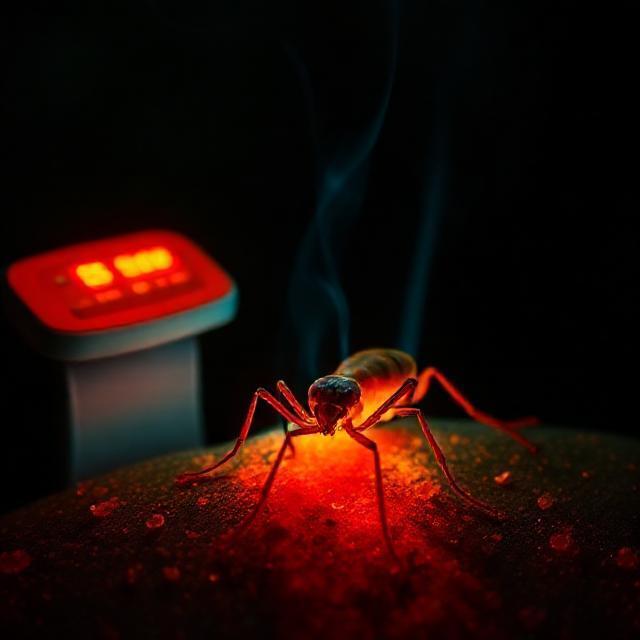
Featured image: Gencraft, Free AI Art Generator.










 micro-bites.org