
Breaking down the microbiology world one bite at a time
That’s Metal! Tackling Antimicrobial Resistance with Bismuth
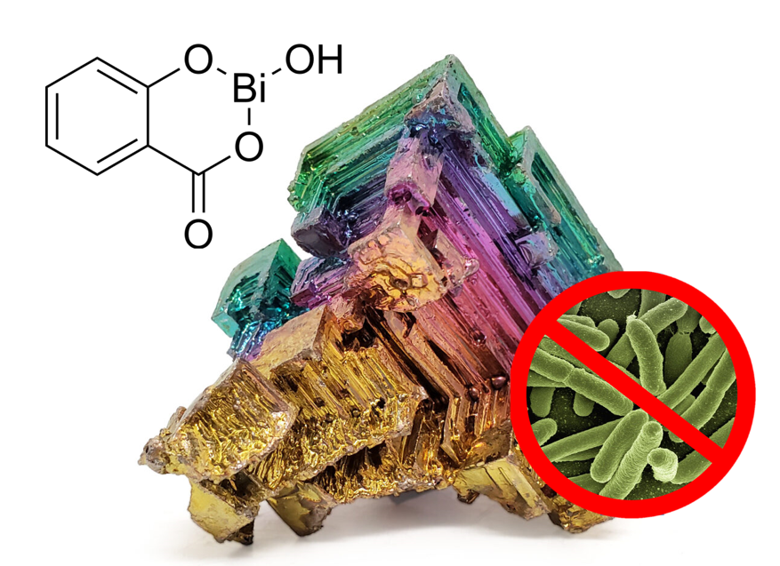
Pepto-Bismol: distinct in its unmistakable pink color, the notorious cure-all for stomach ailments, but how does this viscous virtuoso work? The active ingredient in Pepto-Bismol is bismuth subsalicylate, which exerts its healing effects through a variety of mechanisms – in the context of this article, we are concerned with its ability to kill bacteria. Bismuth subsalicylate breaks down into two components in the stomach: salicylic acid, a close relative of aspirin, and bismuth. Interestingly, this element has notable antimicrobial properties, including preventing bacterial adhesion to the stomach and intestinal lining. Without proper adhesion, biofilms cannot form. A biofilm is an encased community of bacteria that attach to surfaces, rendering many antibiotics ineffective. If it’s good enough for Pepto-Bismol, it’s good enough for science – let’s harness this powerful element for our antimicrobial repertoire!
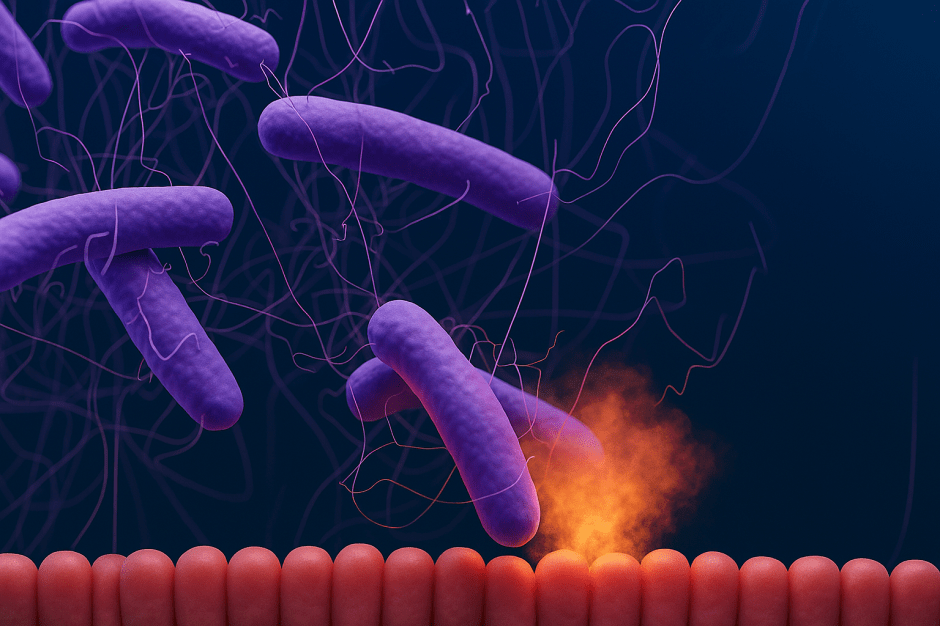
Recently, research teams from the University of Hong Kong and the University of Groningen investigated the potential of bismuth-containing compounds, such as bismuth subsalicylate, in combination with antibiotics. In particular, the researchers were interested in treating Pseudomonas aeruginosa infections due to its notable antimicrobial resistance; medicine currently lacks novel and efficacious antibiotics to treat these Gram-negative bacterial pathogens. Resistance in P. aeruginosa is largely attributed to drug efflux pumps, which rely on the cell’s energy source (ATP) to remove antibiotics, and the formation of biofilms, which shield inner bacteria from antibiotic penetration.
The growing antimicrobial resistance crisis demands strategic alternatives. One key strategy is to repurpose existing antibiotics in combination therapies to increase and prolong their efficacy. To explore this, the researchers screened for antimicrobial activity of bismuth salicylate in combination with thirty different antibiotics. They were surprised to find that all antibiotic classes showed moderate to excellent synergy against P. aeruginosa. Synergy occurs when the combined effect of two or more drugs exceeds the sum of their individual effects, leading to a significantly improved efficacy.
Emboldened by these positive results, the researchers pushed their investigation further. Co-administration of bismuth salicylate with antibiotics prevented the development of significant antimicrobial resistance in a diverse array of resistance mechanisms. The fact that bismuth was able to thwart resistance by maintaining the antimicrobial activity of antibiotics is remarkable! Furthermore, the researchers examined antimicrobial activity in biofilm models, where they saw that the incorporation of bismuth salicylate remained synergistic with antibiotics. Lastly, these findings were reproducible in infected mice, where the treatment improved survival rates and tolerated safety profiles. When developing a novel antimicrobial treatment, it is important to thoroughly evaluate the safety profile – per the U.S. Food and Drug Administration (FDA), there must be no significant safety concerns, including any toxicity or adverse side effects.
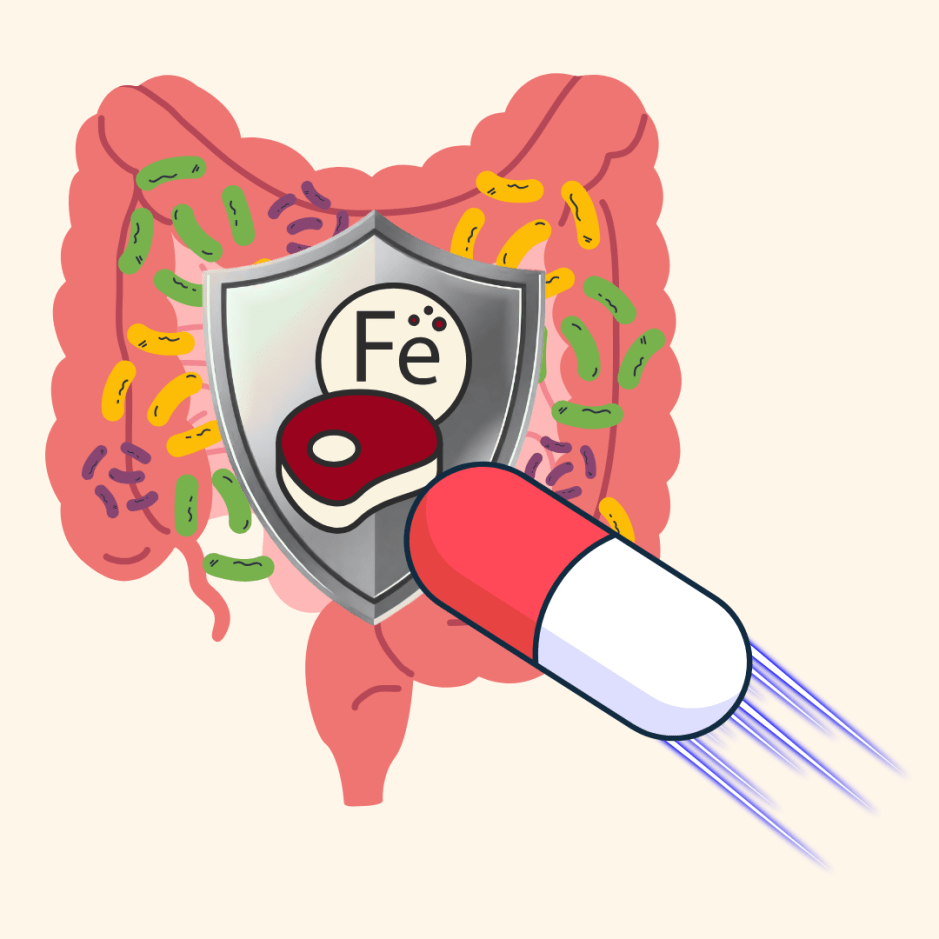
In the case of P. aeruginosa, why can bismuth act as an effective antimicrobial and a useful tool when combined with antibiotics? Bismuth attaches to and blocks key iron-binding molecules, called siderophores, excreted by bacteria to prevent proper iron acquisition. Additionally, bismuth interferes with iron uptake by bacterial cell surface receptors. The cumulative result is iron deprivation inside the microbial cells, leading to an imbalance of key metabolites and, as a result, dysregulation of essential cell processes. In more detail, the lack of iron disrupts the electron transport chain, which is the process responsible for generating ATP, the bacterial cell’s primary energy source. Without sufficient ATP, essential cellular functions, including antibiotic efflux mechanisms, are compromised. As a result, co-administered antibiotics accumulate within the bacterial cell, increasing their effective concentration and rendering the bacteria more vulnerable to treatment.
As we continue to tackle growing antimicrobial resistance, the value of synergy becomes strikingly clear – clever combinations are more important than ever. Turning toward creative solutions will help us make better use of existing antibiotics and lead to exciting new breakthroughs in medicine. Bismuth could be the heavy metal hero we need in our ongoing battle against superbugs!
Link to the original post: Xia, Y.; Wei, X.; Gao, P.; Wang, C.; de Jong, A.; Chen, J. H. K.; Rodríguez-Sánchez, M. J.; Rodríguez-Nogales, A.; Diez-Echave, P.; Gálvez, J.; García, F.; Wu, W.; Kao, R. Y.-T.; Li, H.; Cebrián, R.; Kuipers, O. P.; Sun, H. Bismuth-Based Drugs Sensitize Pseudomonas Aeruginosa to Multiple Antibiotics by Disrupting Iron Homeostasis. Nature Microbiology 2024. https://doi.org/10.1038/s41564-024-01807-6.
Featured image: Created by the author
Additional sources:
To learn more about bismuth salicylate, click here.
To read more about the role of bismuth in clearing other bacterial infections, click here or here.






 micro-bites.org