

Breaking down the microbiology world one bite at a time
Finding Relief from IBS: The Power of Probiotics
The intestinal barrier plays a crucial role in maintaining gut health, acting as a protective filter that allows nutrients to pass while keeping potentially harmful substances out. In some individuals with Irritable Bowel Syndrome (IBS), this barrier can become “leaky”, which can lead to immune activation and discomfort. This study examines how specific probiotic strains (beneficial bacteria that can support gut health) might repair this barrier, reduce “leakiness”, and reduce IBS symptoms.
What is IBS, and why does It matter?
Irritable Bowel Syndrome (IBS) is a common and complex digestive disorder that affects millions of people worldwide. Its symptoms can vary widely, including abdominal cramping, bloating, diarrhea, constipation, or a combination of these. While the exact causes of IBS remain unclear, research suggests it may result from a interplay of factors, including changes in how the gut moves food through the digestive system, increased sensitivity to pain or discomfort in the gut, communication problems between the gut and the brain, changes in the gut microbiome, and immune system dysfunction.
One potential contributing factor in some cases of IBS involves increased intestinal permeability, often referred to as a “leaky gut”. The intestinal barrier typically acts as a selective filter, allowing essential nutrients to pass into the bloodstream while blocking harmful substances. In certain individuals with IBS, this barrier may become compromised, allowing larger molecules or toxins to pass through. This breach can trigger an immune response, potentially leading to inflammation and contributing to symptoms such as discomfort and pain.
Addressing intestinal permeability could be a therapeutic avenue for specific subgroups of IBS, which is why scientists are exploring interventions such as probiotics to support gut barrier function and overall gut health.
Meet the probiotics:
The study focused on a special blend of probiotics, a carefully selected mix of beneficial bacteria designed to support gut health. This blend included three bacterial strains:
- Lactiplantibacillus plantarum (two strains):
This probiotic is naturally found in a variety of fermented food products and dairy, such as pickles, kimchi, sauerkraut, sourdough, and certain cheeses. It is also commonly added to foods like yogurt to enhance health benefits
- Pediococcus acidilactici
This probiotic has been studied for its potential benefits in managing digestive disorders in dogs. It has been included in supplements for pets to address issues such as diarrhea, inflammatory bowel conditions, and other gastrointestinal disturbances.
Previous studies had already shown that this blend could improve the quality of life for IBS patients. But the scientists wanted to dig deeper to figure out why and how it works.
To understand the effects of these probiotics, researchers used lab-grown intestinal cells to create a model of the human gut. These cells were exposed to substances taken from the gut tissue of IBS patients (substances that are known to disrupt the gut barrier and make it more “leaky”). The goal was to see if the probiotics could repair the damage.
The results were promising:
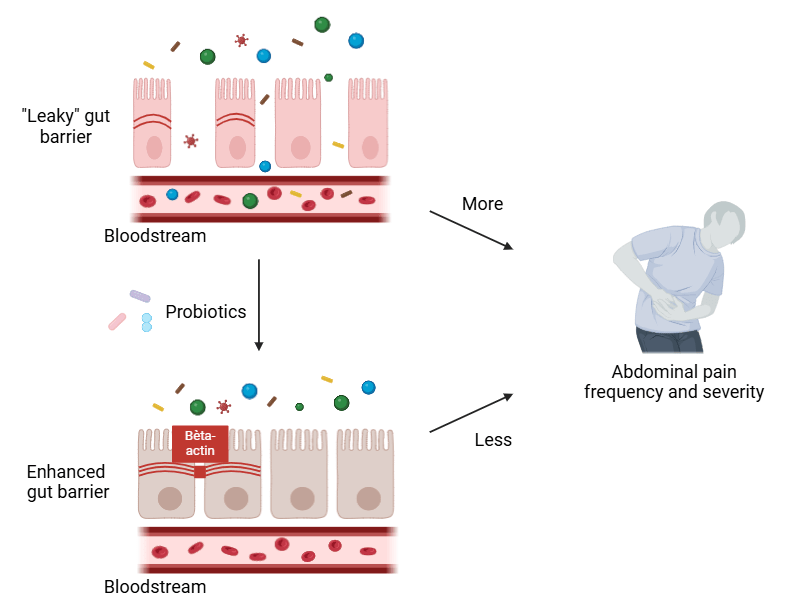
- Reduced Leakiness: Within just three hours, the probiotics reduced the “leakiness” of the intestinal barrier. This means fewer harmful substances could pass through, helping to protect the gut.
- Enhanced Strength: The probiotics boosted the production of beta-actin, a protein that plays a crucial role in keeping the gut cells tightly connected and structurally sound.
- Molecular Boost: The probiotics activated a gene called CYP1A1, which is involved in breaking down harmful substances. This suggests that the probiotics could offer additional protection against irritants in the gut.
One of the most exciting discoveries was that the probiotics produced a compound called indole-3-lactic acid. This compound acts like a chemical messenger, activating pathways that protect and heal the gut lining. This finding sheds light on a potential mechanism through which probiotics could improve gut health in people with IBS.
How does this link to IBS symptoms?
The researchers found a direct connection between the strength of the gut barrier and IBS symptoms. The more “leaky” the barrier, the worse the symptoms reported by IBS patients, including abdominal pain and bloating. By repairing the barrier, the probiotics may help ease these symptoms, offering hope for those living with IBS.
Why Is This Important?
This research highlights the potential of probiotics as a natural, non-invasive treatment for IBS. Unlike medications that may only target specific symptoms, probiotics work to improve the overall health of the gut. For people with IBS, this could mean fewer flare-ups, less discomfort, and a better quality of life.
What’s Next?
While the findings are exciting, they’re just the beginning. More research is needed to confirm how effective and safe this probiotic blend is in a larger group of IBS patients. Researchers also want to explore whether the benefits extend to all types of IBS (there are different subtypes, like IBS with diarrhea or constipation). For now, this study provides a strong foundation that probiotics could be a helpful nutritional approach to strengthen the gut barrier and relieve IBS symptoms.
Link to the original post: Lactiplantibacillus plantarum (CECT7484 and CECT7485) and Pedioccoccus acidilactici (CECT7483) enhance actin cytoskeleton and CYP1A1 expression restoring epithelial permeability alterations induced by irritable bowel syndrome mediators
https://pubmed.ncbi.nlm.nih.gov/39817446/
Featured image: Adapted from https://deepai.org/machine-learning-model/text2img using BioRender










 micro-bites.org