

Breaking down the microbiology world one bite at a time
Using Herbs to Tackle Parasitic Infections
Parasitic organisms infect a large number of domesticated animals, particularly parasitic helminth (worm) infections which are the number one cause of global decline in food production. Goats, in particular, are prone to gastrointestinal nematode infection resulting in significant losses in body weight and productivity. Nematodes are primarily microscopic roundworms. Goats lack an immune mechanism involved in the expulsion of parasites making them more susceptible to infection.
Anthelmintics (drugs against parasitic worms) have been crucial in the fight against gastrointestinal worm infections. However, increasing resistance as well as concern for byproducts and the significant financial burden on farmers, have forced scientists to look for alternative therapies. Compounds in herbal products have been shown to have anthelmintic properties. In particular, Pelargonium quercetorum Agnew is a plant found in the Kurdiastan region of west Iran that has been used as an ethnoveterinary remedy for gastrointestinal parasites.
To determine if P. quercetorum Agnew is an infective treatment for GI parasites, researchers treated 40 goats that were naturally infected with gastrointestinal parasites. Goats were split into 4 treatment groups: albendazole treatment, closantel treatment, P. quercetroum Agnew treatment, and untreated control. Albendazole is a broad-spectrum anthelmintic agent that prevents worms from absorbing sugar so that the worm runs out of energy and dies. Closantel is a veterinary antihelminth primarily used in cattle and sheep that disrupts energy production through blocking oxidative phosphorylation.
On day 0, stool samples were collected from each goat then they were given a 2 week treatment corresponding to their treatment group. A second stool sample was then obtained on day 14. Individual fecal egg count (FEC) was determined using the flotation method. In the flotation method, the eggs are mixed with a flotation solution that causes the eggs to float. The mixture is then filtered and a small sample is transferred to a microscope slide where the eggs can be counted.
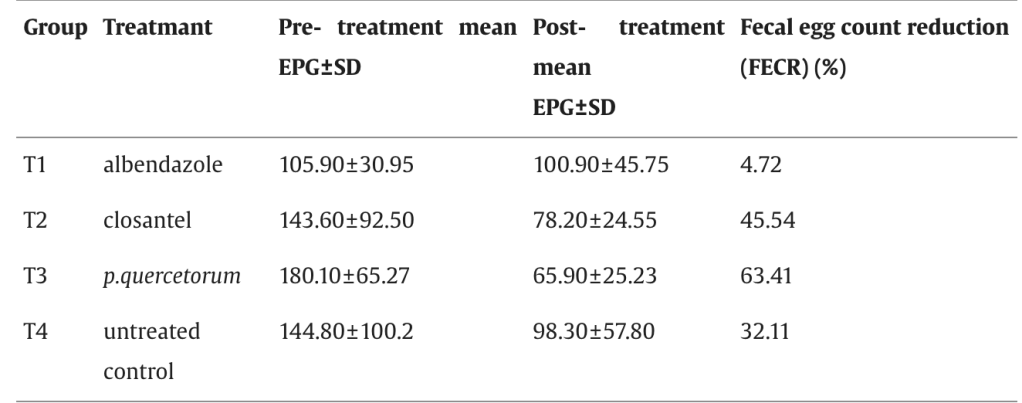
What the researchers found was that the goats treated with P. quercetorum had the greatest reduction in fecal egg count at the end of treatment (Table 1). Interestingly, groups treated with albendazole and closantel had lower levels of fecal egg reduction than typical indicating concerns for resistance. With these results, further studies are needed to help understand which chemicals are contributing to the anthelmintic properties and purifying those compounds to determine dosage and safety.
Link to the original post:
Featured image:













 micro-bites.org