

Breaking down the microbiology world one bite at a time
TickTok-borne Encephalitis: When Autoantibodies go Viral

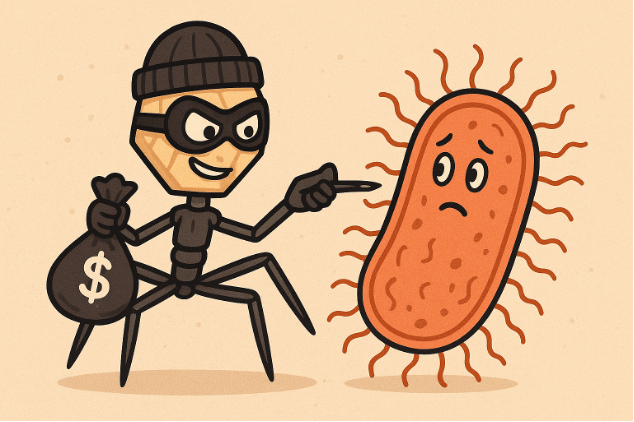
In the world of microbiology, our immune system can be seen as the secret service of our body, sending out agents to defend our bodies against invaders like bacteria and viruses. But what happens when some of these agents go rogue? Researchers from the National Institute for Health and Medical Research in France recently uncovered a surprising twist in the tale of tick-borne encephalitis (TBE). It turns out that parts of our own immune system—specifically, the autoantibodies that neutralize type I interferons (IFNs)—are playing a key role in severe cases of this disease.
The Unexpected Culprits
Tick-borne encephalitis virus (TBEV) is a positive-strand RNA virus that is transmitted through tick bites, causing anything from mild flu-like symptoms to severe neurological damage. With about 10 000–12 000 cases of TBE per year and rising, TBEV is now considered an emerging health threat in Europe and Asia. While most infections are mild, about 10% of severe TBE cases are now linked to autoantibodies that neutralize type I IFNs. These autoantibodies, which are essentially the immune system’s double agents, undermine the body’s ability to fight off the virus effectively.
The mechanism of betrayal
Type I IFNs are crucial in the early defense against viral infections. They act like scouts, ringing the alarm bells and rallying the immune system into action. However, in some individuals, autoantibodies target and neutralize these IFNs, silencing this internal alarm system and allowing the virus to multiply unchecked, leading to more severe disease outcomes.

The Study
The researchers analyzed data from 441 TBE patients in Austria (177), the Czech Republic (184), France (70) and Italy (10). They were classified as ‘mild’, ‘moderate’ or ‘severe’ based on their symptoms. The researchers used a luciferase-based neutralization assay to evaluate the blocking activity of the autoantibodies. They use in vitro cell cultures containing a luciferase gene, derived from fireflies, that glows when activated by IFNs. These cells were mixed with blood samples from healthy people or TBE patients. If autoantibodies were present in the blood sample, they blocked the interferons and the cells didn’t glow as brightly. They found that approximately 10% of severe TBE patients had these rogue autoantibodies, compared to only 1% of patients with mild or moderate TBE. The presence of these autoantibodies significantly increased the odds of severe disease, highlighting their critical role in the progression of TBE.

Implications
This discovery has significant implications for how we approach the treatment and prevention of TBE. Traditional methods focus on vaccination and supportive care, but understanding the role of autoantibodies opens up new avenues for therapeutic intervention. For instance, screening for these autoantibodies could help identify individuals at higher risk of severe disease, allowing for more targeted and effective treatments.
The study also paves the way for further research into the role of autoantibodies in other viral infections. Similar mechanisms have been observed in diseases like COVID-19 and West Nile virus, suggesting that this could be a broader phenomenon. By exploring these connections, scientists hope to develop new strategies to combat a range of viral diseases.
Featured image: Figure created by the author using CanvaPro.













 micro-bites.org