

Breaking down the microbiology world one bite at a time
Using microbes’ weapons to fight antibiotic-resistant bacteria
Antibiotic Resistance
Antibiotic resistance is a global problem, and the World Health Organization (WHO) believes that it will be the cause of up to 10 million deaths per year in 2050. Since the first antibiotic was discovered, more have been identified or synthesized. But some bacteria evolve to neutralize the antibiotic’s effect, and they have great mechanisms to pass that resistance to other bacteria. As the saying goes, what doesn’t kill you makes you stronger.
Currently, however, new antibiotics are rare. The investment into finding or creating new ones is huge, but there are issues why this is not working. This means we are running out of tools to treat bacterial infections, and when we use new antibiotics, the bacteria may soon grow resistant. It seems obvious we require new tools to tackle this problem.

Microbes fight microbes
So where to look for new molecules that can help fight bacteria, and perhaps other microbes (fungi, protozoa, etc)?. Well, the first one, penicillin, was in fact a molecule produced by fungi. In fact, microbes produce a lot of molecules to fight each other, so they can grow unimpeded. We have long looked at them for new tools to fight bacteria, but scientists have now used a new approach.
Sequencing genomes
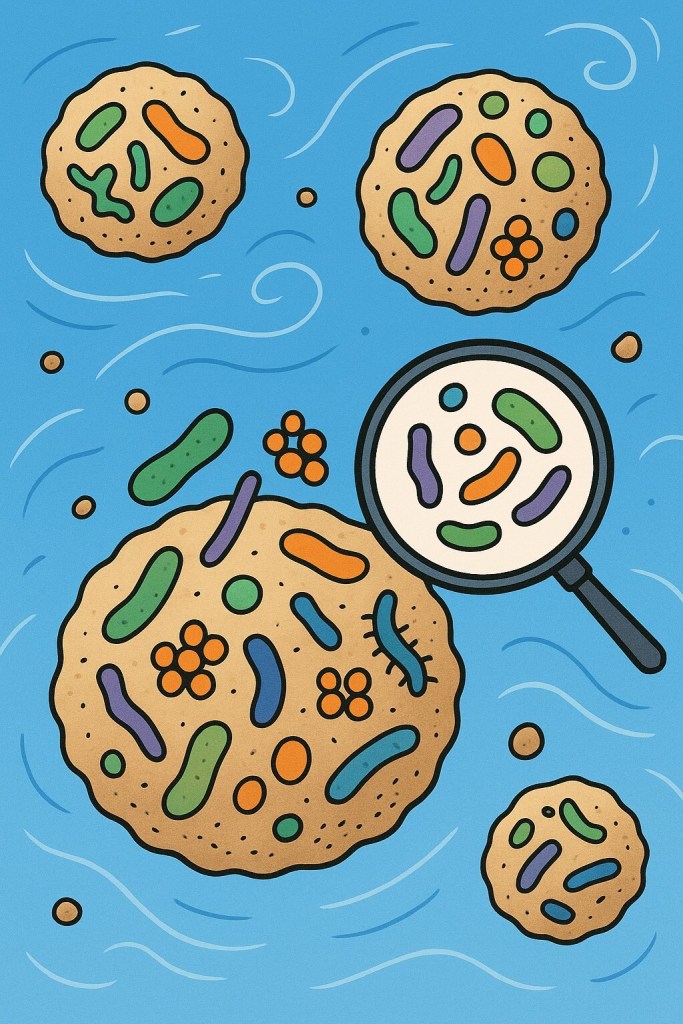
For a long time, we have been able to sequence genomes quite cheaply. You may not know, but many species have been sequenced completely, as well as what we call “microbiomes” (basically, a group of microbes living in one place, for example, the human gut). The data for that is saved in repositories, and this is now paying off. To find how microbes fight each other, scientists have looked at all of this data for clues.
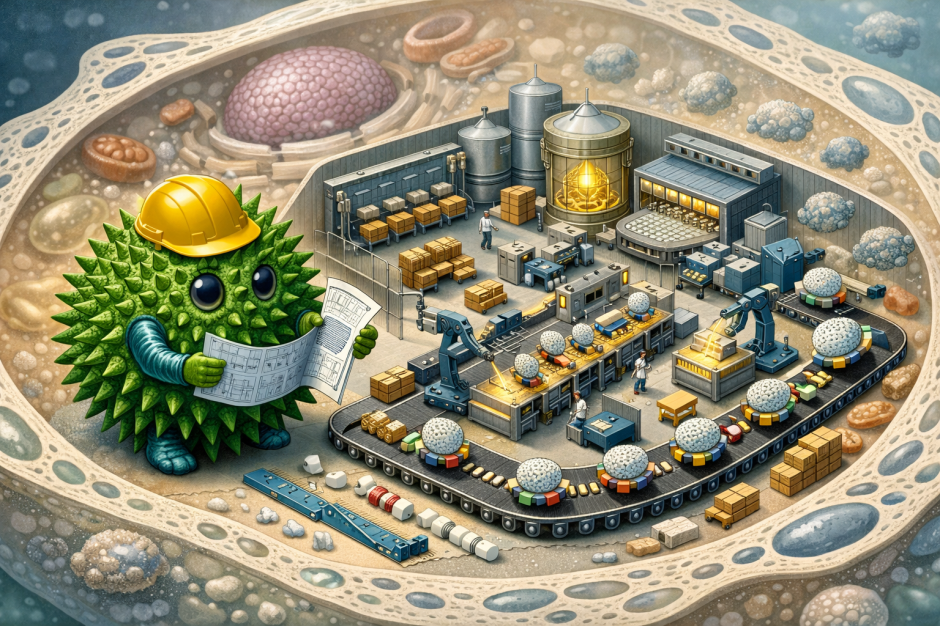
When a genome is sequenced, most of the time is to look at the genes, long pieces of DNA that code proteins. But there is a lot of DNA that does not code large proteins. An overlooked part of genomes actually codes peptides, chains of just a few aminoacids of length. These are usually related to signaling, and the scientists now look for these parts of the DNA (smORFs) to find antimicrobial peptides (AMPs), which might inhibit bacteria’s growth or kill them.
The search for AMPs
To find AMPs, they looked at the data from over 150,000 sequencing experiments. Since it was too much data to analyze individually, the scientists used machine learning to identify possible AMPs in the genome. They ended with a treasure trove of over 800,000 candidate AMPs (they called them c_AMPs). They denominated this group of peptides the AMPSphere. These come from a variety of habitats, including microbes from soil, water, animal and human guts, or associated with animals or plants in other ways. Most are unique to each background, meaning it was rare that one candidate AMP was found in two different habitats (around 10%).
Finding if and how AMPs stop bacteria
The researchers then had to see if the candidate AMPs actually did something. First, in the lab, they tested 100 AMPs against several bacteria. 79 of those had some effect in at least one kind of bacteria. But they needed to compare against a known antibiotic to see if the effects are high enough to consider their use in medicine.
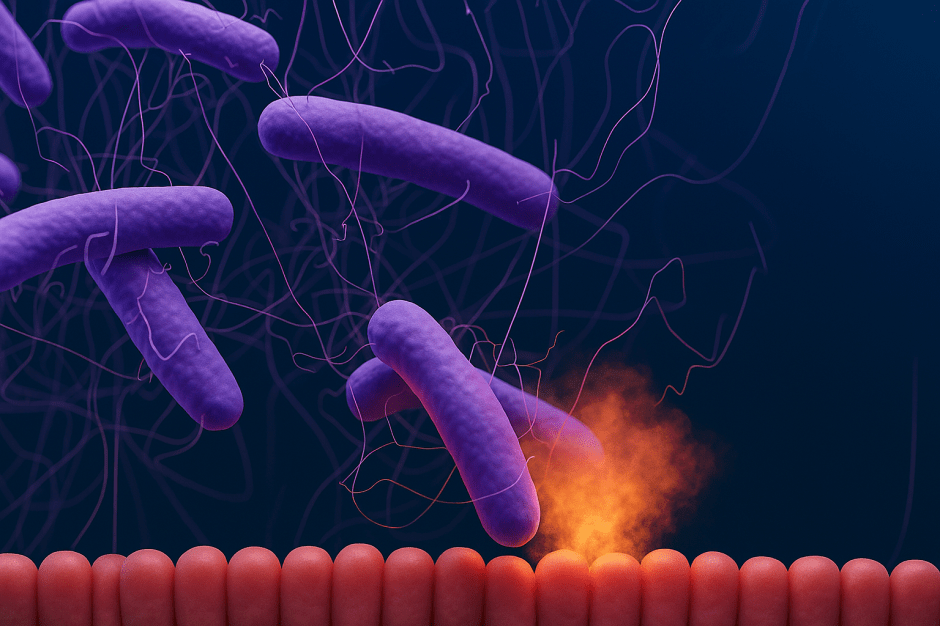
They chose 45 AMPs and tested 39 of them against Acinetobacter baumannii and the other 6 against Pseudomonas aeruginosa. comparing their effects against that of a known antibiotic (polymyxin B). Overall, 14 out of 45 peptides had a stronger effect than the antibiotic. The AMPs seemed to attack the outer membrane of bacteria. And although 14 out of 45 might not seem high, the AMPSphere has close to 1 million different AMPs.
Can AMPs help infection in mice?
To see if the AMPs that kill bacteria are actually useful for treating infections, a small test was done in mice. They infected a minor wound with Acinetobacter baumannii, and treated it with one AMP that had shown antibiotic properties against it. They tested 10 different AMPs, and 7 had positive effects short term, while 4 had positive effects long term. None of the AMPs seemed to be toxic for the mice.

Source: Graphical Abstract of the article (10.1016/j.cell.2024.05.013)
The future of AMPs
While the results of the study are incredibly promising, it will be hard to test all the candidate AMPs. The tests performed in mice are not enough to determine toxicity for the animal in larger, repeated doses. Another concern is possible resistance of the bacteria to the AMPs. As AMPs seem to have similar structures, resistance against one might boost the tolerance of the bacteria against many others.
But while we must not get ahead of ourselves, an incredible amount of promising molecules has been discovered, and there is a new hope to fight the rising epidemic of bacterial resistance occurring worldwide.
Link to the original post: Dias Santos-Júnior, C., Torres, M.D.T., Duan, Y., Huerta-Cepas, J., de la Fuente-Nunez, C., & Coelho, L.P. (2024). Discovery of antimicrobial peptides in the global microbiome with machine learning. Cell, 187(14), 3761-3778.e16.
Featured image: CDC, edited by Christine Daniloff/MIT






 micro-bites.org