
Breaking down the microbiology world one bite at a time
The raw truth: how raw meat diets for dogs can lead to the spread of antibiotic-resistant bacteria
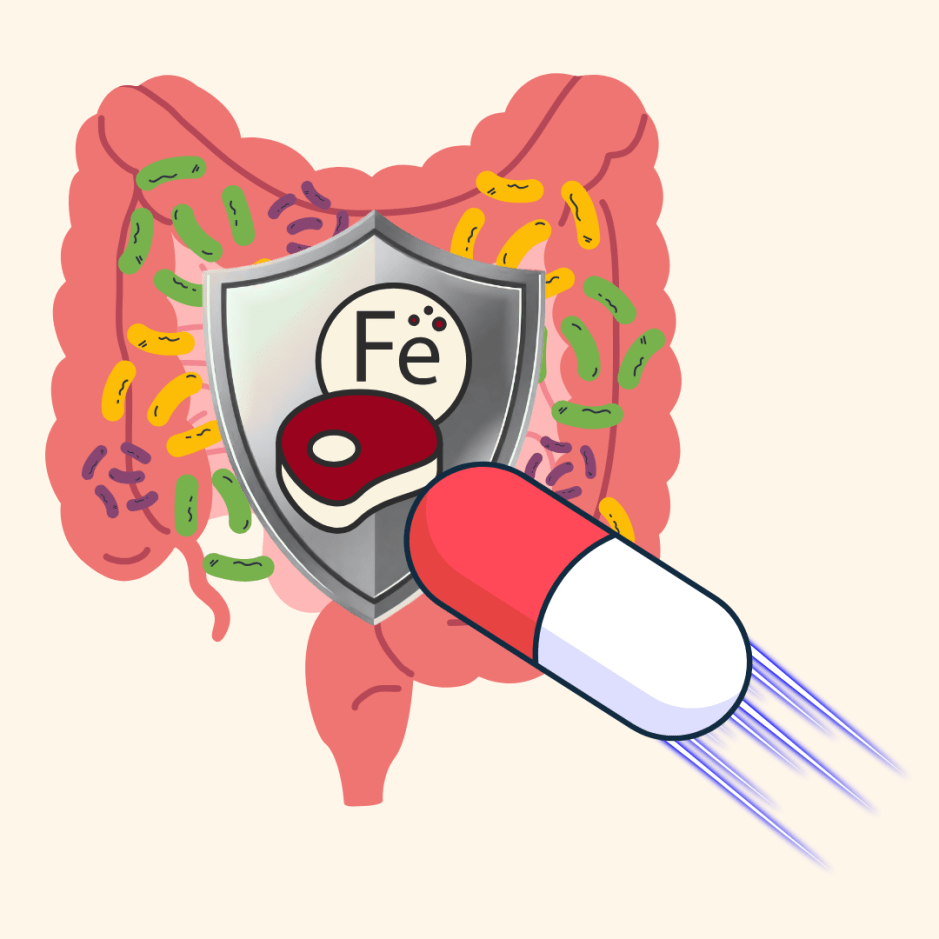
Feeding dogs raw meat diets has become a trendy choice among pet owners, even taking over tik tok. These diets, made up of unprocessed or non-heat-treated animal materials, are marketed and believed by many to be more natural and healthier for dogs. However, recent research has uncovered some significant risks associated with these diets, particularly the spread of antibiotic-resistant bacteria.
Study Overview
Researchers from the University of Liverpool conducted a study to investigate the presence of antibiotic-resistant bacteria Escherichia coli (E. coli) in the feces of dogs fed raw meat diets compared to those fed conventional non-raw diets (e.g. dry or canned dog food).
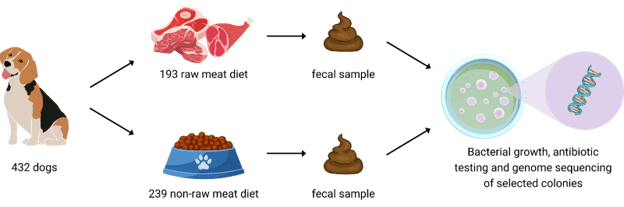
The study involved 432 dogs from the UK, 193 of them were fed a raw meat diet and 239 were fed a non-raw meat diet. Fecal samples were collected from both groups and smeared on an agar plate to study the bacteria that are present. Typical E. coli colonies were selected, grown and tested for resistance against antibiotics used in dogs and humans by the disk diffusion test. This involves placing one or more round paper(s) saturated with an antimicrobial agent (antibiotic disks) on the agar media on a Petri dish, incubating the plate to grow the bacteria and measuring the incubation zone around each disk.

Next, researchers selected 87 bacterial colonies that showed resistance to multiple drugs in the lab tests. They aimed to identify which gene variants were responsible for this resistance.DNA was extracted from these bacterial colonies and analyzed using whole genome sequencing, a technique that reads the sequence of each gene present in the bacterial colony.
Higher levels of antibiotic-resistant bacteria in dogs on a raw meat diet
The researchers found that dogs fed raw meat diets were significantly more likely to carry antibiotic-resistant E. coli. These included bacteria resistant to third-generation cephalosporins, extended-spectrum beta-lactamase-producing bacteria, and multidrug-resistant strains which are a severe health threat and associated with a higher mortality rate upon infection.
Using statistics, the researchers confirmed that raw meat diets are a significant risk factor for carrying antibiotic-resistant genes. The blaCTX–M–15 gene was the most common, found in both dogs fed a raw meat diet and those on cooked diets. Other genes, such as blaCTX–M–55 and blaSHV–66, were also found exclusively in dogs on a raw meat diet, suggesting that these are emerging genes of concern related to antibiotic resistance.
Public health implications
Antibiotic-resistant bacteria can spread from dogs to humans, which poses a serious public health risk. Since many people have a close relationship with their dog, the chance of transmission is high. The researchers want to inform pet owners, veterinarians, and public health officials about the potential dangers of feeding dogs raw meat diets.
Although raw meat diets might seem healthy for dogs, this study reveals significant risks. Dogs that eat raw meat can carry antibiotic-resistant bacteria in their feces, which can threaten both animal and human health. Raising awareness, educating pet owners, and conducting more research are essential to tackle this important issue.
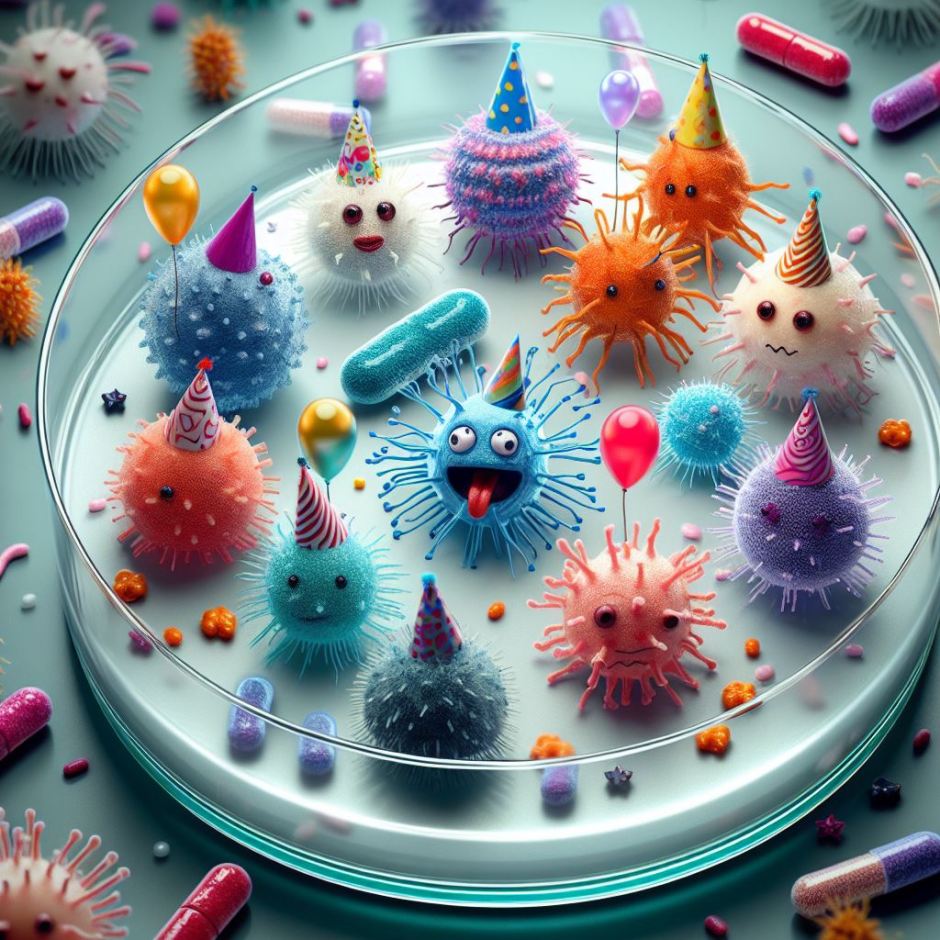
Featured image: Image created by Microsoft Designer.






 micro-bites.org