

Breaking down the microbiology world one bite at a time
Seasonal bacterial circadian clock
WHAT IS A CIRCADIAN CLOCK?
The circadian clock is the internal 24-hour clock of an organism that regulates different body functions and behaviours in response to light and helps the organism adapt to the day/night cycle. The circadian clock is present in plants, animals, and microorganisms.
The circadian clock mainly consists of three parts:
- A time-keeping central biochemical oscillator that has a duration of nearly 24 hours
- Many input channels to the oscillator for the synchronization of the clock
- A set of output channels that control overt rhythms in an organism’s physiology, behaviour, and biochemistry that are connected to different oscillator phases.
The physical, mental, and behavioural changes governed by the circadian clock throughout the day (24 hours) are known as circadian rhythms.
For more information on the circadian clockwork in different organisms, refer to the reviews listed in Additional sources at the end of this article.
CIRCADIAN CLOCK IN CYANOBACTERIA
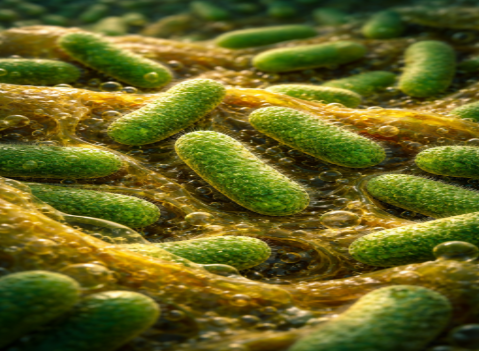
It is evident through literature that long-living plants and animals modify their physiology in response to seasonal variations in day length. According to Jabbur et al., cyanobacteria (a group of autotrophic bacteria that obtain their energy via photosynthesis) can perform the same function even though their individual lives are only a few (5-6) hours long, much shorter than a single-day photoperiod (PP). A photoperiod is the duration of an organism’s exposure to light within a specific time frame—typically a 24-hour day. It can also be used to describe how the length of the day varies with the seasons.
According to the findings of this study, cyanobacteria exposed to winter-like PP (8 hours of light followed by 16 hours of darkness) can withstand low temperatures two to three times longer than those exposed to summer-like PPs (16 hours of light followed by 8 hours of darkness). This adaptation necessitates the presence of a functioning circadian clock.
The authors found that different transcriptional programs are promoted by short vs long days, and cells exposed to short days undergo an adaptive change in membrane lipid saturation similar to that observed in cells exposed to chilly temperatures. The cells exposed to short days showed increased lipid desaturation and membrane fluidity, which are important adaptations to cold. The testing phase, light intensity, and prior exposure to lower temperatures are the environmental elements that can modify the amplitude of the cold photoperiodic survival.
In their natural habitat, cyanobacteria most likely combine a variety of environmental cues to determine the precise moment and strength of their photoperiodic response. The ability of an organism with such a short generation time to recognise the seasons and react adaptively in advance may seem surprising at first, but the benefit of photoperiod time measurement (PPTM) to cyanobacteria becomes clear when selection is seen to be acting on the population lineage through generations rather than the individual. A prevalent feature of authentic PPTM is that numerous 24-hour cycles of inductive photoperiods are frequently necessary to obtain a comprehensive response (photoperiodic counter). Rather than a subsequent loss of cold resistance during lengthy days, the development of differential survival among photoperiods seemed to be primarily caused by a cumulative increase of resistance in short days. For this reason, cumulative exposure to several cycles and a photoperiod-counting memory are necessary for the photoperiodic response.

These findings suggest that the evolutionary origins of PPTM might be older than previously thought. Short days induced the expression of genes that confer adaptive responses to cold temperatures (e.g., lipid desaturases and glycogen synthesis), whereas long days promoted the expression of stress response pathways associated with light, redox, or heat stress. Short versus long photoperiod induced counterbalancing responses in stress pathways.
These correlations led us to hypothesise that prokaryotes may have been the first organisms to evolve PPTM from pre-existing stress mechanisms that had initially evolved to withstand acute shocks. For obligate photoautotrophic organisms such as cyanobacteria, stressors that occur largely in the day (strong light, UV, redox stress, hotter temperatures) versus the night (metabolic stress, hunger) across the daily cycle are increased or shortened as the daily PP varies. Differential stress pathway activation occurs as a result throughout the yearly cycle. A reasonable selection pressure to evolve a PPTM is the addition of a timekeeping mechanism to further regulate the stress route to anticipate regularly occurring environmental challenges in addition to responding acutely once a stress pathway is established.
Thereby, the discovery that a prokaryote exhibits true adaptive photoperiodic timing raises the prospect that photoperiodism is an ancient evolutionary phenomenon and provides a flexible model system for investigating the mechanisms behind the development of photoperiodic responses.
Link to the original post: M.L. Jabbur, B.P. Bratton, and C.H. Johnson, Bacteria can anticipate the seasons: Photoperiodism in cyanobacteria, Science, 385(6713), 1105-1111, September 2024.
ADDITIONAL SOURCES:
- https://micro-bites.org/2021/01/31/can-bacteria-tell-the-time/
- E.M. Wollmuth and E.R. Angert, Microbial circadian clocks: host-microbe interplay in diel cycles, BMC Microbiology, 23, 124, May 2023. DOI: 10.1186/s12866-023-02839-4.
- Y. Yamanaka, Basic concepts and unique features of human circadian rhythms: Implications for human health, Nutrition Reviews, 78(3), 91-96, December 2020. DOI: 10.1093/nutrit/nuaa072.
- D. Srivastava, Md. Shamim, M. Kumar, A. Mishra, R. Maurya, D. Sharma, P. Pandey, and N.K. Singh, Role of circadian rhythm in plant system: An update from development to stress response, Environmental and Experimental Botany, 162, 256-271, June 2019. DOI: 10.1016/j.envexpbot.2019.02.025.
- J.C. Dunlap and J.L. Loro, Making time: Conservation of biological clocks from fungi to animals, Microbiology Spectrum, 5(3), May 2017. DOI: 10.1128/microbiolspec.funk-0039-2016.
Featured image: Created by the author using Microsoft PowerPoint.





 micro-bites.org