

Breaking down the microbiology world one bite at a time
Using bacteria against viral infections: A new vaccine
Influenza is the name we give to a family of viruses, which, when infecting humans or animals, cause the flu. Although you surely have passed this annoying, but usually brief, infection, it can be deadly. According to the World Health Organization, there are around 1 billion cases of seasonal influenza, or the common flu, each year. About 3-5 % of these end up being serious, usually in patients already at risk. And influenza causes between 300.000-650.000 deaths per year worldwide. Each year, a vaccine is developed to target the most common strains of this virus, and given to many people. It should not be a surprise that scientists are working hard to develop better protection for the population, especially those at risk. They might have found a really good way to make better vaccines against influenza viruses. Queue in… bacteria?!
Escherichia coli Nissle 1997 (EcN)
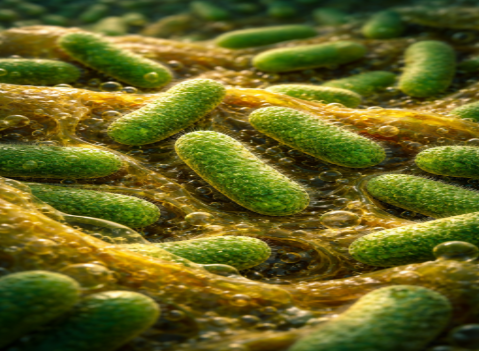
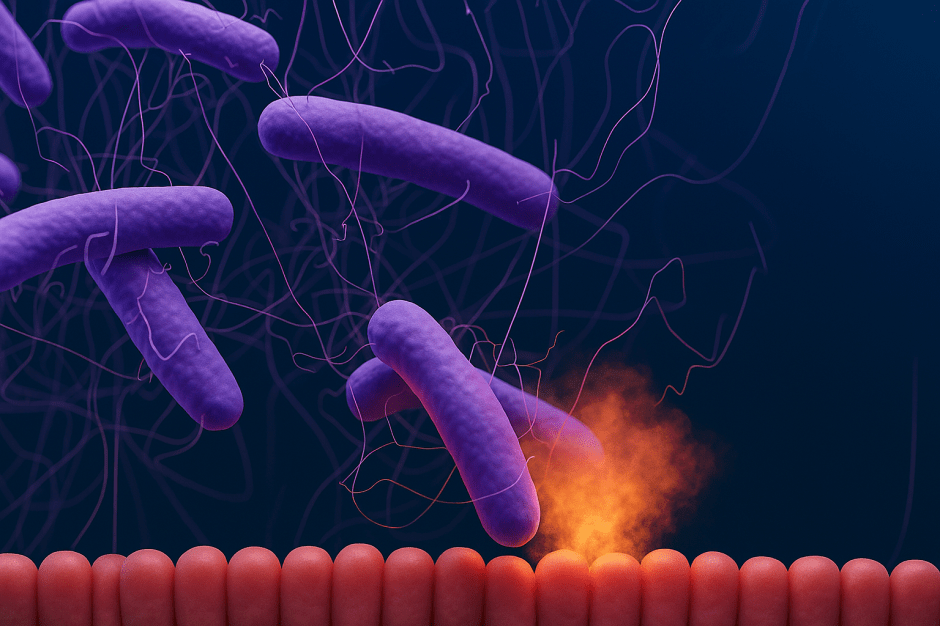
Escherichia coli is a bacteria, well known for being in the human (and many animals) intestinal tract. There are many strains, and some can cause infection, usually being responsible for food poisoning, diarrhea, and some other diseases. However, most strains are beneficial, and indeed needed, for proper gut health. Escherichia coli Nissle 1997, or EcN, is one such strain, and it has been used as a probiotic, improving gastrointestinal health. Scientists have now tested the effect of this bacteria on the respiratory tract. They found that introducing the bacteria in the nasal tissue of mice, using a spray, did in fact boost the immune system greatly. This happened mainly by boosting the innate immune system in the nasal and lung tissues. The innate immune system consists of cells that will attack anything foreign, and is not responsible for the production of antibodies. Mice inoculated with influenza virus at doses that should be lethal survived much better if they had been treated with EcN beforehand. However, this protection was very effective against some strains of influenza, while lacking against others.
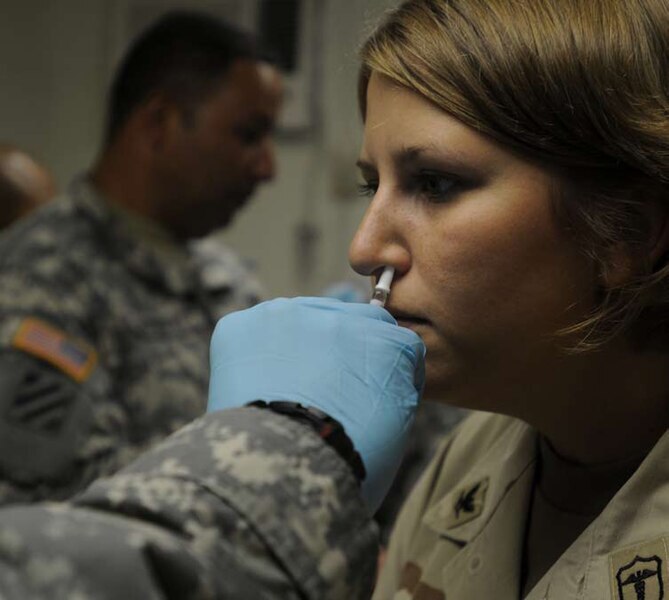
Intranasal vaccine administration. Image taken from wikipedia.
Developing a nasal vaccine out of EcN
Nasal vaccines are likely one of the ways vaccines will be administered in the future. As such, these scientists wanted to engineer EcN to become better at improving the immune system against influenza, so they could use the altered EcN to make a nasal vaccine.
Influenza virus has a protein called matrix protein 2, or M2e. Our immune system is really good at recognizing this protein, and when we get infected, we usually produce antibodies against a small part of this protein, an antigen. However, different strains of influenza have slightly different M2e antigens. To make the best EcN vaccine, the scientists took five M2e antigens from different strains that have caused pandemics or pose a high health risk, and fused them into one protein. Then they added a gene to EcN coding that new protein, making the bacteria produce the protein. This means that when the bacteria comes in contact with the immune system, the immune cells will learn to produce antibodies against these antigens. If there is an influenza infection with one of the antigens, the immune system will already be prepared to target the virus.
The new bacteria was called EcN-5M2e. The researchers used it to vaccinate mice and then expose them to several influenza strains. The mice that had been vaccinated with EcN-5M2e had much less problems, and all survived, than those without any treatment, or those treated with the original EcN. On top of that, the new EcN-5M2e increased the innate immune system response in the nasal and lung tissues, but it also created an adaptive immune response, stimulating production of antibodies and immune cells, and both of these could be found in the mice bloodstream.
Long-term protection against influenza is achieved using EcN-5M2e
There was one more question that needed to be answered, of course. How long did the protection obtained from the new vaccine last? Well, mice treated with the vaccine survived with little issue to lethal doses of influenza after 6 months of vaccination. And both the immune system and respiratory system had antibodies against the antigens of M2e.
Overall, a nasal spray as a seasonal vaccine for influenza virus could be developed rather soon, and tested in humans. And if the responses are similar to what these scientists have observed in mice, we will soon be using bacteria to fight the pesky and dangerous virus that can be influenza!
Link to the original post: Engineered probiotic Escherichia coli elicits immediate and long-term protection against influenza A virus in mice. https://doi.org/10.1038/s41467-024-51182-3
Featured image: Image taken from flickr. Credit: NIAID









 micro-bites.org
