

Breaking down the microbiology world one bite at a time
Dads: Good for more than just their genes?
For over 15 years, when scientists think of the role microbes play in newborn health one word has been on the tip of everyone’s tongue: maternal. In 2010 researchers in Dr. Rob Knight’s lab discovered that the initial microbiome of newborns was driven largely by their delivery mode (C-section vs. vaginal), and helped inspire countless scientists to investigate the role of the microbiome in newborn health.1
Although most researchers consider the womb to be a sterile environment (and free from the influence of the maternal microbiome), recent studies suggest there is a role for microbes in fetal development after all, and that the microbiomes of our parents may impact our health long before birth!
Bacterial metabolites are small molecules produced by bacteria which are used to send signals to other microbes and communicate with our own immune system. These metabolites are small enough to pass through the uterine wall and placenta and begin training the fetal immune system. Studies have shown, using mouse models, that these metabolites play a big role in healthy development of a mammalian fetus.2

But what about the microbiome of your parents before you’re even conceived? People trying to become pregnant already have to think about so many factors which may impact their child’s health (smoking, alcohol use, diet, and exercise just to name a few) – and most focus wholly on the child-bearing parent. A recent study by the Hackett group at the European Molecular Biology Laboratory demonstrated in mouse models that gut microbiome changes in the sperm-donating parent can dramatically affect offspring health.
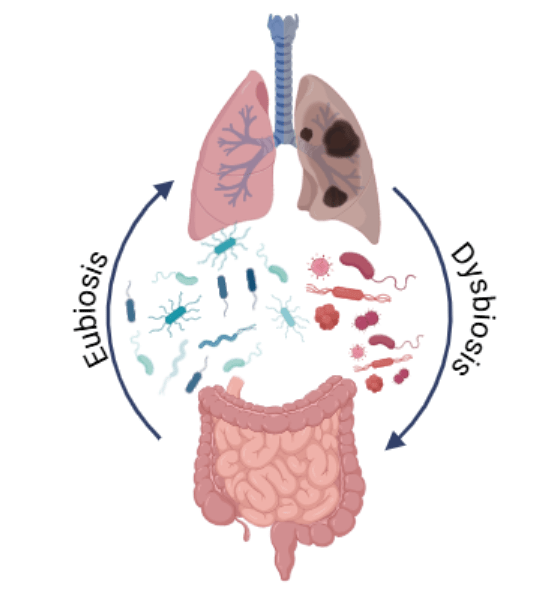
Researchers perturbed (changed) the gut microbiome of mice using non-absorbable antibiotics. This is an important detail because these antibiotics can’t cross the gut barrier, meaning that changes seen in the offspring must be due to perturbations specific to the gut microbiome. When dysbiosis (normal gut microbes being disturbed) is induced in paternal mice using these antibiotics over six weeks of treatment, the impact on the offspring is staggering. Mice conceived from gut-dysbiotic fathers were over 10% more likely to die within 60 days of birth. Mice in these litters were also more likely to show moderate or severe growth restriction. Maybe most interestingly, these effects were completely reversible! Paternal mice who were previously treated with antibiotics, but given eight weeks for their gut microbiome to recover, produced offspring identical in growth trajectory and mortality to the control group. So good news dads and other testes-bearing parents-to-be, wait a few weeks after taking antibiotics, consider probiotics and fermented foods to speed your microbiome recovery, and you’ll have done your part to help ensure the health of your baby-to-be!

Germline cells, sometimes known as sex cells or egg and sperm cells, are what determine the genetic makeup of offspring. This research is one of the first studies to demonstrate a link between the gut microbiome and germline cells. In paternal mice treated with non-absorbable antibiotics, researchers observed smaller testes and lower sperm count than in the control group, along with a smattering of other physical changes. To further investigate these changes, researchers analyzed the metabolites produced in the paternal testes. These data showed a clear difference between the control and antibiotic-treated mice. Once the antibiotic-treated mice were given eight weeks for their microbiomes to stabilize and undergo another cycle of sperm cell generation, their metabolite profile mimicked the control! Additionally, the microbiomes of the paternal mice seem to have no impact on the microbiomes of the pregnant or newborn mice, further supporting the hypothesis that these changes are caused exclusively in utero.
All of these data come together to make a strong case for the existence of a gut-germline axis in mice, and likely many mammals. The idea that paternal microbes may affect offspring health is a relatively new one, and one that needs much more investigation before we can directly apply these findings to human health. However, it aligns with the much older knowledge that environmental changes that your parents are exposed to before your conception and during pregnancy can dramatically affect your health and development. Hopefully further research will give us a better understanding of the microbiome’s role in fetal and neonatal health and what we can do to cultivate helpful microbes.
Featured image: https://www.science.org/do/10.1126/science.aah7199/full/1280x720_mice1b-1644962189197.jpg / https://www.science.org/content/article/mouse-microbes-may-make-scientific-studies-harder-replicate





 micro-bites.org