

Breaking down the microbiology world one bite at a time
Getting to know your most ancient ancestor
Have you ever wondered how far up the genealogical tree you could trace your ancestry? Who was your great-great-great grandmother? What about your great-great-great-great-great-great grandmother? If you kept tracing up the tree, who would your ancestors be? Maybe great artists, world leaders, pioneering agriculturalists, accomplished hunters. A little further back in the tree you will find our closest non-human ancestors—primates, small rodents, eventually dinosaurs. As you continue to traverse this lineage of your ancestors, you will find organisms that look less and less like you. This will continue until you arrive at your great-great-great-great-great-great-great…-great grandmother: LUCA, or the Last Universal Common Ancestor. The ancestor of all life that currently exists on this planet*.
* How do we even know there was a LUCA? Is it possible that life evolved more than once? That some of the life that ended up here originated on other planets? Based on some commonalities that would be very difficult to explain otherwise, scientists believe all life on Earth to have originated from one common ancestor. These commonalities include our shared genetic code, the fact that the machinery used for protein synthesis is shared across all life, the chirality (or handed-ness) of all of the building blocks used to make proteins, and the common use of ATP as an energetic currency.
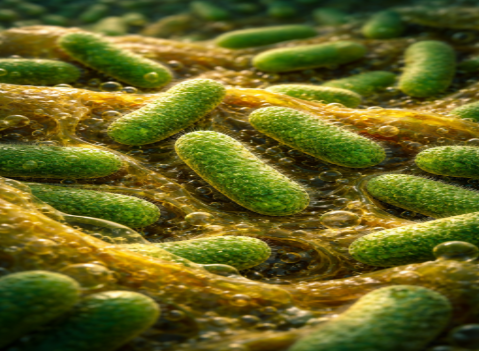
In a new paper, a group of scientists uses the genetic content of extant organisms to reconstruct what this ancestor could have been like. LUCA was a single cellular organism, probably similar to modern bacteria and archaea. It probably also co-existed with other organisms, but it’s impossible to know what these contemporary organisms were like because they left no surviving descendants. first paragraph

Where did LUCA live? Who were its neighbors?
To understand how LUCA made its living, the authors construct a phylogenetic tree of living bacteria and archaea and use the genes that they use to metabolize to infer the genes that LUCA may have had. In their approach, they consider both vertical (from parent to offspring) genetic transfer, and horizontal (from contemporary organism to another contemporary organism) genetic transfer. This allows them to include more gene families in their analysis.
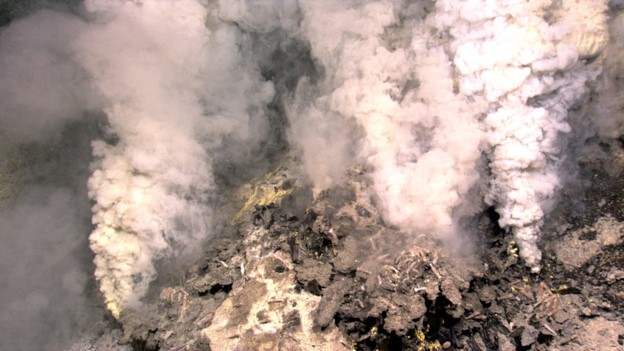
Based on this reconstructed metabolism, LUCA could have lived either on the ocean surface, where the atmosphere would have provided a source of carbon dioxide and hydrogen (both necessary ingredients of LUCA’s diet), or in the deep ocean near a hydrothermal vent. The presence of an enzyme linked to thermotolerance in contemporary organisms supports the hydrothermal vent hypothesis. Living deep in the ocean would also have shielded LUCA from the Late Heavy Bombardment (during which the Earth is hypothesized to have been bombarded by a very high number of asteroids and comets), which is thought to have occurred around LUCA’s estimated age.
LUCA’s ability to degrade complex carbohydrates implies that it may have lived in communities with other organisms capable of producing these complex carbohydrates. While LUCA could, in theory, have lived in isolation, producing everything it needed for itself, it would likely have produced byproducts that other forms of life could have eaten. Therefore, it likely wouldn’t have remained in isolation for long. Among the organisms that could have taken advantage of LUCA’s metabolic end products are methanogens: organisms that could have broken down acetate produced by LUCA into methane, and releasing it into the atmosphere.
What did LUCA do? What did it eat?
Based on the author’s reconstruction of LUCA’s metabolism, it likely was able to use chemical energy to fix carbon dioxide into organic carbon (in LUCA’s case, this fixed carbon would have taken the form of acetate), and to consume sugar for energy and carbon. It was also likely anaerobic, meaning that it did not need oxygen for growth. This makes sense given that it likely existed on a planet with much less available oxygen than we have today. LUCA likely was not able to photosynthesize.
Extant organisms using similar metabolic processes to LUCA are widely successful because they have quite flexible metabolic abilities which allow them to succeed under a diversity of environmental conditions. Acetogenesis (which is what LUCA would primarily have been doing) has quite a low energy yield and LUCA was likely a slow grower.
LUCA also appears to encode an early version of the CRISPR/Cas adaptive immune system that bacteria use today to defend themselves against viral infection. This suggests that viruses were already present and active very early in life’s evolutionary history.

When did LUCA live?
The authors use a technique called a “molecular clock” approach, where the age of an ancestor is estimated using the genetic content of extant organisms in combination with the fossil record. We know that LUCA has to have lived between 4.510 billion years ago (this was when the impact that eventually formed our moon struck the Earth—an event that would have been impossible to live through) and 2.954 billion years ago (when we know based on geochemical records that oxygenic photosynthesis must have been occurring). Using a set of genes common to all life which are believed to have been duplicated in the genome of LUCA, they estimate LUCA to have lived 4.2 billion years ago.
This new work presents a picture of a fairly complex organism living in exceedingly ancient history. LUCA likely had comparable genome size and functional complexity to modern bacteria, even encoding an early version of adaptive immunity.
Link to the original post: Moody, E.R.R., Álvarez-Carretero, S., Mahendrarajah, T.A. et al. The nature of the last universal common ancestor and its impact on the early Earth system. Nat Ecol Evol 8, 1654–1666 (2024). https://doi.org/10.1038/s41559-024-02461-1
Featured image: Image created with Bing Image Generator.








 micro-bites.org