

Breaking down the microbiology world one bite at a time
Fungal partners in botanical carnivory
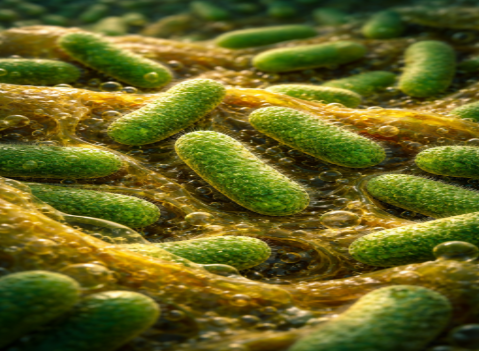
Botanical carnivory is defined as the ability of plants to trap animals and consume them to obtain nutrients. Carnivorous plants, such as Venus fly traps, sundews, pitcher plants, and butterworts, have unique features to attract, capture, kill and digest their prey, and ingest nutrients. Many insectivorous plants have specialized leaf organs that secrete a sticky mucilaginous substance to trap their prey, typically insects. This mucilage harbors various microbial communities, including bacteria and fungi. There are intricate interactions that shape these mucilaginous microbial communities.
The composition of the microbiota is highly dependent on time and influenced by factors including the host plant, community succession, surrounding environment, and even contributing bacteria from the prey. The interactions between host plants and these microbial communities are quite dynamic and can influence plant fitness in a variety of ways.
THE ROLE OF PLANT-FUNGUS HOLOBIONT IN BOTANICAL CARNIVORY
Recent research by Sun and co-workers shed light on the complex symbiotic relationship between a carnivorous plant, Drosera spatulata, and its dominant resident microorganism, Acrodontium crateriforme. The fungus positively enhances the digestion process of the prey, which includes a holobiont between the plant and the fungus. A holobiont is a grouping of a host and several other species that coexist with it to create a distinct ecological unit through symbiosis. In other words, it is a complex and linked system of organisms living close to one another. The importance of microorganisms in the plant holobionts has been explained in previous research.
Sundews (Drosera sp.) have “flypaper” leaf traps with tentacles that exude sticky mucilage to ensnare and engulf prey. This is followed by a well-organized process of insect digestion. It begins with the creation and secretion of digestive enzymes to break down organic components. Specialised transporters then take up and assimilate the nutrients. The jasmonate (JA) signalling, present in the progenitors (ancestors) of non-carnivorous plants, mediates this complicated activity route in sundews. Research shows the JA signalling pathway, originally used in defence, has now been co-opted by these carnivorous plants in carnivory. On the other hand, A. crateriforme is an acidophilic fungus that requires a pH of 4-5 to grow. This pH is maintained in the mucilage of D. spatulata, thereby facilitating the survival of the fungal species.
Key findings of the study can be summarized as follows. To start with, although a variety of bacterial and fungal communities can be found in the sundew mucilage, the fungus A. crateriforme dominates the mucilage microbiome. The coexistence between D. spatulata and A. crateriforme is ancient and well-conserved, maintained through the ages. The fungus uses the sundew stalk glands to colonise, reproduce, and proliferate using insects (prey) as a growth supplement, while the mucilage shelters free fungal hyphae and conidiophores.
Secondly, experiments suggested that D. spatulata could differentiate between non-prey and prey species providing nutrients. Further, colonization of sundew leaves with different sets of microbes indicated that the sundews’ responses to substrates were amplified in the presence of a microbial population as opposed to sterile leaves with no microbial population. This implies that plant-fungus coexistence enhances prey digestion in sundews. Another evidence supporting the role of A. crateriforme in enhancing digestion in the holobiont was provided by the protein digestion experiment. When the fungal species was present, the number of proteins digested increased.
Lastly, the authors reported that A. crateriforme underwent a series of genomic changes, like losing glycoside hydrolase members, high polyketide synthase clusters, and two peptidase Neprosin (prey digesting enzyme) domain-containing genes, to adapt to the symbiotic lifestyle after colonising leaf glands. These traits are associated with symbiotic fungi and suggest a distinct profile of polyketides from secondary metabolite pathways. Furthermore, they provide functional benefits, such as a reduction in digestion time and an increased ability to reopen traps quickly, which eventually increases prey capture rates.

Image source: Image created by the author using Canva
To sum up, this study is a milestone in understanding the role of microbes in holobionts in botanical carnivory. It lends credence to the theory that some carnivorous plants have plant-microbial interactions that aid in the digestion of insect prey, hence promoting prey breakdown processes. Both the microbial species as well as the host plant undergo multidimensional adaptations to facilitate the various aspects of carnivory.
Link to the original post: P-F. Sun, M.R. Lu, Y-C. Liu, B.J.P. Shaw, C-P. Lin, H-W. Chen, Y-F. Lin, D.Z. Hoh, H-M. Ke, I.F. Wang, M-Y. J. Lu, E.B. Young, J. Millett, R. Kirschner, Y-C. J. Lin, Y-L. Chen, and I.J. Tsai, An acidophilic fungus promotes prey digestion in a carnivorous plant, Nature Microbiology, 9, August 2024. DOI: 10.1038/s41564-024-01766-y.
Featured image: Created by the author using Canva
Additional sources: J.R. True and S.B. Carroll, Gene co-option in physiological and morphological evolution, Annual Review of Cell and Developmental Biology, 18, 53-80, April 2002. DOI: 10.1146/annurev.cellbio.18.020402.140619.










 micro-bites.org