
Breaking down the microbiology world one bite at a time
Food cravings, is your brain or gut in control?
“I’ve got a hankering for some chocolate!”, “or a nice portion of chips!”… Have you ever had a craving like that? What if that sudden appetite for fat or sugar wasn’t your fault, but rather the fault of the bacteria living in your gut?
The intestinal microbiota (all the bacteria living in the digestive tract) help to digest our food and in particular to extract nutrients from our food, which are then absorbed by the body. Some so-called essential nutrients are not produced by our bodies and are found only in our food or are produced by our bacteria. Nutrients interact with our nervous system to regulate a multitude of functions, such as food intake and food preferences. The intestinal microbiota, through its action on the availability of nutrients in the body, could therefore influence the food choices made by the host organism.
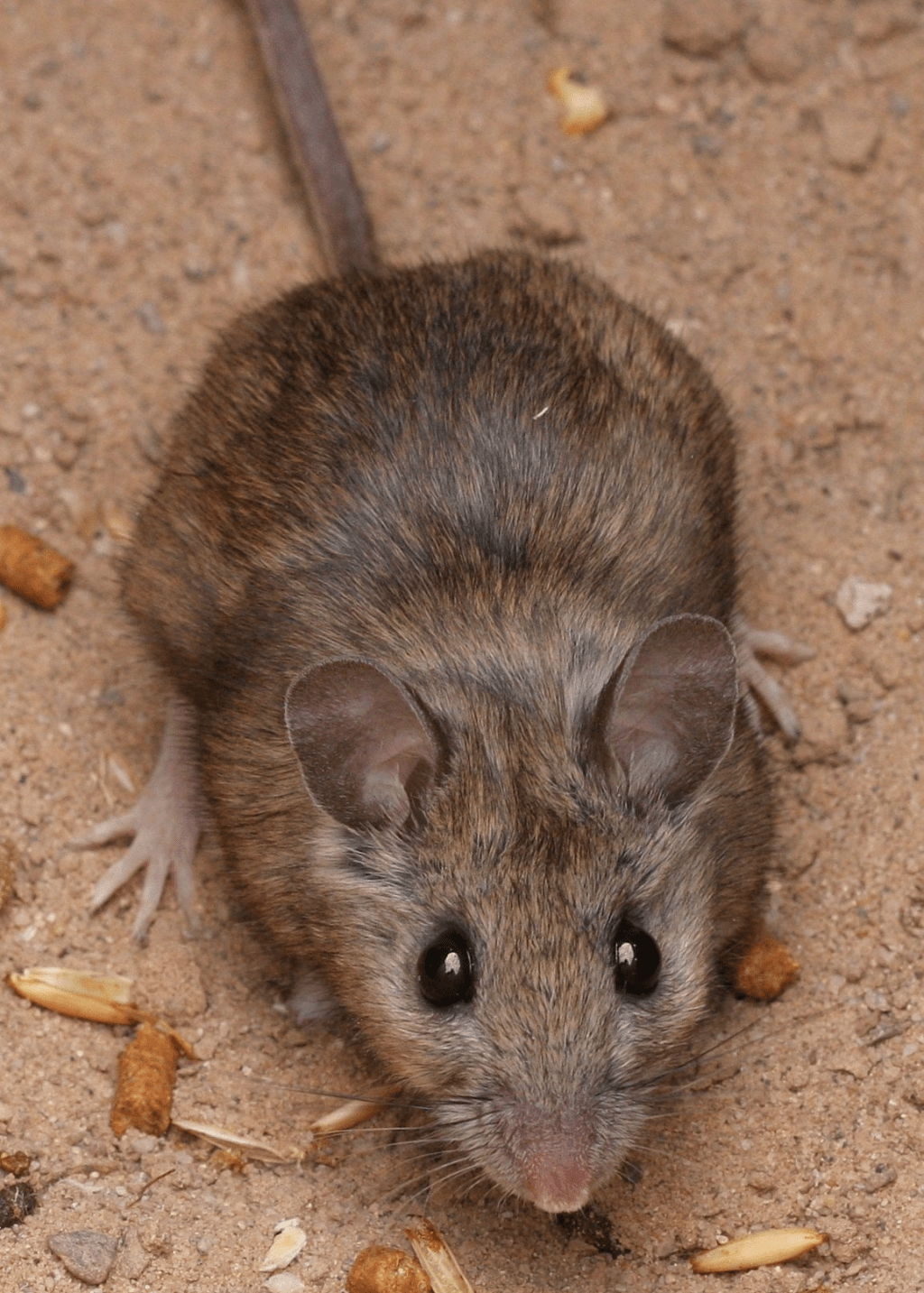
In a recent study, researchers tested this hypothesis in mice. They used germ-free mice, that is mice whose development has been controlled so that they have no microorganisms living on or in them. Each of these mice received a different microbiota from wild mice species with distinct diets: carnivorous/insectivorous, omnivorous, and herbivorous. This is the inoculation step. After a short acclimatization period, the inoculated mice were given a choice of two meals consisting of nutrient powders enriched with proteins or carbohydrates.

The experiment revealed that mice inoculated with different microbiota had different food preferences! Mice inoculated with herbivore microbiota chose to eat the protein-enriched meal! Herbivores that focus on eating proteins, isn’t it a bit strange? Not really! Some essential micronutrients and in particular some amino acids that constitute proteins are found preferentially from animal-based proteins than plant-based proteins. This could encourage herbivores to eat other sources of protein-enriched food from time to time. In short, the intestinal bacteria in short supply of certain essential nutrients would send a distress message to the brain begging it to make you eat that nice burger! But what is this message?
Back to the nutrients! Tryptophan is an essential nutrient involved in the production of serotonin, the happiness hormone that could also influence our food choices. Therefore, the researchers in this study hypothesized that regulation of the quantity of tryptophan by the intestinal microbiota could play a role in food preferences. They showed that the bacteria of mice inoculated with herbivorous microbiota have a higher potential to manufacture tryptophan than those of carnivorous or omnivorous mice. They also showed a link between the amount of tryptophan in the mice’s blood before the experiment and their food choices afterward. These results support their hypothesis that it is most likely via the regulation of tryptophan production that bacteria send messages to the brain!
Although a link between microbiota and eating behavior has been shown here, don’t justify all your cravings by obeying your microbiota! We still have a long way to go to understand all the mechanisms involved in food preferences, and in humans a multitude of factors mix and mingle, making the study even more complex.
Link to the original post: Trevelline, B.K., Kohl, K.D., 2022. The gut microbiome influences host diet selection behavior. Proceedings of the National Academy of Sciences 119, e2117537119. https://doi.org/10.1073/pnas.2117537119
Featured image: J. N. Stuart via flickr







 micro-bites.org