

Breaking down the microbiology world one bite at a time
Finding new allies in the soil to help protecting our crops
One of the main issues in agriculture is the plant pathogens and the methods used to control plant diseases. Bacterial and fungal pathogens can stay in the soil for long periods of time and severely impact plant health. This threatens crop productivity and food security as some pathogens cause diseases that reduce yield and ultimately kill plants. Plant pathogens are mainly controlled by chemicals like pesticides, and their excessive usage is extremely harmful to the environment, human health and to other living organisms. Fortunately, we can find allies in the soil that can help us battle against pathogenic microbes.
Different microbes (bacteria, fungi, and protists) have abilities to kill pathogens. Such beneficial microbes produce antibiotic compounds or compete for space and resources. These approaches are known as microbial biological control (biocontrol). Biological control is an eco-friendly alternative and potentially a long-term approach to manage plant diseases caused by pathogens. Leveraging such beneficial microbes as a sustainable solution for agriculture that helps reduce synthetic chemical pesticides and fertilizers is being intensively explored.
Using protists to control bacterial diseases in plants
Besides bacteria and fungi in the soil, there is a great amount of protists. These microorganisms include all microscopic, unicellular eukaryotes that are not an animal, a plant or a fungus, for example amoebas or algae. Although protists are the least studied microbes for biocontrol purposes, they can also contribute to plant health.

The majority of soil protists are predators. Predatory protists feed on other microbes including plant pathogenic bacteria and fungi. However, how they contribute to plant health and disease suppression remains understudied. A group of researchers in China wanted to know 1) whether bioorganic fertilization can improve plant health by promoting pathogen-suppressive protists, and 2) if predatory protists can suppress a bacterial pathogen responsible for tomato wilt and therefore prevent tomato yield losses.
Diversity analysis in tomato field soils
The researchers started evaluating the impact of conventional (CF), organic (OF) and bioorganic (BF) fertilizers on disease suppression of the bacterial pathogen Ralstonia solanacearum. CF was a mix of mineral fertilizers, OF was a compost of rapeseed meal and chicken manure, and BF was a mix of OF and the beneficial bacteria Bacillus amyloliquefaciens T-5. In a long-term tomato field experiment, they applied the three different fertilizers and evaluated wilt symptoms. They also collected soil samples from the tomato field and extracted DNA to identify the bacteria, fungi and protists present in those soils that contain the bacterial pathogen.
They found that fertilization had a greater impact on the diversity of protists compared to bacteria and fungi. Interestingly, the researchers also found more predatory protists when the disease incidence was low, meaning that predatory protists were affecting the pathogenic bacteria R. solanacearum abundance in the soil.
Isolation of predatory protists and test in greenhouse experiments
In general, to isolate protists from the soil, researchers use the dilution method. This method consists of taking a soil sample and mixing it with water, then taking a subsample and adding more water to obtain only a few protists in the mix. To isolate predatory protists, it is necessary to include their food source (e.g., bacteria) either alive or dead so the predatory protists can follow their prey.
Two mechanisms can be observed when using predatory protists for pathogen suppression. The first, a direct effect where the protists eat the pathogenic bacteria or an indirect effect by altering other bacteria present in the soil. To test these effects, the researchers used isolated predatory protists. In the greenhouse they inoculated the soil of tomato plants with R. solanacearum and Colpoda protist strains.
In these tests, they found that the protists did reduce R. solanacearum abundance because they were consuming the pathogen. This suggests that predatory protists can be used as biocontrol agents to suppress soil-borne pathogens like Ralstonia solanacearum in diverse agricultural systems. Furthermore, some predatory protists can also promote the production of antimicrobial compounds by beneficial bacteria, which also kill pathogens. This indirect effect is also supported by the ability of some predatory protists to selectively eat bacteria that promote the growth of pathogens.

Application of predatory protists for biocontrol in agriculture is promising and could be more effective than bacterial or fungal biocontrol agents. Protists can survive extreme conditions including lack of water and high or low temperatures in the soil. Such resistance can also be useful when formulating bioproducts because it can extend shelf life and allow easier handling and transport of the product. Thus, protists can become strategic allies to help us protect our crops and ensure food security.
Link to the original post: Guo, S., Jiao, Z., Yan, Z., Yan, X., Deng, X., Xiong, W., … & Geisen, S. (2024). Predatory protists reduce bacteria wilt disease incidence in tomato plants. Nature Communications, 15(1), 829. DOI: https://doi.org/10.1038/s41467-024-45150-0
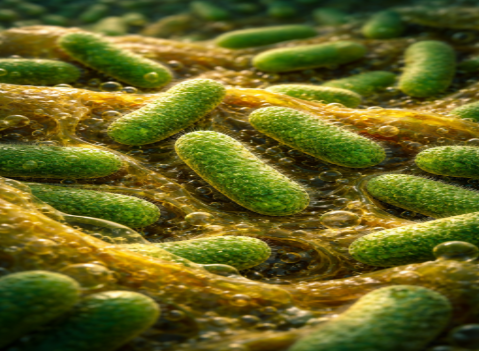
Featured image: Image created by Fiama Guevara with Microsoft Designer. Image source: Microsoft image creator
Additional references: Fujino et al., 2024. Guardians of plant health: roles of predatory protists in the pathogen suppression. https://link.springer.com/article/10.1007/s11104-024-06846-w#Sec6







 micro-bites.org