

Breaking down the microbiology world one bite at a time
Engineered antibodies could be the future of infection defense
When you get sick with a virus or bacteria, your body makes antibodies to help fight off the invading pathogen, and researchers have taken advantage of our immune systems and, for some illnesses, will administer extra antibodies to give an extra boost.
Immunotherapy uses antibodies to treat different diseases, but how our natural antibodies bind to pathogens isn’t perfect. Engineered antibodies have been developed to help them better recognize pathogens, and help our bodies be better prepared for an infection, and researchers are continuing to hone in on what makes a perfect antibody.
New research has found a way to make these antibodies even better by combining two different kinds of them. This hybrid antibody can strongly bind to harmful invaders while also activating a strong immune response, offering a better therapeutic option to combat harmful diseases.
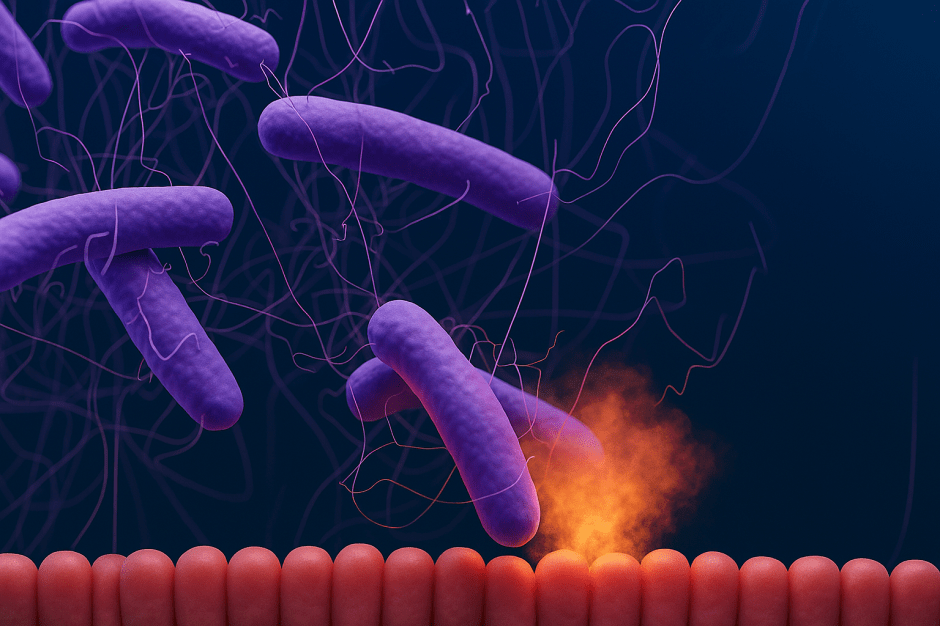
The researchers started their process to find the best hybrid antibody by looking at its effect on neutralizing the bacteria Streptococcus pyogenes, which causes high mortality rates and can be difficult to treat with antibiotics.
The hinge region affects an antibodies flexibility
Each part of the antibody can affect how it functions. The heavy chain in an antibody helps to provide structure and stability, and can help determine which type of pathogens the antibody will recognize. Heavy chains can differ in structure and function, which is what determines an antibody subclass.
The study used an antibody made for targeting the bacteria and changed it for different subclasses. Each subclass has a different hinge region, the flexible area that connects the arms of the antibodies. They found when the antibody had an IgG3 subclass, even though it didn’t stick as well to the bacteria, it created a strong immune response.
Using simulations, they found that IgG3 was more flexible than other antibody types, which might allow it to interact with immune cells better. Showing that the hinge region of an antibody can change how well it functions. The hinge region of IgG3 is longer than some of the other subclasses. Combined with its flexibility, the antibody has more movement.
Length of an antibody matters
The length of the hinge had different impacts. Antibodies with longer hinge lengths are associated more with the important immune cell phagocyte. The long hinge length also causes phagocytes to engulf the bacteria better. But hinge length had a limit. When it was too long, the antibody lost function.

Researchers modified the hinge length of different antibodies to test their effectiveness in fighting pathogens. Image modified from Izadi et al., 2024.
The researchers found that 47 amino acids worked best as a hinge length for fighting bacteria. Using an antibody with a 47-amino acid hinge length was great at fighting off the bacteria in mice and helped prevent the spread of the infection to the spleen and liver. The antibody also persisted in the blood the longest compared to ones with shorter and longer hinge lengths.
When they examined it against other strains of streptococcus pyogenes, the antibody was effective against all the strains they looked at, meaning it could be a promising treatment for a variety of streptococcus pyogenes infections.
Engineered antibodies also protect against viruses
Seeing how great the engineered antibody was against bacteria, the researchers wanted to test its capabilities against a virus. They used antibodies known to target SARS-CoV-2 and gave them the 47-amino acid hinge length. They found that their hybrid antibodies were effective at activating the immune response against the virus, increasing phagocyte interaction, and engulfing the virus.
Future prospects
Overall, researchers showed that a long antibody hinge length can improve its immune capabilities and that antibody binding isn’t the only factor determining its success. This advancement in antibody engineering could allow researchers to transform antibodies into powerful tools for combating a range of infections.
Link to the original post: Izadi, A., Karami, Y., Bratanis, E. et al. The hinge-engineered IgG1-IgG3 hybrid subclass IgGh47 potently enhances Fc-mediated function of anti-streptococcal and SARS-CoV-2 antibodies. Nat Commun 15, 3600 (2024). https://doi.org/10.1038/s41467-024-47928-8
Featured image: by the author in Biorender.com










 micro-bites.org