
Breaking down the microbiology world one bite at a time
Arginine Eating Bacteria Energizing Regulatory T Cells
As conveyed time and again in our blog, the human body hosts many other living organisms other than itself. One such site is the gut. The microbes in the gut interact with our cells affecting our health and manifestation of diseases. Cancer is a disease where cells escape their normal cell cycle to grow unrestrictedly. Cancerous cells often spread from one site to other sites in the body and this process is termed as metastasis. Metastasis occurs preferentially to certain organs such as the omentum, which is fat present in front of organs in the peritoneal cavity like the stomach and spleen. It acts like a cushion and also helps to fight infections and heal wounds within the abdominal area.
Interested in investigating the contribution of microbes to metastasis to sites like the omentum, a research group studied tumor growth in the omentum upon being seeded in the peritoneal cavity in mice with and without microbes (termed as germ free mice). Interestingly they only saw tumor growth in the omentum in mice with microbes. Upon closer examination, they found some tumor cells in the omentum in mice without microbes but no tumor growth suggesting that while the tumor cells were able to reach the omentum space from the site of injection, they were unable to grow within the omentum in the absence of microbes.
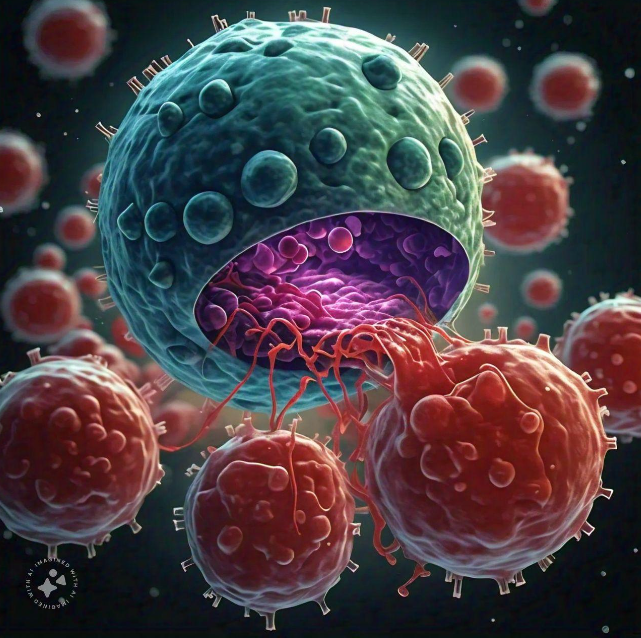
The tumor cells were being attacked by immune cells, particularly the adaptive arm of the immune system (cells with a specific enemy in mind). In mice with microbes, a suppressive immune cell called regulatory T cells (as the name suggests, their main role is to stop the other immune cells from fighting) were preventing the other immune cells from attacking tumor cells.
We have technology that will allow us to look into these cells and read their state of mind (by reading their RNA production). Using these sequencing techniques, the authors saw that regulatory T cell development was linked to the mTOR pathway. mTOR is a protein that is an important signaling molecule with the cell. Blocking mTOR using a drug called rapamycin in mice without microbes led to increased regulatory T cell numbers and tumor growth in the omentum when the mice were seeded with tumor cells.

By specifically removing different types of bacteria using narrow-spectrum antibiotics (chemicals used to kill bacteria and fungi), the authors were able to determine that loss of Proteobacteria could result in lack of metastasis to the omentum. The Proteobacteria utilized arginine (an amino acid) which resulted in the regulatory T cells blocking other immune cells from attacking the tumor cells thus enabling metastasis. Thus a complex interaction between microbes and the human body has been uncovered inspiring new medical therapies.
Gut microbes have often been known to help breakdown nutrients so their absence in us can selectively result in altered metabolite concentrations. These metabolites at their new concentrations can influence our cells to new states. Here arginine, an amino acid, is found to enable regulatory T cells to suppress other immune cells, which allows for cancerous cells in the omentum to grow, without having to fence attacks from the immune cells. It highlights the importance of holistic medicine and considering how your nutrition can influence your microbiota which influences your immune system which protects your body from attackers.
Featured image: AI generated image












 micro-bites.org