

Breaking down the microbiology world one bite at a time
Bacteria’s defense systems team up against phages.
In their natural environment, bacteria constantly face threats from their viral counterparts called bacteriophages (or phages for short). These viruses specifically infect bacteria, hijacking their cellular machinery to replicate and produce new phages. Once replication is complete, phages use specific proteins to break open the bacterial cell in a process called lysis, releasing the newly formed phages into the environment, and killing the bacterial host. However, bacteria do not passively wait for their destruction. Much like humans have an immune system to combat various pathogens, bacteria also have numerous strategies to defend against phage infections.
The bacterial immune system is diverse, targeting various stages of the phage life cycle, from DNA injection to the lysis step. Well-known defense mechanisms include CRISPR-Cas and restriction-modification systems, which cut invading phage DNA. Other defense systems will inhibit viral transcription, disrupt phage particle assembly, or even deplete the bacteria from essential components thus hindering the phage replication. Currently, more than 150 defense systems have been described, with bacteria typically harboring around five different systems. Most research focuses on individual defense systems, and few studies explore how these systems might interact. This paper investigates the interactions between defense systems with the hypothesis that systems frequently found together in bacteria might have synergistic effects, thus having been selected by bacteria because they provide greater protection against phages than the sum of their individual effects.
In the first step, the authors focused on the species Escherichia coli using bioinformatics tools to predict known defense systems in over 20,000 genomes. By analyzing correlations, they found that some defense systems are often found together in the same genome (co-occur), while others rarely do (mutually exclude each other). It is widely known that defense systems tend to co-localize at specific locations in bacterial genomes called “defense islands” making it easier for them to be transferred together from one bacterium to another by horizontal gene transfer. But surprisingly, even defense systems that are far apart still often show up together, not just those in the same defense island. They hypothesized that the reason some defense systems are most frequently found together is because they might be more effective together.
Next, they experimentally tested this hypothesis by mixing different defense systems to see how well they could fight off phages. For example, E. coli containing just the Gabija defense system or the tmn defense system did not do much against phages T1, T3, and T4. But, when both defense systems were combined in the same strain, they were much better at combating these phages. For phage T1, having both defense systems together led to 1000 times fewer phages being released. Overall, they tested three different pairs against 29 phages and found that these systems work better together than alone. In addition, bacteria with these combined defenses have a considerable advantage, enabling them to survive and develop more easily in the presence of phages than bacteria with a single defence system.
The researchers also evaluated a pair of defense systems called Zorya II and ietAS, which are usually not found together in E. coli. Surprisingly, when combined, these defenses worked really well against phage T3. By looking at how defense systems are distributed in other bacterial orders (like Bacillales and Pseudomonales), they found out that the co-occurrence patterns can change and that defense pairs that are often together in E. coli may exclude each other in other bacteria. This means that the reason some defense systems don’t pair up is not just because they can not work together.

Overall, this research highlights that combined bacterial defense systems often result in enhanced protection against phages, demonstrating that bacteria have various strategies to target different phages with varying sensitivities. Since defense systems are generally compatible, the defensive arsenal of a particular bacterium is heavily influenced by its environment and the types of circulating phages.
Additional references:
Tesson, F., Hervé, A., Mordret, E., Touchon, M., D’humières, C., Cury, J., & Bernheim, A. (2022). Systematic and quantitative view of the antiviral arsenal of prokaryotes. Nature communications, 13(1), 2561.
Mayo-Muñoz, D., Pinilla-Redondo, R., Birkholz, N., & Fineran, P. C. (2023). A host of armor: prokaryotic immune strategies against mobile genetic elements. Cell Reports, 42(7).
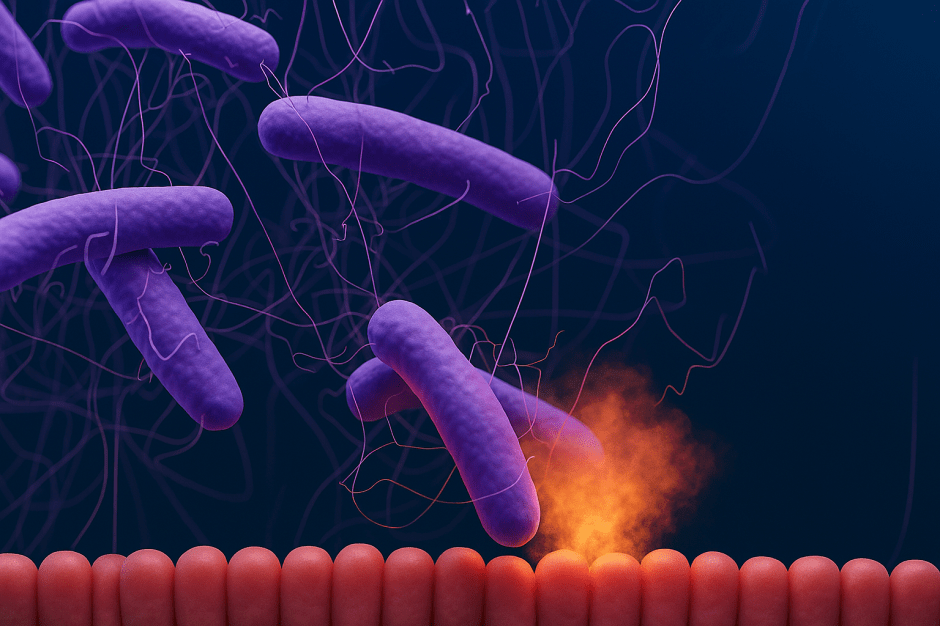
Featured image: From https://www.gutmicrobiotaforhealth.com/the-crosstalk-between-bacteriophages-and-commensal-bacteria-contributes-to-the-gut-ecosystems-stability/









 micro-bites.org