
Breaking down the microbiology world one bite at a time
How do gut bacteria affect our mental health?
Our gut is a home for a complex microbial community, and thanks to it we survive. Gut microbiota helps us in food digestion and provides us with essential metabolites like vitamins, amino acids, fatty acids, and neurotransmitters. Those metabolites are called postbiotics, and GABA is one of them. GABA is an abbreviation of gamma-aminobutyric acid and it presents in many organs of our body like our brain, pancreas, guts, urinary bladder, heart, lung, and ovary. Its role differs from one organ to the other. For instance, in the pancreas, GABA was believed to help in insulin production and pancreas protection, while in the brain it was identified as a key inhibitory neurotransmitter.
GABA was first discovered in the brain in 1950 and for a quite long time, it was believed not to cross the blood-brain barrier so its effect on the brain was neglected. Yet, that was found to be not true, and now we know that changes in GABA’s concentration or circulation modulate brain diseases and our mental health. Interestingly, a change in GABA levels in our bodies is associated with a change in microbial composition in the gut, which is directly related to what we eat. In this article, we discuss how gut-dwelling bacteria manipulate our mental health through GABA production.
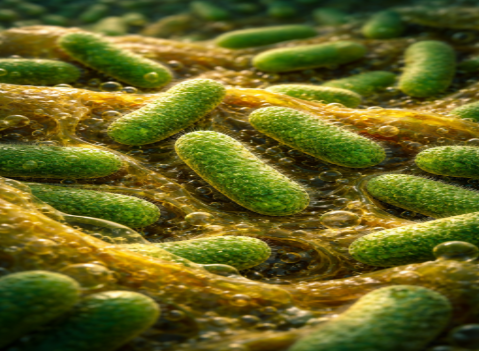
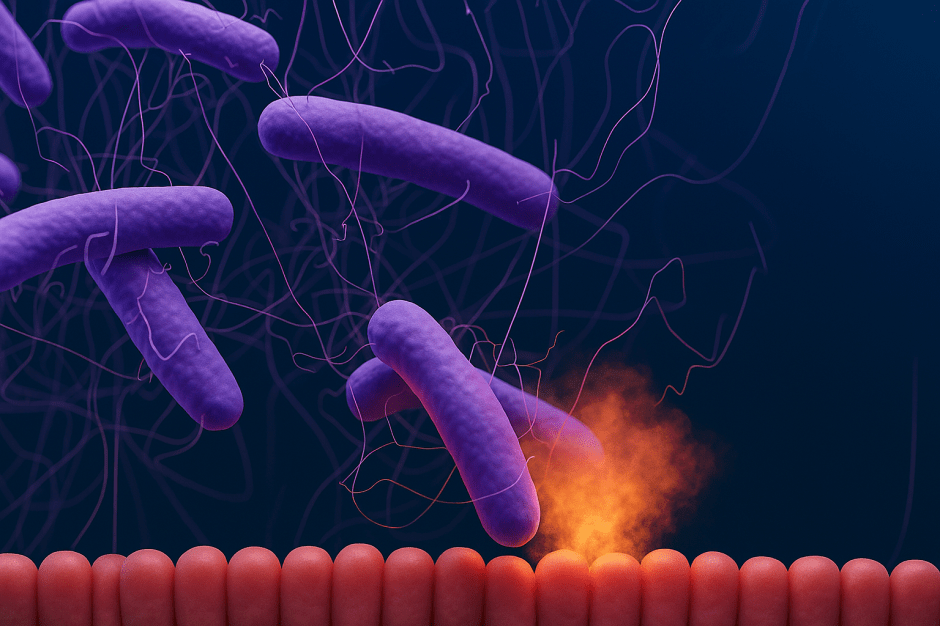
Many of the gut inhabitants produce GABA, notably Bacteroides which is one of the dominant genera forming 31.7% of the gut microbial community and the primary genus to influence our mental health by regulating GABA production. However, it is not clear to us why bacteria produce GABA. One hypothesis is that GABA helps bacteria to survive the acidic and anaerobic conditions in our guts. To get energy, gut bacteria respire anaerobically producing acids (like lactate) which causes the pH inside the bacterial cell to drop. To re-adjust its cellular pH again, bacteria activate the GABA production genes that result in consuming the excess H+ while catalyzing the decarboxylation of the glutamine (one of the biochemical steps in GABA production). Finally, the produced GABA is released outside of the cell and the cellular pH is neutralized again.

Decreasing the level of GABA or altering the diversity of GABA-producing bacteria in the gut was found to be linked to anxiety, stress, autism, and brain disorders such as Schizophrenia, Alzheimer’s disease, and epilepsy. Different studies have shown that symptoms of the focal disorder or disease were relieved after increasing GABA levels through diet intake. For instance, it was found that the risk of Alzheimer’s disease was reduced after the intake of Blautia, a new probiotic bacterial isolate, which produced GABA and increased its level in the cerebrospinal fluid. Likewise, findings regarding stress and anxiety indicated that there was a decrease in the abundance of Bacteroides sp., and the symptoms were elevated after the consumption of GABA-producing bacteria which caused changes in the gut microbiota. Similarly, in mice, the symptoms of anxiety and depression were improved after being fed with a diet rich in GABA-producing strain, and in this case it was Lactobacillus strain.
In epilepsy, it was found that the imbalance in: (i) the neuroactive compounds including GABA or (ii) the gut microbial community composition are the main reasons for causing the disease. Thus, an effective intervention to treat epilepsy is to change the diet to more fats and low carbohydrates (in a period of two weeks). This diet alters the gut microbiota and significantly increases GABA/glutamine ratios demonstrating an anti-seizure effect. In a study carried out on 45 drug-resistant epileptic patients, the intake of probiotics (e.g., Lactobacillus, Bifidobacterium, and Streptococcus strains) for 3 months was found to decrease the number of seizures by more than 50%, and to improve the quality of life of the patients.
In addition, GABA was found to play a considerable role in patients with attention deficit hyperactivity disorder (ADHD) but in different ways in adults and children. While the magnetic resonance spectroscopy showed a significant reduction of GABA concentration in the brain in children with ADHD, the adults were showed to have increased concentration. In the same line, the gut microbiota composition was found to be depleted from many Lactobacillus that are strong GABA producers in infants (6 months old), while the adults were found to have a high abundance of GABA-producing bacteria like different Bacteroides and Bifidobacterium strains.
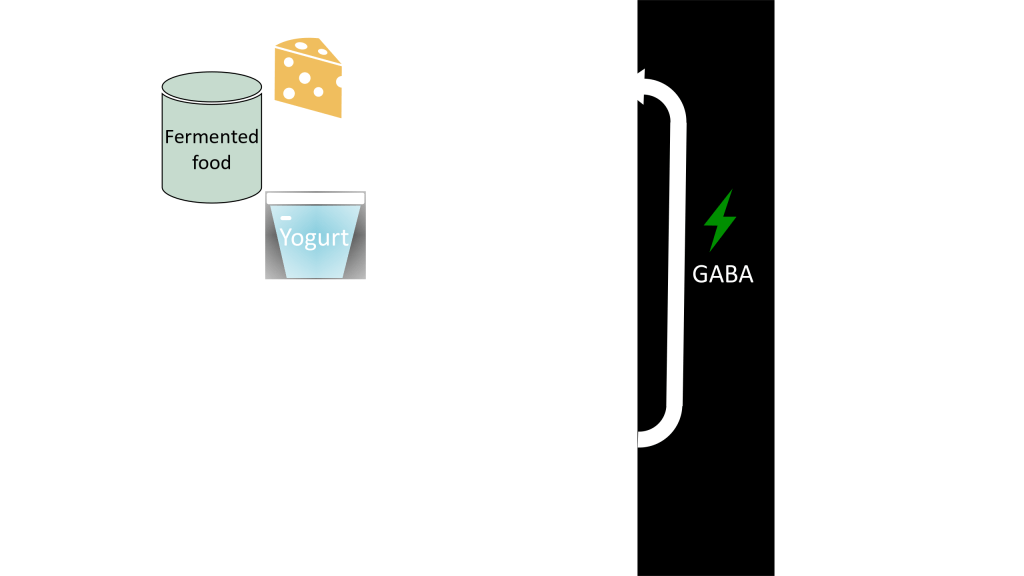
If GABA has such a significant impact on our mental health, how to increase the intake of GABA in our diet? Two ways to increase the intake of GABA in our food either by eating food that contains GABA-producing bacteria (such as Lactobacillus strains), or eating food that contains factors that induce GABA production by promoting the growth of GABA-producing gut-bacteria. A wide range of traditional fermented food contains GABA-producing bacteria like cheese, yogurt, ground pork, sourdough, and Asian fermented products such as kimchi, and many others. A traditional method to prepare fermented food is to add lactic acid bacteria which converts sugars to lactic acid contributing to food preservation and converts glutamine to GABA increasing its presence in food. For the latter choice, many factors such as microbial-derived enzymes (proteases, lipases, amylases, and cellulases) act as prebiotics which enhance the growth of GABA-producing bacteria in the gut resulting in producing more GABA.
Link to the original post: Braga, J.D., Thongngam, M. & Kumrungsee, T. Gamma-aminobutyric acid as a potential postbiotic mediator in the gut-brain axis. npj | science of food 8, 16 (2024).
Featured image: Made by the author









 micro-bites.org